 EN
EN
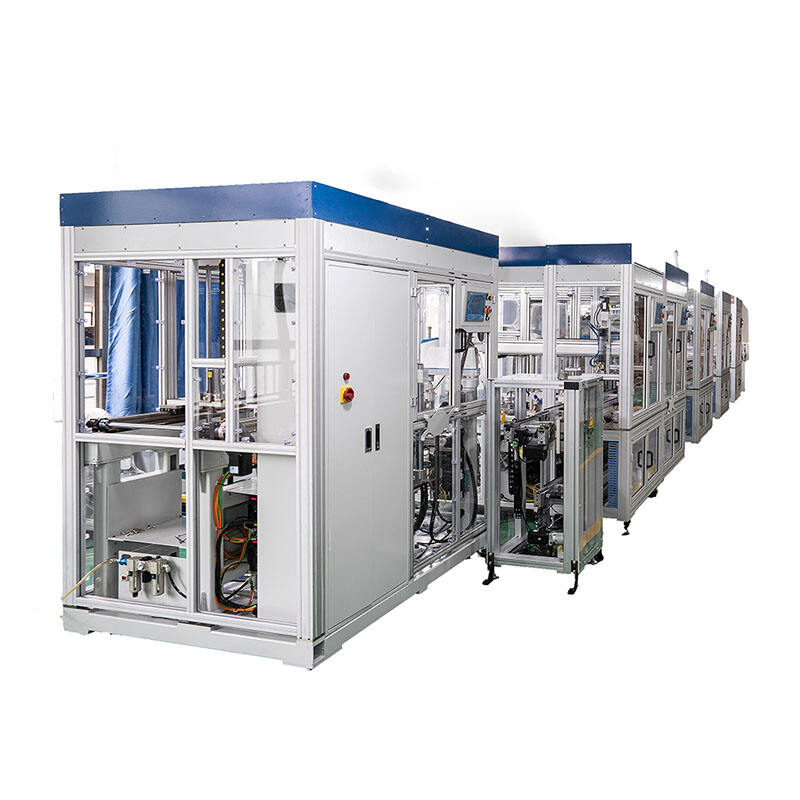
Modern motor manufacturing faces mounting pressure to adapt quickly to market demands while maintaining operational excellence. Traditional fixed production systems often struggle with scalability challenges and suffer from extended downtime during maintenance or reconfiguration. Modular production lines for motors represent a transformative approach that addresses these critical pain points through flexible design, independent workstation operation, and rapid adaptation capabilities. This architectural shift enables manufacturers to scale operations efficiently while minimizing disruptions that typically plague conventional assembly systems.
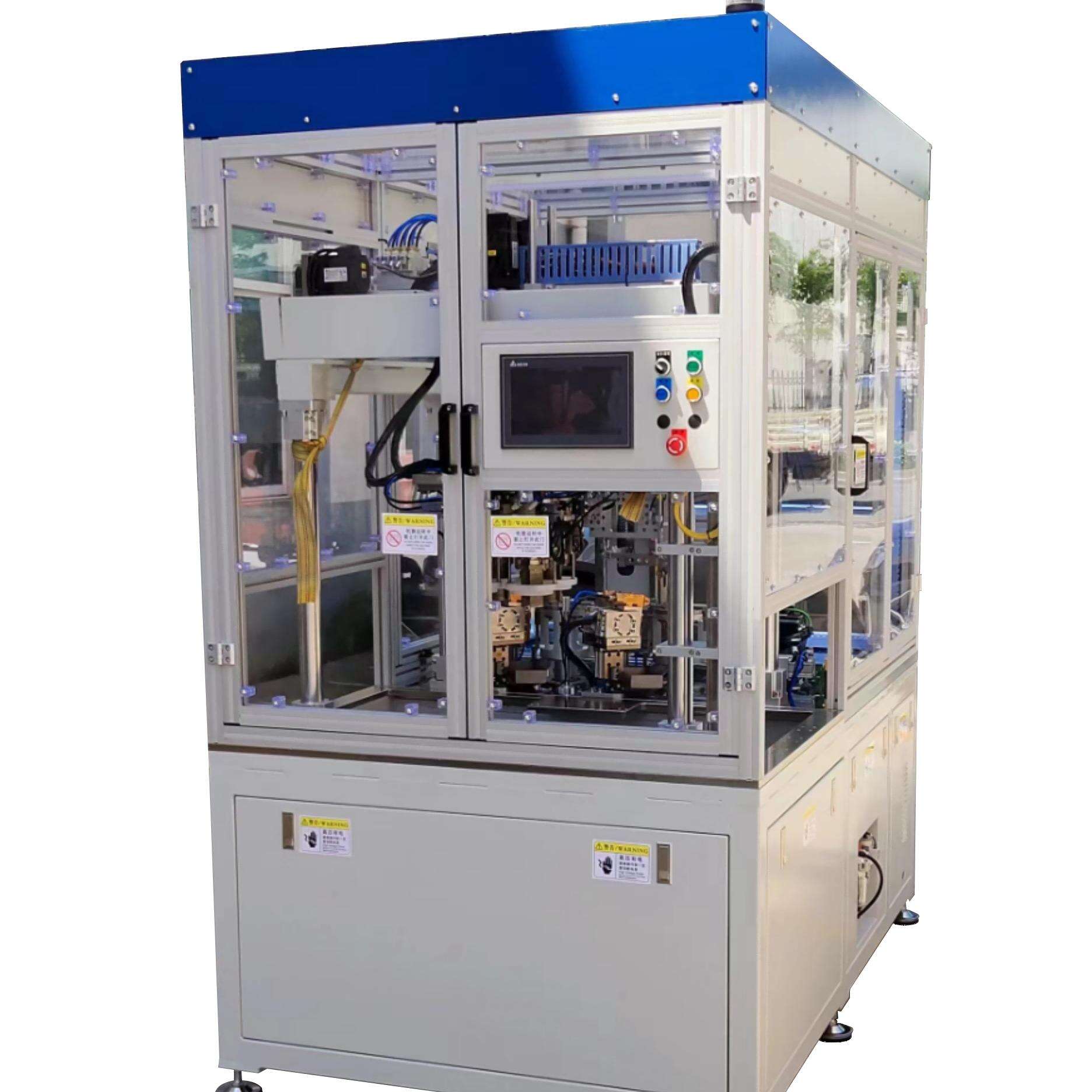
Understanding how modular production lines for motors improve scalability and reduce downtime requires examining their fundamental design philosophy and operational mechanics. Unlike monolithic production systems where all components depend on continuous sequential operation, modular systems compartmentalize manufacturing processes into self-contained units that function semi-independently. This architectural approach creates redundancy, flexibility, and fault isolation that directly translate to measurable improvements in production capacity adjustments and system availability. For motor manufacturers competing in dynamic markets, these advantages determine competitive positioning and profitability.
Architectural Advantages Driving Scalability in Motor Production
Independent Workstation Design and Production Flexibility
Modular production lines for motors achieve superior scalability through independent workstation architecture that separates discrete manufacturing operations into standalone modules. Each workstation performs specific tasks such as stator winding, rotor assembly, bearing installation, or testing procedures without relying on rigid mechanical coupling to adjacent stations. This independence allows manufacturers to add, remove, or reconfigure modules based on production volume requirements without overhauling the entire system. When demand increases for specific motor types, additional modules handling critical bottleneck operations can be integrated seamlessly into the existing production flow.
The flexibility inherent in modular systems extends beyond simple capacity adjustments to encompass product mix variations. Motor manufacturers serving diverse applications require production systems capable of handling different sizes, power ratings, and specialized configurations. Modular architectures support this requirement through reconfigurable workstations that accommodate tooling changes, parameter adjustments, and process variations without extensive downtime. This adaptability proves particularly valuable when introducing new motor designs or responding to custom orders that deviate from standard product specifications.
Independent module operation also enables parallel processing strategies that amplify production capacity without proportional increases in floor space or infrastructure investment. By duplicating specific high-volume operations across multiple identical modules, manufacturers can process several motor assemblies simultaneously through those critical stages while maintaining single-module processing for less demanding operations. This selective parallelization optimizes resource allocation and maximizes throughput for specific product families without committing to full-line duplication.
Rapid Capacity Expansion Through Module Addition
Scalability in modular production lines for motors manifests most visibly through the ability to expand capacity incrementally rather than through discrete step changes requiring massive capital investment. Traditional production lines often necessitate complete system replacement or parallel line installation when capacity increases exceed design parameters. Modular systems circumvent this limitation by allowing manufacturers to purchase and integrate additional modules that address specific capacity constraints identified through production analysis.
This incremental expansion approach reduces financial risk by enabling capacity growth aligned with actual demand realization rather than speculative forecasting. Motor manufacturers can observe market trends, confirm sustained demand patterns, and then deploy capital for module additions with confidence that utilization will justify investment. The shorter lead times associated with module procurement and integration compared to complete production line installation further reduce opportunity costs and market response delays.
Module standardization across different production facilities creates additional scalability advantages through equipment transferability and shared spare parts inventory. When market dynamics shift regional demand patterns, manufacturers can relocate modules between facilities rather than maintaining underutilized assets or scrambling to install new capacity. This geographic flexibility proves particularly valuable for multinational motor producers balancing production across multiple regions with varying demand volatility and labor cost structures.
Intelligent Control Systems Enabling Dynamic Reconfiguration
Modern modular production lines for motors incorporate sophisticated control architectures that facilitate dynamic reconfiguration without manual intervention or extended setup periods. Distributed control systems communicate across module boundaries through standardized protocols, enabling real-time coordination of workflow routing, quality data sharing, and production scheduling. This intelligent coordination allows the production system to adapt automatically to changing product mixes, quality requirements, or capacity constraints identified through operational monitoring.
The scalability benefits of intelligent control extend to workforce management and skill requirements. Centralized monitoring interfaces provide operators with comprehensive visibility across all modules, reducing the staffing increases typically associated with capacity expansion. Operators can supervise multiple modules simultaneously, respond to alerts prioritized by production impact, and access standardized interfaces regardless of specific module functions. This standardization accelerates training for new modules and reduces the specialized knowledge barriers that limit workforce flexibility in traditional production environments.
Adaptive algorithms embedded in control systems optimize production flow by dynamically allocating work to available modules based on real-time capacity, quality performance, and maintenance status. When temporary capacity increases are required, the system can reduce cycle times within operational parameters, prioritize high-margin products, or defer non-critical quality checks to maximize throughput. This intelligence transforms modular production lines for motors from static configurations into responsive systems that continuously optimize performance against current objectives.
Downtime Reduction Mechanisms in Modular Motor Manufacturing
Fault Isolation Preventing Cascading Production Stoppages
The primary mechanism by which modular production lines for motors reduce downtime operates through fault isolation that prevents single-point failures from stopping entire production systems. In traditional integrated lines, mechanical linkages and sequential dependencies mean that failure in any component halts all upstream and downstream operations until repairs are completed. Modular architectures break these dependencies by incorporating buffer stations, parallel processing paths, and autonomous module operation that isolates faults to affected modules while allowing continued operation elsewhere.
Buffer capacity between modules provides critical decoupling that maintains production flow despite temporary module unavailability. When a winding station experiences mechanical failure, motors awaiting that operation accumulate in buffer storage while subsequent assembly operations continue processing previously completed units. This buffering strategy converts potential complete production stoppages into temporary throughput reductions that minimize financial impact and preserve partial capacity availability for urgent orders.
Fault isolation also accelerates problem diagnosis by limiting the scope of investigation to affected modules rather than requiring system-wide troubleshooting. Maintenance personnel can focus diagnostic efforts on specific workstations identified through control system alerts, access module-specific documentation and tools, and implement repairs without navigating complex interdependencies. This focused approach reduces mean time to repair and enables more effective preventive maintenance scheduling based on individual module performance trends rather than aggregate system metrics.
Maintenance Scheduling Flexibility Without Production Interruption
Modular production lines for motors enable proactive maintenance strategies that address wear and component degradation before failures occur, yet without imposing the production interruptions typical of preventive maintenance in integrated systems. Because modules operate independently, maintenance teams can schedule work on specific units during periods of lower demand, product changeovers, or when parallel modules provide sufficient capacity to meet production requirements. This scheduling flexibility eliminates the forced choice between preventive maintenance and production continuity that plagues conventional motor manufacturing operations.
Rolling maintenance programs that sequentially service modules while others remain operational represent a significant advantage of modular architectures. Rather than scheduling comprehensive shutdowns that impact all production capabilities simultaneously, manufacturers can rotate modules through maintenance cycles that distribute downtime impacts across extended periods. This approach maintains more consistent production availability, reduces maintenance labor concentration that strains workforce resources, and allows more thorough inspection and component replacement than time-constrained shutdown windows permit.
The modularity principle extends to component standardization within workstations, creating maintenance efficiency through interchangeable parts, standardized tools, and common skill requirements across different module types. Maintenance personnel develop expertise applicable across multiple modules rather than specializing in unique subsystems, enabling more efficient resource deployment and faster response to emerging issues. Spare parts inventory requirements also decrease because common components serve multiple modules, reducing capital tied up in safety stock while improving parts availability for critical repairs.
Hot-Swap Capability and Rapid Module Replacement
Advanced implementations of modular production lines for motors incorporate hot-swap capabilities that enable complete module replacement during operation without stopping adjacent workstations. This capability proves particularly valuable when failures require extensive repairs exceeding acceptable downtime windows or when temporary capacity increases demand rapid deployment of additional modules. Standardized mechanical interfaces, electrical connections, and control system integration protocols allow replacement modules to connect and synchronize with existing production flow within minutes rather than hours or days required for traditional equipment installation.
Hot-swap architectures depend on plug-and-play integration standards that eliminate custom configuration for each module installation. Network-based module identification, automatic parameter loading from central databases, and self-calibration routines enable replacement modules to assume operational status with minimal manual intervention. This automation dramatically reduces the technical expertise required for module swaps and allows production personnel to execute replacements during shift transitions or product changeovers without dedicated engineering support.
The strategic implications of hot-swap capability extend beyond emergency response to encompass planned technology upgrades and process improvements. Manufacturers can develop improved module designs, test them in parallel with existing production, and then systematically replace older modules during routine maintenance windows. This evolutionary upgrade path avoids the obsolescence risk inherent in monolithic systems where incremental improvements prove impractical and technology advancement requires complete system replacement at prohibitive cost.
Operational Impact and Business Value Realization
Production Throughput Optimization Through Balanced Module Deployment
Realizing scalability benefits from modular production lines for motors requires analytical approaches to identify bottlenecks and deploy modules strategically to balance production flow. Detailed process mapping reveals cycle time variations across manufacturing operations, highlighting specific workstations that constrain overall throughput. Manufacturers can then add modules specifically addressing these bottlenecks rather than uniformly expanding all operations, optimizing capital deployment for maximum capacity impact.
Dynamic bottleneck analysis recognizes that constraint locations shift based on product mix, quality requirements, and equipment performance variations. Modular architectures accommodate these shifts through flexible module allocation that concentrates capacity where current production demands require. When producing high-precision motors with extended testing requirements, additional testing modules can be activated or testing cycle times extended while maintaining standard processing speeds for less critical operations. This adaptive balancing maximizes effective capacity utilization across diverse production scenarios.
Throughput optimization also encompasses quality yield improvements enabled by modular production lines for motors. Isolated module operation facilitates controlled experimentation with process parameters, tooling modifications, and material variations without risking entire production runs. Quality engineers can implement improvements in individual modules, validate effectiveness through statistical analysis, and then propagate successful changes across parallel modules with confidence. This systematic improvement methodology accelerates continuous improvement cycles and compounds quality gains over time.
Financial Performance Metrics Demonstrating Downtime Reduction Value
Quantifying the business value of reduced downtime in modular production lines for motors requires comprehensive metrics that capture both direct production losses and indirect operational costs. Overall Equipment Effectiveness calculations typically show improvements of fifteen to thirty percent when transitioning from integrated to modular architectures, reflecting higher availability, improved performance rates, and enhanced quality yields. These aggregate improvements translate directly to revenue capacity increases without proportional fixed cost growth.
Mean time between failures and mean time to repair metrics demonstrate the reliability advantages of fault isolation and maintenance flexibility inherent in modular systems. Extended intervals between production-affecting failures reduce emergency maintenance costs, overtime labor requirements, and expedited parts procurement expenses that erode profitability. Shorter repair durations minimize lost production opportunity costs and improve customer delivery performance that influences repeat business and market reputation.
Working capital impacts represent less visible but equally significant financial benefits of downtime reduction. Modular production lines for motors enable more consistent production flow that reduces work-in-process inventory buffers required to hedge against system unreliability. Lower inventory levels reduce carrying costs, obsolescence risks, and warehouse space requirements while improving cash conversion cycles. These working capital improvements compound annual returns on modular system investments and enhance financial flexibility for growth investments.
Competitive Positioning Through Responsive Manufacturing Capabilities
Market competitiveness in motor manufacturing increasingly depends on responsiveness to custom specifications, short lead times, and flexible production capabilities that modular production lines for motors enable. Customers across automotive, industrial automation, and appliance sectors demand motor variants optimized for specific applications with delivery schedules incompatible with inflexible production systems. Modular architectures support these demands through rapid changeovers, parallel processing of different product types, and capacity allocation aligned with current order priorities.
The scalability advantages of modular systems also support market expansion strategies that require incremental capacity increases synchronized with customer acquisition and revenue growth. Rather than over-investing in capacity speculation or constraining sales growth through production limitations, manufacturers can scale production in measured steps that maintain healthy capacity utilization rates and preserve financial returns. This balanced growth approach reduces business risk while maintaining competitive responsiveness.
Technology leadership positioning benefits from the upgrade flexibility inherent in modular production lines for motors. As advanced motor technologies emerge, including higher efficiency designs, integrated electronics, and novel materials, modular systems accommodate technology insertion through targeted module replacements rather than wholesale production system overhauls. This adaptability extends production asset lifecycles, protects technology investments, and enables manufacturers to lead rather than follow market technology transitions.
Implementation Considerations for Modular Motor Production Systems
Initial System Design and Module Selection Strategies
Successfully implementing modular production lines for motors begins with comprehensive process analysis that identifies logical module boundaries based on manufacturing operations, material flow, and quality control requirements. Effective modular decomposition balances module independence against coordination requirements, creating workstations complex enough to justify standalone operation yet simple enough to maintain and reconfigure efficiently. This balance varies across different motor types and production volumes, requiring customized analysis rather than generic modular templates.
Technology selection for individual modules demands careful evaluation of standardization benefits against performance optimization for specific operations. Highly standardized modules reduce spare parts inventory, simplify training, and enable flexible workforce deployment but may sacrifice operational efficiency available through specialized equipment. Manufacturers must assess whether marginal performance gains justify complexity costs or whether standardization benefits outweigh efficiency differences across their specific production context and strategic priorities.
Integration architecture design establishes communication protocols, material handling interfaces, and control system standards that enable current module coordination while preserving future expansion flexibility. Open-architecture approaches using industry-standard protocols maximize vendor options and technology insertion opportunities, though potentially sacrificing tightly integrated performance available through proprietary systems. This strategic choice significantly influences long-term scalability and technology evolution capabilities of modular production lines for motors.
Workforce Development and Operational Management Adaptation
Transitioning to modular production lines for motors requires workforce development programs that shift skill emphasis from deep specialization in specific equipment toward broader understanding of module operation principles, control system interaction, and systematic troubleshooting methodologies. Cross-training initiatives enable operators to work across multiple module types, improving schedule flexibility and reducing vulnerability to individual absence or turnover. This skill diversification also enhances job satisfaction through varied responsibilities and career development opportunities.
Management approaches must adapt to leverage the dynamic reconfiguration capabilities of modular systems through data-driven decision making and responsive production scheduling. Real-time performance monitoring, predictive analytics, and optimization algorithms provide insights that enable proactive capacity allocation, maintenance scheduling, and quality interventions. Managers require analytical capabilities to interpret system data and implement adjustments that maximize modular architecture advantages rather than operating within traditional fixed-capacity mental models.
Organizational structures supporting modular production lines for motors often evolve toward cross-functional teams with integrated responsibility for specific product families or customer segments rather than functional silos organized around manufacturing operations. These product-focused teams coordinate module deployment, quality standards, and capacity allocation aligned with market demands and business priorities. This organizational alignment ensures that technical flexibility translates to business responsiveness rather than remaining an underutilized capability.
Continuous Improvement and System Evolution Pathways
Sustaining the competitive advantages of modular production lines for motors requires continuous improvement methodologies that systematically identify enhancement opportunities, validate potential solutions, and propagate proven improvements across applicable modules. Structured experimentation frameworks leverage module independence to test process variations, tooling modifications, and parameter adjustments without risking production stability. Statistical analysis of module-level performance data reveals improvement opportunities and validates effectiveness of implemented changes.
Technology evolution pathways should be explicitly planned during initial system design, incorporating upgrade interfaces, expandable control system capacity, and physical space allocation for anticipated module additions. Forward-looking architecture prevents technology lock-in and ensures that modular systems remain competitive throughout extended operational lifecycles. Regular technology assessments identify emerging capabilities that could enhance specific module performance, with business case analysis determining optimal timing for upgrade investments.
Knowledge management systems capture learnings from module operation, maintenance experiences, and improvement initiatives, creating institutional knowledge that compounds value over time. Structured documentation of optimal parameter settings, troubleshooting procedures, and configuration strategies for different production scenarios accelerates training, reduces problem resolution time, and enables systematic replication of best practices across modules and production facilities. This knowledge infrastructure transforms modular production lines for motors from physical assets into continuously improving systems that generate sustained competitive advantage.
FAQ
What production volume justifies transitioning to modular production lines for motors?
The economic justification for modular production lines for motors depends less on absolute production volume than on volume variability, product mix diversity, and downtime costs in existing systems. Manufacturers experiencing frequent capacity constraints, extended downtimes exceeding four percent of available production time, or significant product changeover requirements typically achieve positive returns on modular investments at volumes as low as fifty thousand motors annually. Higher volumes accelerate payback periods, but strategic benefits around scalability and responsiveness provide value even at moderate production scales where traditional automation might not justify investment.
How does modularity affect initial capital investment compared to traditional production lines?
Initial capital requirements for modular production lines for motors typically range from five to fifteen percent higher than equivalent-capacity traditional systems due to duplicate control systems, material handling interfaces, and standardized module frames. However, this comparison overlooks the flexibility value and reduced obsolescence risk of modular architectures. When accounting for incremental expansion capabilities that avoid over-capacity investment and technology upgrade pathways that extend system lifecycles, total lifecycle capital efficiency of modular systems typically exceeds traditional alternatives by twenty to thirty percent across ten-year planning horizons relevant to motor manufacturing equipment.
Can existing motor production lines be converted to modular architectures?
Retrofitting existing integrated motor production lines to modular architectures proves feasible when physical layouts accommodate module separation and control systems support distributed architectures. Successful conversions typically proceed incrementally, isolating specific operations into independent modules while maintaining overall production continuity. Critical requirements include adequate floor space for buffer stations between modules, control system capabilities for independent module operation, and material handling systems compatible with decoupled workflow. Complete conversions typically span twelve to twenty-four months with phased implementations that progressively increase modularity benefits while managing conversion risks and capital deployment.
What maintenance capabilities must be developed to support modular motor production systems?
Supporting modular production lines for motors requires maintenance teams with diagnostic capabilities across electrical, mechanical, and control system domains rather than deep specialization in specific equipment types. Condition monitoring interpretation, predictive maintenance analytics, and systematic troubleshooting methodologies become more important than equipment-specific repair skills. Organizations should invest in standardized diagnostic tools compatible across module types, comprehensive technical documentation accessible through digital systems, and training programs emphasizing logical problem-solving approaches. Partnerships with module suppliers for technical support during initial operation and complex failures help bridge capability gaps while internal expertise develops over the first twelve to eighteen months of modular system operation.
Table of Contents
- Architectural Advantages Driving Scalability in Motor Production
- Downtime Reduction Mechanisms in Modular Motor Manufacturing
- Operational Impact and Business Value Realization
- Implementation Considerations for Modular Motor Production Systems
-
FAQ
- What production volume justifies transitioning to modular production lines for motors?
- How does modularity affect initial capital investment compared to traditional production lines?
- Can existing motor production lines be converted to modular architectures?
- What maintenance capabilities must be developed to support modular motor production systems?