 EN
EN
Understanding the concept of KV in drone motors is fundamental for anyone looking to optimize their unmanned aerial vehicle performance. KV represents the motor's velocity constant, measured in RPM per volt, which determines how fast your drone motor will spin under specific voltage conditions. This critical specification directly influences your drone's speed, efficiency, and overall flight characteristics, making it essential knowledge for pilots ranging from hobbyists to commercial operators.
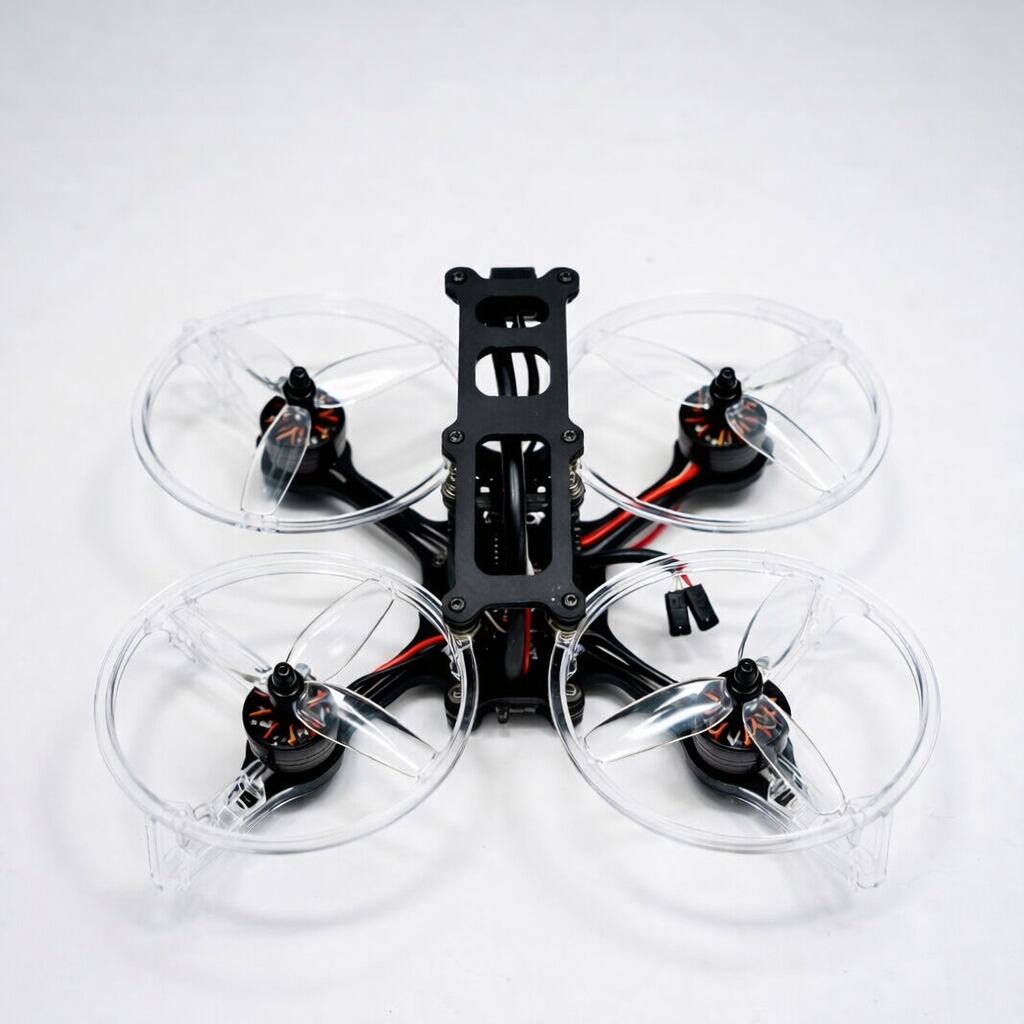
The relationship between KV rating and motor performance affects every aspect of your drone's operation, from takeoff power to maximum flight speed. Higher KV values typically result in faster propeller rotation but may sacrifice torque, while lower KV ratings provide more torque but reduced rotational speed. This fundamental trade-off makes selecting the appropriate KV rating crucial for achieving your desired flight performance and battery efficiency.
Technical Foundation of Motor KV Rating
Mathematical Relationship Between KV and Performance
The KV rating in drone motors represents a direct mathematical relationship where motor RPM equals KV multiplied by applied voltage. For example, a 1000KV motor running on 12 volts will theoretically spin at 12,000 RPM under no-load conditions. This calculation provides the foundation for predicting motor behavior across different voltage inputs and helps engineers design propulsion systems that meet specific performance requirements.
Real-world performance differs from theoretical calculations due to factors like motor efficiency, load conditions, and electrical losses. Understanding KV in drone motors requires considering these practical limitations, as actual RPM will be lower than the theoretical maximum when driving propellers or experiencing resistance. Motor manufacturers typically provide KV ratings under standardized no-load conditions, creating a baseline for comparison across different motor models.
Physical Factors Influencing KV Ratings
The physical construction of drone motors directly determines their KV characteristics through factors like magnet strength, wire gauge, and winding configuration. Motors with fewer turns of thicker wire typically exhibit higher KV ratings, while motors with more turns of thinner wire produce lower KV values with increased torque output. These design choices reflect fundamental electromagnetic principles that govern motor performance across different applications.
Stator size, magnet configuration, and air gap dimensions also significantly impact KV ratings in drone motors. Larger stators generally accommodate more windings and stronger magnets, affecting both KV characteristics and overall power output. Manufacturers carefully balance these parameters to create motors optimized for specific applications, whether prioritizing speed, efficiency, or torque production.
Application-Specific KV Selection Strategies
Racing Drone KV Requirements
Racing drones demand high KV motors to achieve maximum speed and rapid acceleration through tight courses. Typical racing applications utilize motors with KV ratings between 2000-2800, paired with smaller propellers to minimize rotational inertia while maximizing responsiveness. The high rotational speeds achieved with these KV values enable rapid direction changes and explosive acceleration that competitive pilots require.
Battery voltage selection becomes critical when optimizing KV in drone motors for racing applications. Most racing drones operate on 4S or 6S lithium polymer batteries, requiring careful motor selection to avoid exceeding safe RPM limits while maintaining adequate power reserves. Higher voltage systems allow for lower KV motors while achieving similar performance, often providing better efficiency and heat management during intensive racing sessions.
Aerial Photography and Cinematography Applications
Professional aerial photography requires significantly different KV characteristics compared to racing applications, typically favoring lower KV ratings between 300-800 for improved stability and battery life. Lower KV motors provide superior torque characteristics for driving larger propellers efficiently, creating the smooth, controlled flight dynamics essential for capturing professional-quality footage. These motors excel at maintaining precise positioning and smooth movements that cinematographers demand.
The relationship between KV in drone motors and propeller selection becomes particularly important for cinematography applications. Lower KV motors paired with larger propellers create more efficient thrust production while generating less noise and vibration. This combination results in longer flight times and superior stability for professional camera operations, making KV selection a critical factor in commercial drone design.
Performance Optimization Through KV Matching
Propeller and Motor Compatibility
Achieving optimal performance requires careful matching of KV ratings with appropriate propeller specifications, considering factors like diameter, pitch, and material composition. High KV motors work best with smaller, lower-pitch propellers that can spin efficiently at high RPMs without creating excessive load. Conversely, low KV motors excel with larger propellers that capitalize on increased torque to move more air volume per revolution.
The physics of propeller loading significantly affects how KV in drone motors translates to actual performance. Propeller diameter and pitch create varying levels of resistance that can dramatically alter motor RPM from theoretical no-load values. Understanding these interactions allows builders to select motor and propeller combinations that operate within optimal efficiency ranges while avoiding potentially damaging overload conditions.
Battery System Integration
Battery cell count and chemistry directly influence how KV ratings affect real-world performance, requiring careful system integration planning. Higher cell counts provide increased voltage that multiplies with KV ratings to determine maximum RPM, while battery discharge characteristics affect sustained performance throughout flight operations. Lithium polymer batteries offer high discharge rates suitable for high KV applications, while other chemistries may limit performance potential.
Current draw relationships become complex when considering KV in drone motors alongside battery capabilities and electronic speed controller specifications. Higher KV motors typically draw less current at equivalent power levels but may exceed safe RPM limits with high-voltage battery systems. Balancing these factors requires understanding the complete electrical system to ensure reliable operation within component specifications.
Advanced Considerations for KV Selection
Efficiency Optimization Strategies
Motor efficiency varies significantly across different KV ratings and operating conditions, making efficiency considerations crucial for battery-powered applications. Peak efficiency typically occurs within specific RPM ranges that vary based on motor design and KV characteristics. Understanding these efficiency curves helps optimize KV in drone motors for maximum flight time while maintaining adequate performance for intended applications.
Heat generation increases with inefficient operation, making thermal management a critical factor in KV selection for demanding applications. Higher KV motors operating at extreme RPM ranges may generate excessive heat that degrades performance and reduces component lifespan. Proper KV selection helps maintain motors within optimal temperature ranges while delivering required performance levels throughout typical mission profiles.
Future-Proofing and Scalability
Evolving battery technology and increasing power density requirements make future-proofing an important consideration when selecting KV ratings for drone applications. Higher energy density batteries may enable higher voltage systems that require different KV characteristics to achieve optimal performance. Understanding these trends helps ensure motor selections remain relevant as technology advances and performance expectations increase.
Modular design approaches increasingly rely on standardized KV ratings that facilitate easy component upgrades and system modifications. Selecting motors with commonly available KV values ensures long-term parts availability and compatibility with emerging technologies. This standardization also simplifies maintenance and repair procedures while providing flexibility for future performance upgrades.
Practical Implementation Guidelines
Testing and Validation Procedures
Proper validation of KV in drone motors requires systematic testing under realistic operating conditions to verify performance predictions and ensure system compatibility. Bench testing should include measurements of actual RPM, current draw, and temperature under various load conditions. These tests help identify potential issues before flight operations and confirm that selected KV ratings provide expected performance characteristics.
Field testing procedures should evaluate complete system performance including flight dynamics, battery consumption, and operational reliability. Real-world conditions often differ significantly from bench test results, making field validation essential for confirming KV selection accuracy. Documentation of test results provides valuable data for future motor selections and system optimizations.
Troubleshooting Common KV-Related Issues
Motor overheating frequently results from incorrect KV selection that forces motors to operate outside optimal efficiency ranges. High KV motors paired with oversized propellers may struggle to achieve target RPM while drawing excessive current and generating heat. Conversely, low KV motors with inadequate torque for their propeller load may also overheat due to inefficient operation at low RPM ranges.
Electronic speed controller compatibility issues often arise when KV ratings don't match ESC specifications or timing parameters. Some ESCs optimize performance for specific KV ranges, while others offer universal compatibility with adjustable timing settings. Understanding these relationships helps avoid performance degradation and ensures reliable system operation across different KV configurations.
FAQ
What happens if I choose the wrong KV rating for my drone application
Selecting inappropriate KV in drone motors can result in poor performance, reduced efficiency, overheating, and potential component damage. High KV motors with large propellers may struggle to reach optimal RPM while drawing excessive current, leading to rapid battery drain and motor overheating. Low KV motors paired with small propellers may not provide adequate thrust while operating inefficiently at high RPM ranges beyond their design parameters.
How do I calculate the optimal KV rating for my specific propeller and battery combination
Calculate optimal KV by dividing your desired maximum RPM by your battery voltage, then adjust based on propeller specifications and efficiency considerations. For example, if you want 8000 RPM with a 4S battery (14.8V nominal), you would need approximately 540KV. However, consider propeller load characteristics and motor efficiency curves to fine-tune this calculation for real-world performance optimization.
Can I use different KV motors on the same drone frame
Using different KV ratings on the same drone creates significant performance and control issues due to uneven thrust production and motor response characteristics. All motors on a multirotor aircraft should have identical KV ratings to ensure balanced flight dynamics and proper flight controller operation. Mixed KV configurations can cause instability, reduced maneuverability, and increased stress on flight control systems.
Do higher KV motors always provide better performance
Higher KV in drone motors doesn't automatically translate to better performance, as optimal KV depends entirely on your specific application requirements. While high KV motors provide rapid acceleration and high top speeds with appropriate propellers, they may sacrifice efficiency, flight time, and low-speed control authority. Lower KV motors often provide superior efficiency, longer flight times, and better stability for applications requiring precise control and extended operation.