 EN
EN
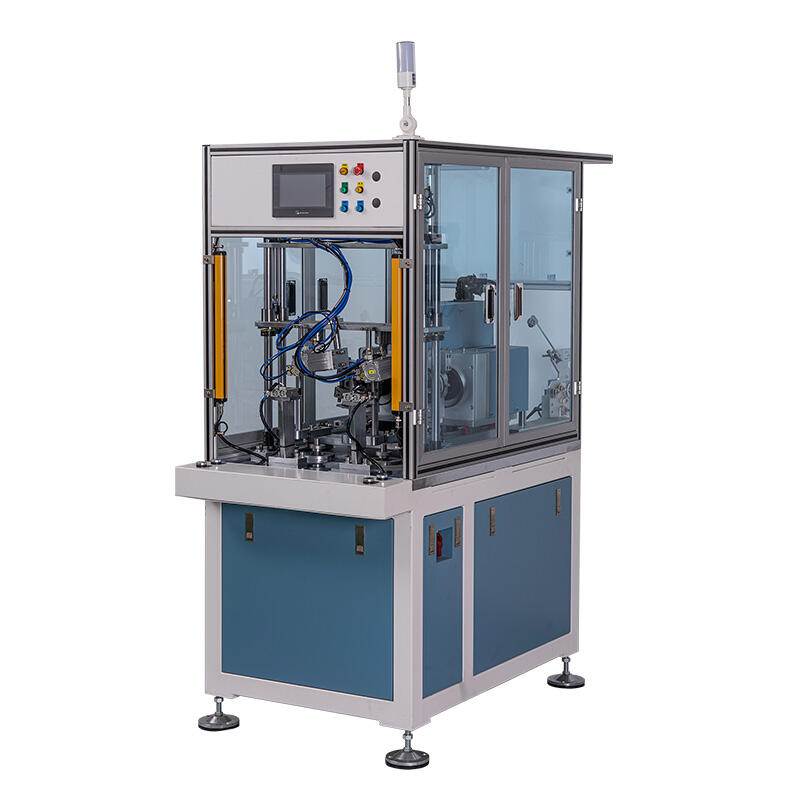
When engineers and drone manufacturers discuss what truly determines how far an unmanned aerial vehicle can fly on a single charge, the conversation almost always gravitates toward battery chemistry, airframe weight, and propeller efficiency. Yet one of the most decisive factors sits quietly inside the motor itself: the precision and consistency of the stator winding. The quality of this winding process directly shapes copper fill rate, thermal performance, and magnetic flux efficiency — all of which feed into the range equation in ways that are measurable, repeatable, and critical for commercial drone development. Understanding why Stator Winding Machinery plays such a central role in drone range gives engineers and procurement professionals the clarity they need to make smarter sourcing and production decisions.
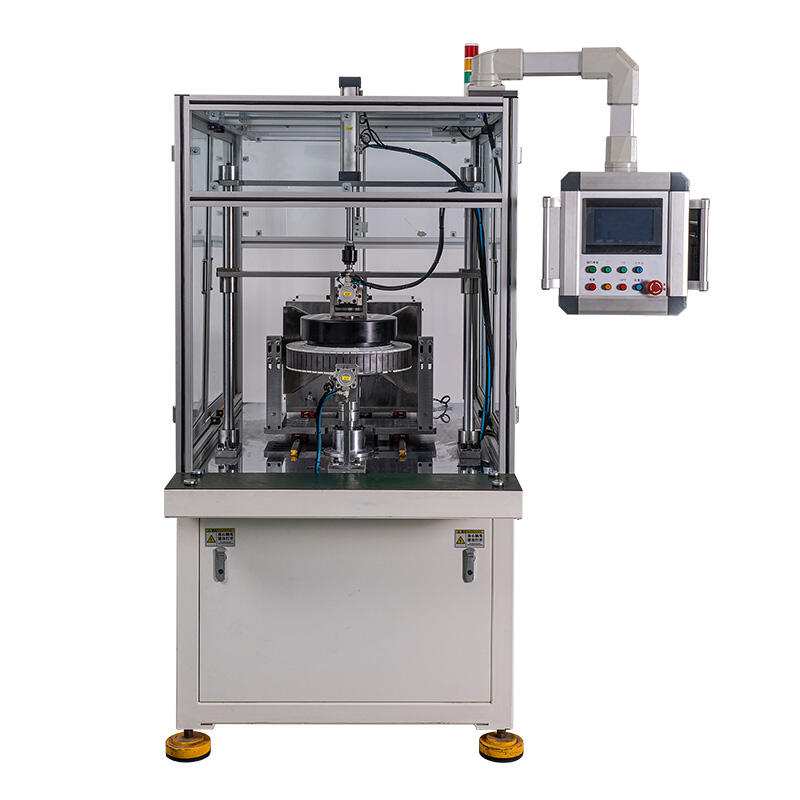
The drone industry has matured rapidly over the past decade, moving from hobbyist gadgets into mission-critical platforms used for delivery logistics, agricultural surveys, infrastructure inspection, and emergency response. In all of these applications, range is not merely a performance specification — it is a business constraint. Maximizing flight distance per charge cycle requires squeezing every watt of electrical energy into useful mechanical output, and that journey begins at the stator. Advanced Stator Winding Machinery exists precisely to ensure that this energy conversion process is as efficient, reliable, and consistent as possible across every motor unit that rolls off a production line.
The Connection Between Stator Winding Quality and Motor Efficiency
How Winding Geometry Shapes Electromagnetic Performance
A drone motor's ability to convert electrical energy into rotational force depends heavily on how tightly and uniformly the copper wire is wound around each tooth of the stator core. When winding geometry is inconsistent — meaning some coils are looser, some have wire crossings, and some have variable turn counts — the resulting magnetic field becomes uneven. This unevenness forces the electronic speed controller to compensate, drawing more current and generating more heat than a well-wound motor would require. The cumulative effect is a measurable reduction in electrical-to-mechanical efficiency, which translates directly into shorter flight times.
Precision Stator Winding Machinery eliminates this variability by applying consistent tension, accurate turn counts, and controlled wire placement for every coil in every motor. When every stator winding matches the design specification within tight tolerances, the resulting motors produce more torque per ampere of current drawn. For a drone that needs to lift a payload and sustain forward flight, this improvement in motor constant directly extends the range achievable on a fixed battery capacity. The winding machine is, in effect, the gatekeeper of motor consistency across mass production.
Copper Fill Rate and Its Impact on Resistance Losses
Copper fill rate refers to the proportion of the stator slot cross-section that is occupied by conductor material rather than insulation, air gaps, or misaligned wire. A higher fill rate means lower winding resistance, and lower resistance means less energy is lost as heat during motor operation. For drone motors, which are often run at high duty cycles during flight, even a small reduction in winding resistance translates into meaningful improvements in total flight time. This is where the mechanical precision of Stator Winding Machinery becomes economically significant.
Manual winding or low-quality automated winding equipment tends to produce inconsistent wire packing, leaving more dead space within the slot. Purpose-built Stator Winding Machinery designed for drone motor stators uses controlled nozzle trajectories and optimized tension profiles to achieve high and repeatable copper fill rates. The difference between a 65% fill rate and a 75% fill rate in a compact drone stator slot may sound incremental, but it cascades into observable gains in both motor efficiency and thermal stability. Thermal stability matters because a motor that runs cooler sustains its rated efficiency for longer, contributing further to drone range.
Why Drone Motor Stators Present Unique Winding Challenges
Compact Geometry and High Slot Count Complexity
Drone motors are not simply scaled-down versions of industrial motors. They are optimized for a very specific combination of high power density, low weight, and high rotational speed. This optimization typically results in stators that have a large outer diameter relative to the slot depth, combined with a high number of poles and slots for smooth torque delivery. Winding these compact, multi-slot stators accurately at production speed is a challenge that general-purpose winding equipment was never designed to meet. Specialized Stator Winding Machinery built for drone motor applications addresses these geometry-specific demands directly.
The tight clearances between stator teeth in high-pole-count designs mean that a winding needle must follow a precisely calculated path through very narrow passages without damaging wire insulation. Any insulation breach — even a microscopic nick in the enamel coating — can lead to inter-turn short circuits that degrade motor performance or cause outright failure. Advanced Stator Winding Machinery uses servo-controlled axes and application-specific needle guides to navigate these tight geometries safely and repeatably. This level of mechanical precision cannot be replicated through manual processes or generic winding tools.
The Role of Winding Tension in Coil Stability
Wire tension during the winding process affects two outcomes simultaneously: the tightness and consistency of the coil pack within the slot, and the risk of wire breakage or stretching. Tension that is too low produces loose, bulging coils that sit poorly in the slot and contribute to poor fill rate and mechanical resonance during high-speed operation. Tension that is too high risks stretching the wire, which increases its resistance and weakens the insulation. Achieving the correct tension window requires active tension control, which is a feature incorporated into professional-grade Stator Winding Machinery.
For drone motors, which experience significant vibration during flight, coil stability is not just an efficiency concern — it is a reliability concern. A coil pack that shifts position slightly under vibration can alter the motor's inductance profile, affecting the ESC tuning and potentially causing instability in the flight control system. This is why manufacturers who build motors for commercial drone platforms invest in high-quality Stator Winding Machinery that provides active tension control and programmable winding patterns tailored to each stator design. The investment pays off in lower warranty return rates and more predictable flight performance across production batches.
Production Consistency and Its Downstream Effect on Fleet Performance
Batch-to-Batch Uniformity in Motor Characteristics
When drone operators deploy multiple aircraft in a fleet — as is common in agricultural spraying, surveying, and logistics operations — motor-to-motor consistency becomes a critical operational parameter. If individual motors within a batch have different winding resistances, slightly different back-EMF constants, or uneven torque profiles due to winding variability, the flight controller on each drone must compensate differently. This creates unpredictable variations in hover efficiency, load response, and ultimately flight range from unit to unit. Consistent Stator Winding Machinery is the foundation of batch uniformity.
Programmable Stator Winding Machinery stores winding parameters digitally — including turn count, wire speed, tension setpoints, and termination sequences — and applies them identically to every stator processed. This digital repeatability is something that no manual or semi-manual winding method can match over a production run of thousands of units. The result is a tight distribution of motor electrical characteristics across the batch, which simplifies ESC tuning, reduces the need for individual motor calibration, and ultimately delivers more predictable range performance across an entire drone fleet.
Quality Control Integration and Process Traceability
Modern Stator Winding Machinery designed for drone motor production increasingly incorporates in-process quality monitoring features. These may include real-time tension logging, turn count verification, and alarm triggers for out-of-specification conditions. When a winding anomaly is detected during the process, the machine flags the affected stator before it moves further down the assembly line. This integration of quality control into the winding process itself reduces downstream inspection costs and prevents defective motors from reaching final assembly.
Traceability data generated by modern Stator Winding Machinery also supports post-market analysis. If a field failure is reported, manufacturers can correlate the failed unit's serial number with its winding process records to identify whether a process parameter drift contributed to the failure. This kind of data-driven quality management is increasingly expected by commercial drone OEMs and their enterprise customers, who require documented evidence of process control as part of supplier qualification. Investing in capable Stator Winding Machinery is therefore not just a production decision — it is a quality assurance and business continuity decision.
Selecting the Right Stator Winding Machinery for Drone Motor Production
Machine Configuration and Stator Compatibility
Drone motor stators come in a variety of outer diameters, slot counts, and tooth profiles depending on the application — from small indoor racing drones to heavy-lift commercial platforms. Not all Stator Winding Machinery is designed to accommodate this range of stator geometries. When evaluating equipment, manufacturers should assess the machine's adjustable tooling range, the diameter and profile of available winding needles, and the ease of changeover between different stator configurations. A machine that requires lengthy mechanical reconfiguration for each product changeover adds downtime costs that erode the productivity benefits of automation.
Multi-station configurations in Stator Winding Machinery are particularly valuable for drone motor production, as they allow simultaneous winding of multiple stators in a single machine cycle. This multiplies throughput without proportionally increasing the machine footprint or operator headcount. For a drone motor manufacturer scaling from prototype volumes to commercial production, the ability to increase capacity incrementally through multi-station tooling is a significant operational advantage. The Stator Winding Machinery designed specifically for drone motor light-duty applications exemplifies this kind of purpose-built engineering, combining dual-station productivity with the precise control requirements that drone stators demand.
Software Control, Programmability, and Ease of Use
The practical value of any piece of Stator Winding Machinery is heavily influenced by how easily and reliably its parameters can be programmed, saved, and recalled. A machine with intuitive human-machine interface software allows engineering teams to develop winding programs for new stator designs quickly, validate them through short trial runs, and store them for future production orders. This programmability reduces engineering lead time when new drone motor designs enter production and provides a reliable baseline for process audits.
For manufacturers who produce multiple drone motor variants — perhaps serving different customers or flight categories — programmable Stator Winding Machinery eliminates the risk of operator-dependent process variation. Once a winding program is validated and locked, every operator produces the same result by simply selecting the correct program and loading the stator fixture. This standardization supports scalable quality management and is an essential feature for any manufacturer aiming to supply drone motors to commercial OEMs with rigorous supplier quality requirements.
FAQ
How does Stator Winding Machinery directly affect drone flight range?
Stator Winding Machinery determines the quality, consistency, and copper fill rate of motor stator windings. Higher fill rates reduce winding resistance, which lowers energy losses and improves motor efficiency. More efficient motors draw less current to produce the same thrust, which means the battery lasts longer and the drone can fly farther. Precision Stator Winding Machinery ensures that this efficiency is achieved consistently across every motor unit in production.
Can manual winding produce the same quality as automated Stator Winding Machinery?
Manual winding can achieve acceptable results for prototype or very low-volume production but cannot match the repeatability, fill rate consistency, or throughput of dedicated Stator Winding Machinery. Drone motor stators have tight slot geometries and high pole counts that make manual winding particularly prone to inconsistency. For commercial production volumes, automated Stator Winding Machinery is essential to maintain the quality standards that drone OEMs require.
What features should I look for in Stator Winding Machinery for drone motor production?
Key features to evaluate include active wire tension control, programmable winding parameter storage, multi-station capability for higher throughput, compatibility with the specific stator diameter and slot count of your drone motor design, and in-process quality monitoring. Purpose-built Stator Winding Machinery for drone motor applications will typically offer all of these features configured for the compact geometries and fine wire gauges common in drone stators.
How does winding consistency affect drone fleet operations?
In a drone fleet, motor-to-motor consistency determines how uniformly each aircraft performs in terms of hover efficiency, load response, and achievable range. When Stator Winding Machinery produces motors with tightly matched electrical characteristics, ESC tuning parameters apply uniformly across the fleet, maintenance intervals are more predictable, and range performance is consistent from unit to unit. Inconsistent winding quality, by contrast, creates unpredictable performance variation that complicates fleet management and increases operational risk.
Table of Contents
- The Connection Between Stator Winding Quality and Motor Efficiency
- Why Drone Motor Stators Present Unique Winding Challenges
- Production Consistency and Its Downstream Effect on Fleet Performance
- Selecting the Right Stator Winding Machinery for Drone Motor Production
-
FAQ
- How does Stator Winding Machinery directly affect drone flight range?
- Can manual winding produce the same quality as automated Stator Winding Machinery?
- What features should I look for in Stator Winding Machinery for drone motor production?
- How does winding consistency affect drone fleet operations?