
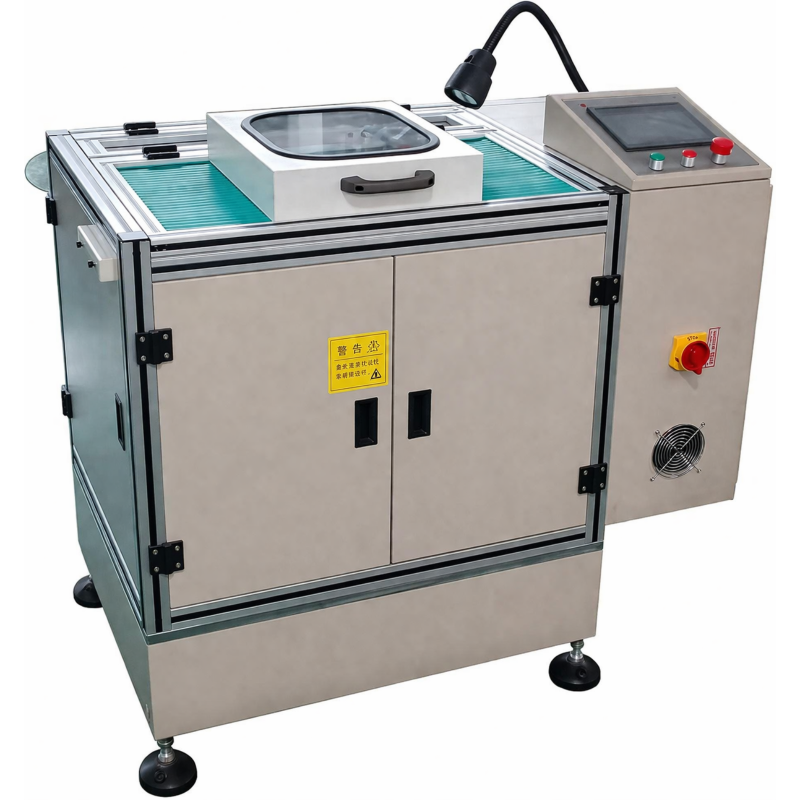
This stator insulation inserter is automatic equipment for placing slot insulation paper into the stators of small and medium-sized three-phase motors and generators. It brings paper feeding, edge folding, punching, forming, and insertion into one defined sequence. For a motor manufacturer, that sequence matters because insulation paper must be shaped and positioned consistently before later stator operations proceed. The machine is intended for applications where the workpiece falls within its documented core, diameter, paper-thickness, and edge-fold limits.
In practical terms, motor manufacturing automation is not only about reducing manual handling. It is about giving a repeatable slot-paper operation a clear place in the production flow. This stator insulation inserter supports that goal with automatic paper feeding and forming functions, while the operator handoff allows slot-number parameters to be adjusted when the stator configuration changes. Automatic slot-skipping insertion is also supported. These functions help organize the insulation step around the actual slot pattern rather than treating every stator as the same workpiece.
The stator insulation inserter performs several operations automatically: feeding the insulation paper, folding its edges, punching, forming, and inserting the prepared paper into the stator slots. Combining these actions within one machine helps keep the sequence close to the documented process. The machine is described as operating with low noise, high speed, and good forming quality. Actual results still depend on the selected paper, stator geometry, tooling condition, and operating setup.
Motor manufacturing automation can benefit from functions that simplify defined changes, but flexibility does not replace confirmation of the workpiece. A machine feature is useful when the stator core, slot pattern, insulation material, and production route have been checked together. Mold replacement for different stator slot types is described as convenient and fast; the appropriate mold and setup should still match the actual stator design.
The following values are taken from the existing product specification. They describe the stated working limits and machine requirements for this stator insulation inserter.
| Specification | Documented value |
|---|---|
| Stator core length limit | 20–90 mm |
| Stator outside diameter limit | ≤ Ø135 mm |
| Stator inside diameter limit | Ø20–Ø90 mm |
| Folded-edge height | 2–4 mm / 4–7 mm |
| Slot paper thickness | 0.188–0.35 mm |
| Cycle time | Approximately 0.5 second per slot |
| Power supply | 380 V, 50/60 Hz, 2 kW |
| Machine weight | Approximately 200 kg |
| Dimensions | 1200 × 650 × 1100 mm |
The approximately 0.5-second-per-slot figure gives a useful starting point for discussing slot paper insertion ROI, especially where an existing manual method is being reviewed. However, slot paper insertion ROI depends on the stator design, number of slots, material handling, setup time, operator allocation, and the production route around the machine. It should be considered with the full process rather than as a stand-alone cycle-time claim.
This stator insulation inserter is suited to small and medium-sized three-phase motor and generator stators within the stated limits. It can be considered for industrial motor production where the insulation-paper step needs automatic feeding, forming, and insertion. The existing product material also identifies fuel automotive and industrial applications. In either setting, the relevant question is whether the stator dimensions and required paper specification fit the documented range.
For a motor production cell, the machine can form part of an industrial motor assembly solution by handling the slot insulation stage between other stator operations. Its role is specific: it prepares and inserts insulation paper. Upstream material preparation, downstream coil work, material transfer, and broader line control remain separate process considerations. This scope distinction makes it easier to place the equipment within a defined work instruction.
Motor manufacturing automation is most useful when each production stage has clear inputs and outputs. Before the insulation operation, confirm the stator core and paper supplied to the machine. After the operation, confirm how the insulated stator moves to the next stage. The stator insulation inserter contributes to the insertion step; the surrounding material flow and line layout should be matched to the installation plan.
A CE-certified insulation equipment request should be discussed against the supplied product documentation and the requirements of the destination application. The existing page material states CE and ISO 9001 certification; confirm the current documents, configuration, and applicable scope for the intended installation. This keeps the inquiry focused on the machine actually being specified.
For a useful technical discussion, provide the stator core length, outside diameter, inside diameter, slot count, slot shape, insulation-paper thickness, required folded-edge height, and expected operating arrangement. These details help determine whether the stated range of the stator insulation inserter fits the intended workpiece. If multiple stator variants are planned, include their dimensions and slot configurations so tooling and changeover requirements can be considered.
Slot paper insertion ROI is clearer when the same process boundaries are used in every comparison. Consider paper preparation, insertion time, setup activity, inspection steps, and the way completed stators leave the station. A broader feature set may support flexibility, but it does not replace a confirmed process route. For manufacturers seeking an industrial motor assembly solution, this equipment offers a defined automatic approach to the slot-paper insertion operation within its documented specifications.
Paper thickness, folded-edge requirement, and stator dimensions should be reviewed as one operating set. A paper thickness within the stated 0.188–0.35 mm range does not by itself establish suitability when the slot profile or required fold differs. Likewise, a core that meets the stated length and diameter limits should be considered together with its slot arrangement. Providing these details at the inquiry stage supports a more relevant discussion of tooling, parameter settings, and the intended automatic insertion sequence.
The machine dimensions, power requirement, and approximate weight are also useful installation details. They help a production team plan the station around the documented 1200 × 650 × 1100 mm footprint, 380 V 50/60 Hz 2 kW power supply, and approximate 200 kg machine weight. Confirm site utilities and the selected configuration before installation.

 EN
