 EN
EN
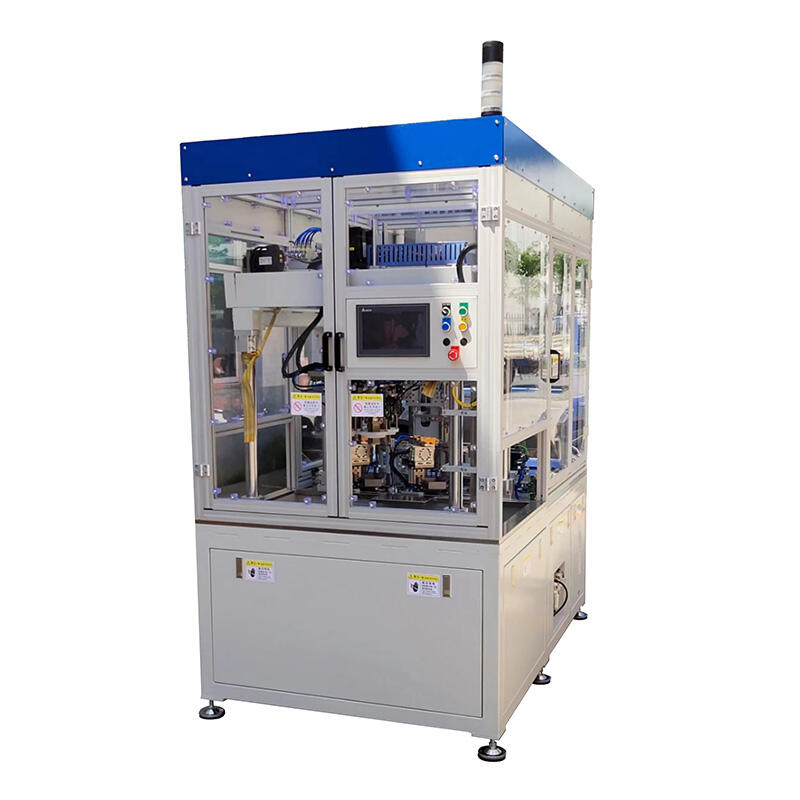
For manufacturers operating in the competitive electric motor and pump industry, finding ways to improve efficiency without overspending is a constant challenge. Motor Production Lines represent one of the most capital-intensive assets in any manufacturing facility, and every decision about upgrading them carries significant financial weight. The good news is that cost-effective improvements are not only possible — they are increasingly accessible thanks to advances in automation, smart controls, and modular engineering design.
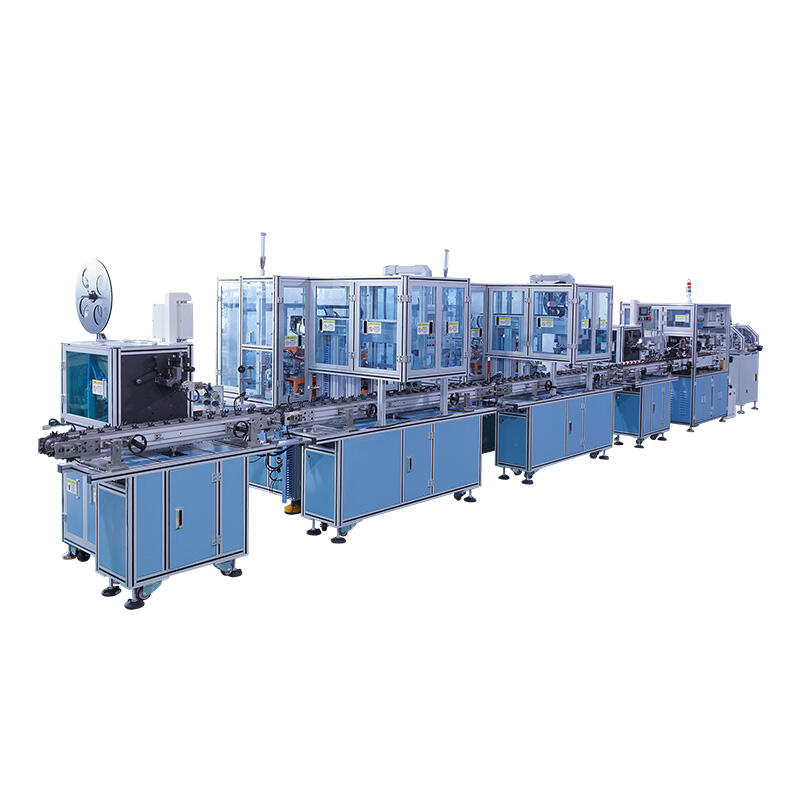
This article is designed to help production managers, plant engineers, and operations directors identify where the most impactful and budget-conscious upgrades can be made on Motor Production Lines. Rather than recommending a complete overhaul, the focus here is on targeted improvements that deliver measurable returns — whether through reduced cycle times, lower reject rates, better energy consumption, or improved workforce utilization. Understanding these strategic options can mean the difference between a facility that merely functions and one that genuinely competes.
Understanding the True Cost of Outdated Motor Production Lines
Hidden Inefficiencies in Legacy Systems
Many facilities continue to run Motor Production Lines that were installed a decade or more ago. While these lines may still be operational, they often carry hidden costs that slowly erode margins over time. Downtime for maintenance, manual rework to correct assembly errors, and slow changeover times between product variants all add up to a substantial drag on throughput and profitability.
The challenge with legacy systems is that individual inefficiencies are easy to overlook. A machine that takes 90 seconds to complete a task that a modern equivalent handles in 45 seconds may not seem urgent in isolation, but multiplied across dozens of stations and thousands of cycles per shift, the cumulative loss is enormous. Auditing Motor Production Lines with this lens reveals opportunities that are both economically significant and relatively straightforward to address.
Energy consumption is another area where older Motor Production Lines consistently underperform. Older pneumatic and hydraulic systems, unoptimized conveyor drives, and inefficient heating or curing processes all contribute to energy bills that are higher than necessary. A targeted energy audit is often the first step that generates quick wins with minimal capital outlay.
The Risk of Deferred Upgrades
Some manufacturers delay upgrades because the upfront costs appear prohibitive. However, deferring investment in Motor Production Lines carries its own financial risks. Equipment that is consistently pushed beyond its designed operational lifespan becomes increasingly prone to unexpected failures. These unplanned stoppages are typically far more costly than the scheduled maintenance or phased upgrade programs that could have prevented them.
Beyond direct costs, aging Motor Production Lines can limit a facility's ability to respond to customer demands for new motor specifications, tighter tolerances, or faster delivery windows. In competitive B2B markets, the inability to adapt quickly has long-term consequences that extend well beyond a single lost order. Strategic, phased investment in upgrades is almost always more cost-effective than reactive crisis management.
Targeted Automation Upgrades That Deliver the Best ROI
Automating High-Repetition Assembly Tasks
On most Motor Production Lines, there are a handful of assembly stations that are both highly repetitive and prone to human error. These are ideal candidates for automation investment. Tasks such as coil winding, stator insertion, bearing press-fitting, and rotor balancing are all areas where automated or semi-automated equipment delivers consistent quality while freeing operators for higher-value roles.
The key to cost-effective automation on Motor Production Lines is focusing on the highest-volume, highest-impact tasks first. A comprehensive review of defect logs and rework records will typically highlight the same two or three stations repeatedly. Directing automation investment toward these stations produces the fastest and most measurable ROI, often recovering the investment cost within 12 to 24 months depending on production volume.
It is also worth considering semi-automation as an intermediate step. Collaborative robot systems, automated feeding mechanisms, and vision-guided assembly aids can significantly improve consistency and speed without requiring the same capital commitment as full automation. These solutions are increasingly modular and compatible with existing Motor Production Lines, reducing integration complexity and cost.
Smart Conveyor and Material Handling Integration
The conveyor and material handling infrastructure that connects stations on Motor Production Lines is often overlooked during upgrade planning. Yet inefficiencies in this area can create bottlenecks that negate performance improvements made elsewhere on the line. Upgrading to servo-driven or variable-frequency-drive conveyors allows the line to adjust pacing dynamically based on real-time production flow rather than running at a fixed, conservative speed.
Integrating smart sensors and RFID tracking into the conveyor system also allows Motor Production Lines to collect granular process data at each station. This data is invaluable for identifying bottlenecks, predicting maintenance needs, and validating quality at every stage of assembly. The installation of such systems is relatively low-cost compared to major machine upgrades, yet the operational intelligence gained can drive significant efficiency improvements over time.
Control System Modernization on Motor Production Lines
Upgrading PLCs and HMI Interfaces
One of the most cost-effective upgrades available for Motor Production Lines is the modernization of programmable logic controllers (PLCs) and human-machine interfaces (HMIs). Older control systems often lack the connectivity, processing power, and software flexibility needed to support modern production management approaches. Replacing or supplementing aging PLCs with current-generation equivalents enables integration with MES (Manufacturing Execution Systems) and data analytics platforms.
Modern HMI panels provide operators with real-time visual feedback on line status, machine health, and production metrics. On Motor Production Lines, this visibility enables faster response to faults, reduces the time operators spend diagnosing problems, and improves overall equipment effectiveness (OEE). The cost of PLC and HMI upgrades is generally modest relative to the operational improvements they enable, making them a logical early step in any upgrade program.
Control system upgrades also support faster product changeovers. Many facilities running Motor Production Lines produce multiple motor variants with different winding specifications, frame sizes, or performance ratings. Modern PLCs with recipe management capabilities allow operators to switch between product configurations in minutes rather than hours, dramatically increasing line flexibility and responsiveness to customer orders.
Predictive Maintenance Through IoT Connectivity
Connecting Motor Production Lines to IoT (Internet of Things) monitoring platforms is another upgrade that offers exceptional cost-effectiveness relative to its impact. Vibration sensors, thermal cameras, power quality analyzers, and acoustic monitors can all be retrofitted to existing machinery at relatively low cost. The data these devices collect enables a shift from time-based preventive maintenance to condition-based predictive maintenance.
The financial benefit of predictive maintenance on Motor Production Lines is well-documented in industrial practice. By replacing components only when data indicates they are approaching failure — rather than on a fixed schedule — facilities reduce both unnecessary parts consumption and the risk of unexpected breakdowns. Over a 12-month period, a well-implemented predictive maintenance program can reduce maintenance-related downtime by a substantial margin while also lowering total maintenance costs.
Quality Control Enhancements That Reduce Waste and Rework
Inline Vision Inspection Systems
Defect detection is a critical function on Motor Production Lines, and traditional end-of-line inspection creates a significant lag between when a defect is introduced and when it is caught. By the time a faulty component is identified at the final inspection stage, it may have traveled through many additional assembly stations — consuming labor, materials, and time. Inline vision inspection systems address this problem by catching defects at or immediately after the station where they originate.
Modern machine vision systems can inspect motor components for dimensional accuracy, surface defects, correct assembly orientation, and proper placement of fasteners or electrical connections — all at production speeds that do not create bottlenecks. Integrating these systems into Motor Production Lines reduces scrap rates, minimizes rework labor, and improves the consistency of the finished product reaching the customer.
The return on investment for inline quality systems on Motor Production Lines is particularly strong in facilities with high scrap or rework rates. Even a modest reduction in the percentage of defective units can translate into substantial material and labor savings over the course of a production year, often justifying the upgrade cost within a single fiscal period.
Electrical Testing and Performance Validation
For manufacturers of electric motors and pumps, electrical performance testing is a non-negotiable quality gate. Upgrading the testing stations on Motor Production Lines to include automated high-potential (Hi-Pot) testing, surge comparison testing, and locked-rotor current measurement eliminates the variability inherent in manual testing procedures. Automated test stations apply standardized parameters consistently and record results directly into the production database.
This traceability is increasingly important for B2B customers who require documented quality evidence as part of their supply chain compliance programs. Motor Production Lines equipped with automated electrical testing not only produce more reliable motors but also generate the audit-ready quality records that major OEM customers demand. The upgrade pays dividends in both defect reduction and customer confidence.
Workforce and Process Optimization to Complement Equipment Upgrades
Lean Manufacturing Principles Applied to Motor Assembly
Even the most modern equipment investment delivers suboptimal results if the surrounding process is poorly organized. Applying lean manufacturing principles to Motor Production Lines can unlock significant efficiency improvements at minimal cost. Value stream mapping exercises identify waste in the form of unnecessary motion, excessive work-in-progress inventory, and non-value-adding process steps that accumulate over years of incremental change.
Reorganizing workstation layouts, standardizing tooling, and implementing visual management systems are all examples of low-cost interventions that meaningfully improve throughput and quality on Motor Production Lines. These process improvements also make it easier for workers to identify problems, follow correct procedures, and maintain consistent output quality — all without significant capital investment.
Cross-Training and Skill Development for Line Flexibility
As Motor Production Lines become more automated and data-driven, the skill profile of the operators who manage them must evolve accordingly. Investing in cross-training programs allows operators to cover multiple stations, reduces the vulnerability of the line to absenteeism or turnover, and enables more flexible scheduling. Workers who understand the full assembly sequence are better equipped to identify root causes when quality problems arise.
Training investment on Motor Production Lines also pays dividends when new equipment or processes are introduced. Operators who are comfortable with technology and empowered to contribute process improvement ideas are a genuine competitive asset. The combination of skilled, adaptable people and well-configured automated equipment defines the most productive and resilient Motor Production Lines in the industry today.
FAQ
What is the most cost-effective first upgrade for an older motor production line?
The most cost-effective starting point for most Motor Production Lines is a control system upgrade, specifically modernizing PLCs and HMI interfaces. This upgrade is relatively affordable, does not require replacing existing machinery, and immediately improves visibility, flexibility, and connectivity. It also lays the foundation for subsequent upgrades such as IoT monitoring and MES integration.
How do inline quality systems reduce overall production costs on motor production lines?
Inline quality systems on Motor Production Lines catch defects close to their point of origin, preventing defective components from consuming additional assembly resources. This reduces scrap material costs, minimizes rework labor, and improves first-pass yield rates. Over a full production year, even a small improvement in defect detection efficiency can generate savings that significantly outweigh the cost of the inspection system itself.
Can automation upgrades be applied incrementally to existing motor production lines?
Yes, one of the major advantages of modern automation technology is its modular and scalable nature. Motor Production Lines can be upgraded incrementally by targeting individual high-impact stations rather than undertaking a complete replacement. Semi-automated solutions, collaborative robots, and smart conveyor upgrades can all be integrated into existing lines with manageable disruption to ongoing production schedules.
How does predictive maintenance differ from standard preventive maintenance on motor production lines?
Standard preventive maintenance on Motor Production Lines replaces components on a fixed time or cycle-based schedule regardless of actual condition. Predictive maintenance uses real-time sensor data — such as vibration, temperature, and electrical consumption — to replace components only when data indicates they are approaching failure. This approach reduces unnecessary parts replacement, lowers maintenance costs, and significantly reduces the risk of unplanned production stoppages.
Table of Contents
- Understanding the True Cost of Outdated Motor Production Lines
- Targeted Automation Upgrades That Deliver the Best ROI
- Control System Modernization on Motor Production Lines
- Quality Control Enhancements That Reduce Waste and Rework
- Workforce and Process Optimization to Complement Equipment Upgrades
-
FAQ
- What is the most cost-effective first upgrade for an older motor production line?
- How do inline quality systems reduce overall production costs on motor production lines?
- Can automation upgrades be applied incrementally to existing motor production lines?
- How does predictive maintenance differ from standard preventive maintenance on motor production lines?