 EN
EN
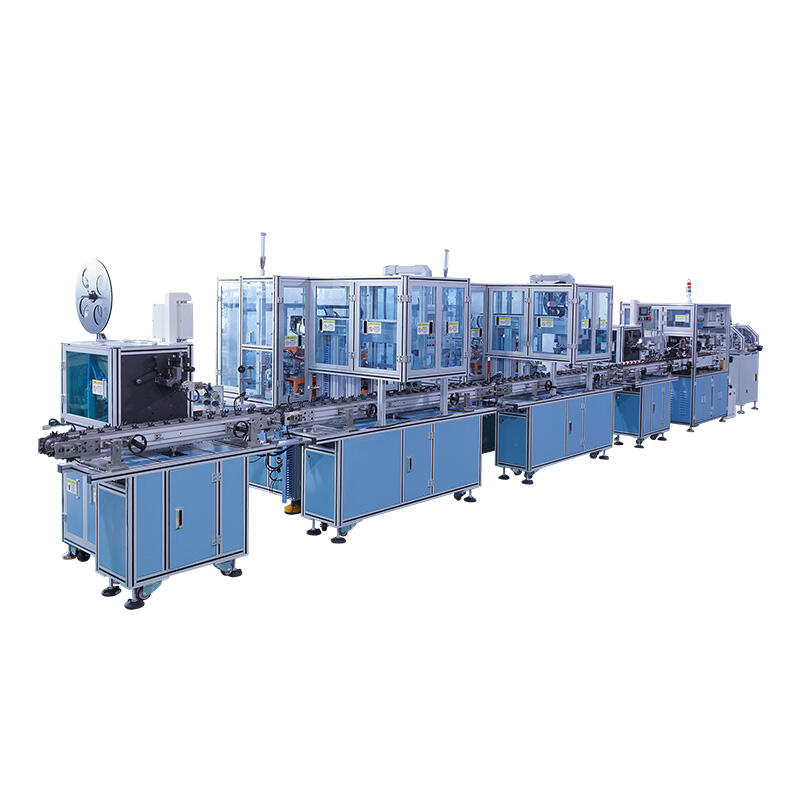
The drone manufacturing industry is undergoing a profound transformation, and at the heart of this shift lies the evolution of Motor Production Lines. As unmanned aerial vehicles move from niche experimental technology into mainstream commercial and industrial applications, the demand for high-precision, high-throughput motor manufacturing has never been greater. Traditional manual assembly methods simply cannot keep pace with the volume, consistency, and quality requirements that today's drone market demands. Smart automation is no longer an optional upgrade — it is the defining factor that separates competitive manufacturers from those left behind.
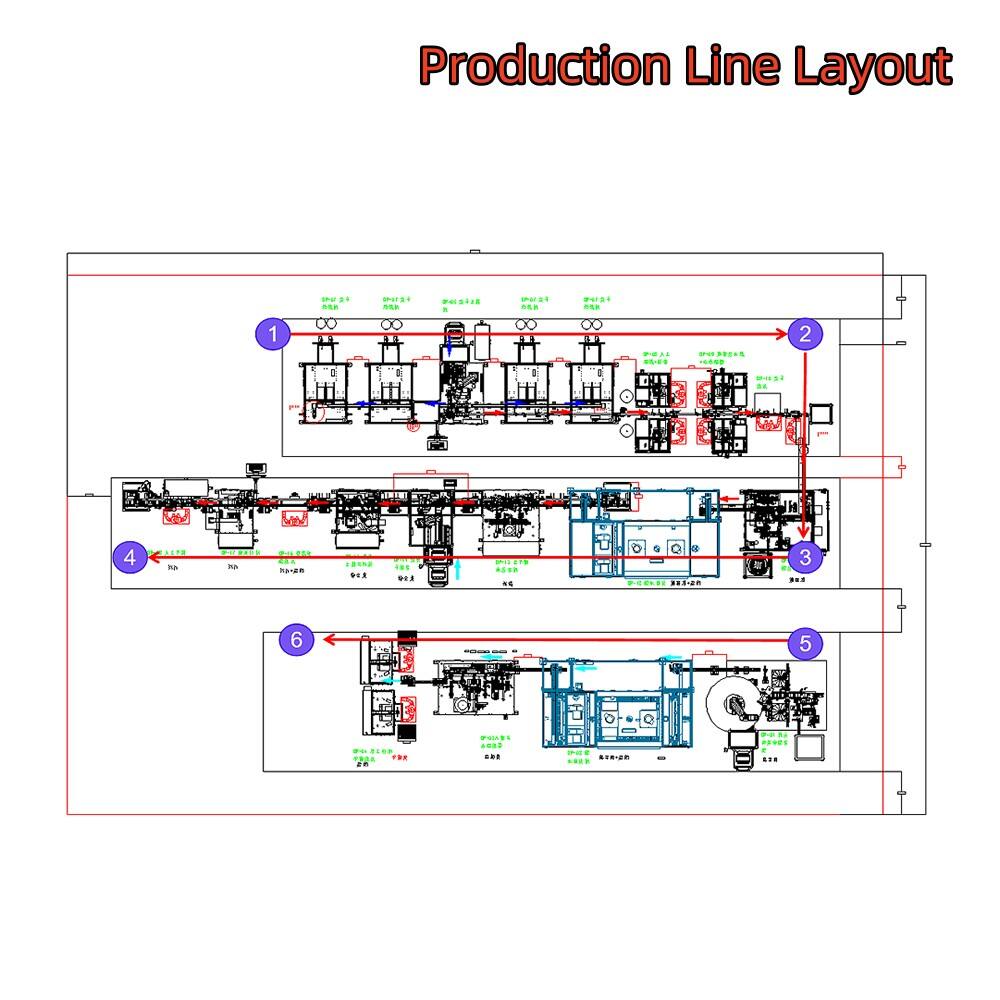
Modern Motor Production Lines designed for drone manufacturing are integrating robotics, machine vision, real-time data analytics, and advanced process control into unified smart systems. These intelligent platforms do not merely automate repetitive tasks — they optimize the entire production workflow, reduce defect rates, and enable manufacturers to scale output without proportional increases in labor cost or error risk. Understanding how this technology is shaping the future of drone motor manufacturing is essential for any business looking to remain relevant and profitable in a rapidly evolving landscape.
The Transformation of Drone Motor Manufacturing
From Manual Assembly to Intelligent Automation
For years, drone motor manufacturing relied heavily on manual labor at critical assembly stages. Skilled technicians wound stator coils, pressed bearings, installed magnets, and performed quality inspections by hand. While craftsmanship had its place, this approach created significant bottlenecks in output capacity, introduced human-induced variability, and made consistent quality control extremely difficult to maintain at scale. Motor Production Lines built on intelligent automation have fundamentally changed this equation.
Today's automated systems handle stator winding, rotor assembly, shaft pressing, balancing, and final performance testing in continuous, synchronized sequences. Each station in a smart Motor Production Line communicates with upstream and downstream processes, creating a cohesive digital workflow rather than a collection of isolated operations. This systemic integration is what enables modern manufacturers to achieve both higher throughput and tighter tolerances simultaneously — goals that were historically in tension with one another.
The shift is also cultural. Manufacturers who have invested in smart Motor Production Lines report changes not just in output metrics, but in how engineering teams approach process design. When data from every production station is captured and analyzed continuously, improvement opportunities become visible in ways that manual observation could never reveal. This feedback-driven culture of continuous improvement is itself a competitive advantage that compounds over time.
Why Drone Motors Demand Precision Manufacturing
Drone motors — particularly FPV and commercial UAV motors — operate under uniquely demanding conditions. They must deliver precise torque and RPM responses in milliseconds, maintain thermal stability during sustained flight, and do so while weighing only a fraction of their industrial counterparts. Any deviation in rotor balance, winding uniformity, or magnetic alignment directly impacts flight stability, efficiency, and lifespan. This is why generic Motor Production Lines designed for conventional applications cannot simply be repurposed for drone motor manufacturing.
Smart Motor Production Lines purpose-built for drone applications incorporate specialized tooling, micro-tolerance assembly fixtures, and AI-assisted inspection systems that can detect imperfections invisible to the human eye. For example, machine vision systems can identify stator winding irregularities at the micron level before they propagate into completed motors and generate costly rework or field failures. This level of precision is only achievable through dedicated automation architecture designed specifically around drone motor specifications.
Key Technologies Driving Smart Motor Production Lines
Robotics and Adaptive Handling Systems
The physical backbone of any advanced Motor Production Line is its robotic handling infrastructure. Collaborative robots and high-speed articulated arms now perform tasks that once required the most delicate human touch — including placing fragile magnet assemblies, threading micro-gauge winding wire, and inserting precision bearings with sub-millimeter positional accuracy. These systems operate at speeds and consistency levels that human operators simply cannot sustain across an entire production shift.
What makes modern robotics particularly powerful in Motor Production Lines is their adaptability. Unlike rigid automation of previous generations, today's systems can be reprogrammed to accommodate design changes or new motor variants with minimal downtime. A manufacturer producing multiple motor SKUs for different drone platforms can switch production configurations through software updates rather than mechanical retooling. This flexibility is critical in the fast-evolving drone industry where product cycles are short and engineering changes are frequent.
Force-torque sensors integrated into robotic end-effectors allow assembly operations to self-correct in real time. If a component resists insertion beyond acceptable thresholds, the system flags the event, rejects the part, and logs the anomaly for quality review — all without human intervention. This closed-loop responsiveness is a hallmark of truly intelligent Motor Production Lines and directly contributes to first-pass yield improvements.
Machine Vision and Automated Quality Control
Quality assurance in drone motor manufacturing traditionally required dedicated inspection personnel stationed throughout the production floor. Smart Motor Production Lines are replacing this approach with embedded machine vision systems that inspect components at every stage of assembly — not just at final test. High-resolution cameras paired with deep learning algorithms can classify surface defects, verify dimensional accuracy, confirm correct part placement, and even assess winding quality based on visual patterns that correlate with electrical performance.
The advantage of in-line vision inspection within Motor Production Lines goes beyond defect detection. When quality data is captured at each station and correlated across production batches, manufacturers can identify systematic process drift before it results in defective output. Predictive quality control — anticipating problems before they occur — is only possible when inspection is continuous, data is structured, and analytical tools are built into the production system architecture.
For drone motors specifically, automated electrical performance testing at end-of-line is another critical element. Smart Motor Production Lines incorporate dynamic test stations that spin each motor under controlled load conditions, measure back-EMF waveforms, assess vibration signatures, and validate RPM linearity — all in a matter of seconds per unit. Motors that fall outside specification are automatically sorted and flagged, ensuring that only conforming units proceed to packaging and shipment.
Data Integration and Manufacturing Intelligence
The intelligence in a smart Motor Production Line is not just mechanical or optical — it is fundamentally data-driven. Every sensor reading, every robot cycle, every inspection result, and every test outcome is captured, timestamped, and stored in a unified manufacturing data platform. This data architecture enables manufacturers to build detailed traceability records for every motor unit, an increasingly important requirement for commercial drone operators who must document component provenance for regulatory compliance and warranty purposes.
Beyond traceability, manufacturing intelligence platforms connected to Motor Production Lines enable predictive maintenance of production equipment. By analyzing vibration patterns in assembly robots, thermal profiles in winding stations, and cycle time deviations across shifts, maintenance teams can schedule interventions before failures occur — preventing the unplanned downtime that represents one of the most significant hidden costs in high-volume manufacturing environments.
Scalability and Flexibility in Drone Motor Production
Designing Lines for Volume Growth
One of the most strategically important characteristics of modern Motor Production Lines is their scalability architecture. Unlike fixed traditional production systems, smart lines can be designed with modular station configurations that allow capacity to be expanded incrementally as order volumes grow. A manufacturer serving early-stage drone market segments can begin with a core automated line and add stations — winding modules, additional test benches, extra handling robots — without rebuilding the entire system from scratch.
This modularity also extends to product mix flexibility. A well-architected Motor Production Lines platform can support production of multiple motor families — from lightweight FPV racing motors to heavier-lift commercial UAV powerplants — by changing tooling sets and production recipes within the same physical line footprint. For manufacturers serving diverse drone OEM customers, this versatility directly translates into reduced capital expenditure and faster response to market demand shifts.
Scalability also applies to quality output. As Motor Production Lines accumulate operational data over time, machine learning models trained on that data become progressively better at optimizing winding parameters, assembly sequences, and test thresholds for each motor variant. The line effectively improves itself through experience — a capability that simply has no equivalent in manual production environments.
Integration with Broader Factory Automation Ecosystems
Smart Motor Production Lines do not operate in isolation. In advanced drone manufacturing facilities, motor production systems are integrated with upstream supply chain management platforms, real-time inventory tracking, and downstream final assembly and test operations. When a production line receives updated build schedules from an enterprise resource planning system, it can automatically adjust station parameters, queue component kitting operations, and pre-configure test profiles — all without manual operator intervention.
This level of factory-wide integration is increasingly the standard that major drone OEMs expect from their manufacturing partners. Suppliers operating smart Motor Production Lines that can demonstrate seamless data exchange with customer quality management systems and supply chain platforms have a significant competitive advantage in procurement evaluations. The ability to provide real-time production status visibility and digital quality records is becoming a baseline expectation rather than a differentiator in many commercial UAV supply chains.
Business and Strategic Implications for Manufacturers
Total Cost of Ownership and Return on Investment
Investing in smart Motor Production Lines requires significant upfront capital commitment, and manufacturers must evaluate this investment through a rigorous total cost of ownership framework. While initial line installation costs are higher than equivalent manual capacity, the operating cost profile changes dramatically over time. Labor costs per unit drop substantially, defect-related rework costs decrease as first-pass yields improve, and material waste is reduced through tighter process control. When these factors are modeled across a realistic production volume ramp, the payback period for advanced Motor Production Lines is typically far shorter than it appears at first glance.
Manufacturers should also factor the revenue-side implications of automation investment into their ROI analysis. Smart Motor Production Lines enable faster time-to-volume for new motor designs, which means drone OEM customers can accelerate their own product development cycles when working with automated production partners. This responsiveness commands premium positioning in supplier relationships and supports higher pricing power relative to competitors still operating manual production environments.
Competitive Positioning in the Drone Supply Chain
The drone industry is moving rapidly toward volume scale that only automated production can support. Delivery drone networks, agricultural UAV fleets, and infrastructure inspection programs all require motors in quantities that strain manual production capacity. Manufacturers who have invested early in smart Motor Production Lines are positioning themselves to capture this volume growth rather than watching it flow to better-equipped competitors.
Beyond volume capability, quality certification is increasingly important in commercial drone supply chains. Regulatory frameworks for commercial UAV operations in multiple jurisdictions require documented quality management systems with traceability to component level. Smart Motor Production Lines that generate comprehensive digital quality records inherently support these certification requirements, reducing the administrative burden on manufacturers while simultaneously strengthening their compliance posture with OEM customers and regulatory authorities.
The strategic message for drone motor manufacturers is clear: smart Motor Production Lines are not just an operational tool — they are a market access mechanism. As the commercial drone industry matures and quality expectations rise, manufacturers without automated production capabilities will find themselves progressively locked out of the most valuable customer segments.
FAQ
What distinguishes a smart Motor Production Line from a standard automated line?
A standard automated line replaces manual labor with machines but operates with fixed programming and limited feedback capabilities. A smart Motor Production Line goes further by integrating real-time data capture, machine vision inspection, adaptive robotics, and manufacturing intelligence software that allows the system to monitor, adjust, and improve its own performance continuously. The result is not just faster production, but production that learns and optimizes over time.
How long does it typically take to implement a fully automated Motor Production Line for drone motors?
Implementation timelines for smart Motor Production Lines vary based on line complexity, motor design specifications, and site readiness. A typical fully automatic FPV motor production line project — from initial design through installation, commissioning, and operator training — generally spans several months. Phased implementation approaches, where core automation is installed first and additional modules are added progressively, can allow manufacturers to begin production earlier while continuing to expand line capability.
Can Motor Production Lines handle multiple motor designs or sizes on the same physical line?
Yes. Modern smart Motor Production Lines are designed with configurable tooling and software-driven production recipes that allow different motor variants to be produced on the same infrastructure. Changeover between variants is managed through automated parameter adjustments and, in some cases, quick-change tooling systems. This flexibility is particularly valuable for manufacturers serving multiple drone OEM customers with different motor specifications across a shared production footprint.
What role does data play in improving Motor Production Lines over time?
Data is the continuous improvement engine within smart Motor Production Lines. Every cycle, inspection result, test outcome, and process parameter reading contributes to a growing operational dataset. Over time, analytical tools and machine learning models applied to this data reveal correlations between process variables and output quality, enabling manufacturers to refine settings, predict equipment maintenance needs, and systematically improve yield rates and throughput. The longer a smart Motor Production Line operates, the more intelligent and optimized it becomes.
Table of Contents
- The Transformation of Drone Motor Manufacturing
- Key Technologies Driving Smart Motor Production Lines
- Scalability and Flexibility in Drone Motor Production
- Business and Strategic Implications for Manufacturers
-
FAQ
- What distinguishes a smart Motor Production Line from a standard automated line?
- How long does it typically take to implement a fully automated Motor Production Line for drone motors?
- Can Motor Production Lines handle multiple motor designs or sizes on the same physical line?
- What role does data play in improving Motor Production Lines over time?