 EN
EN
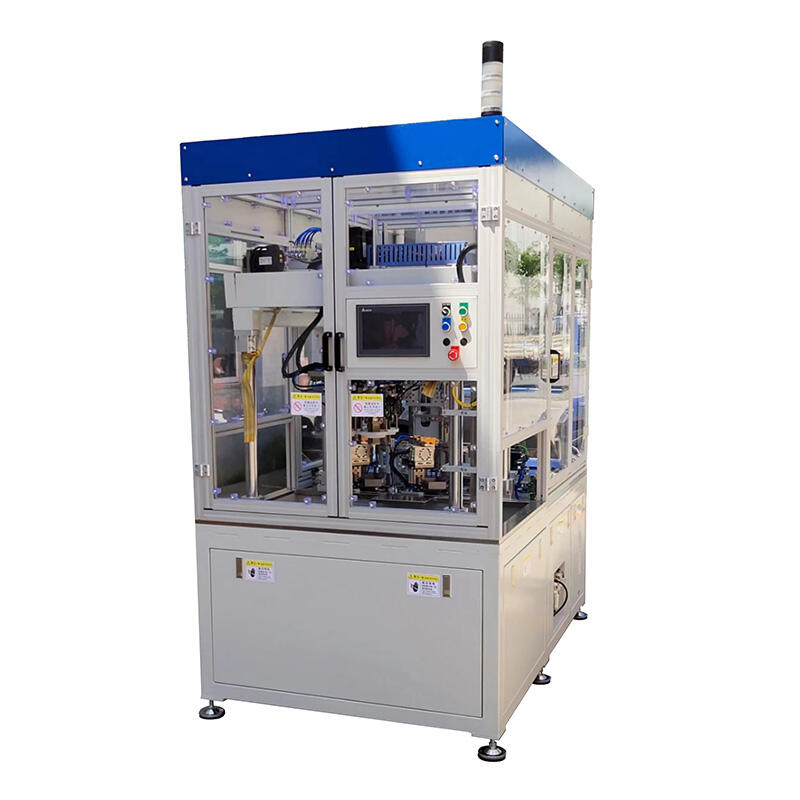
The drone industry is evolving at an unprecedented pace, and the manufacturing infrastructure behind it must keep up. At the center of this manufacturing revolution are Motor Production Lines — highly engineered systems designed to produce drone motors with the speed, precision, and consistency that modern aerial applications demand. Whether for FPV racing drones, commercial delivery UAVs, or industrial inspection platforms, the quality of the motor directly determines the reliability and performance of the final product. This makes the design and capability of Motor Production Lines one of the most strategically important investments a drone manufacturer can make.
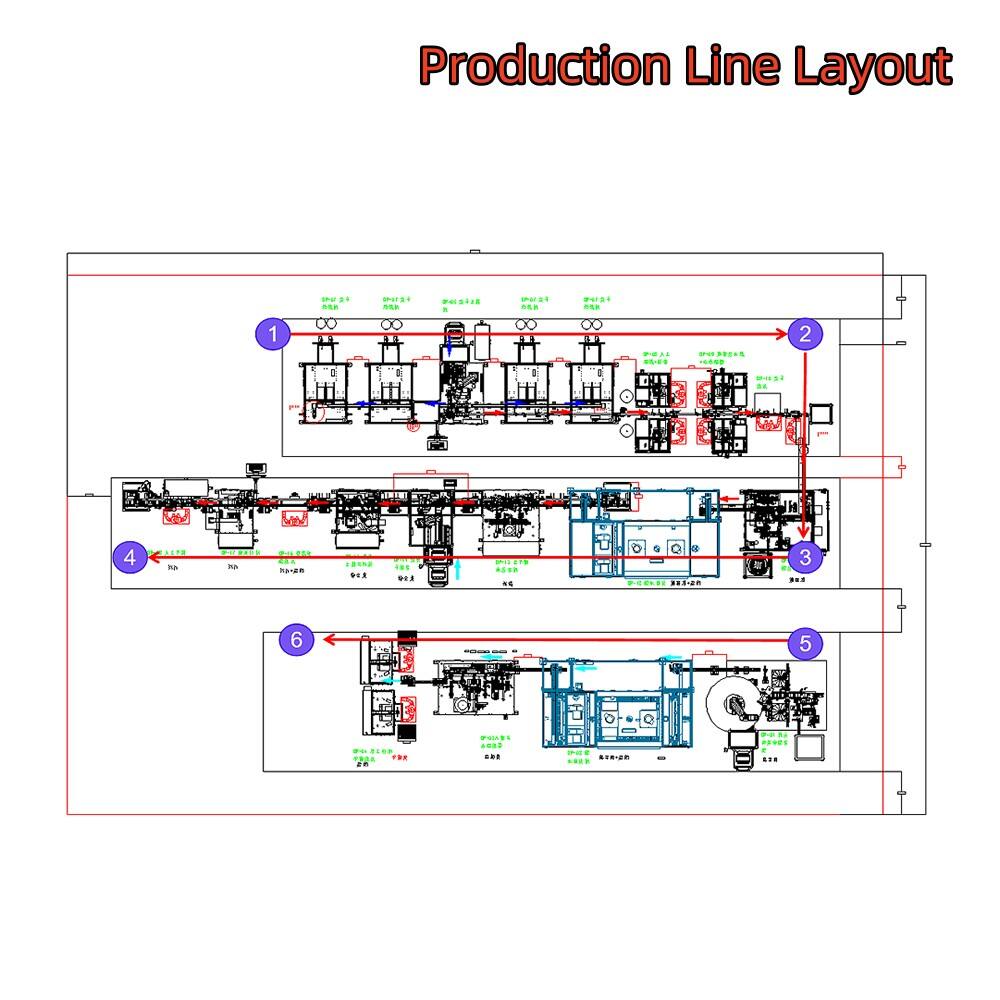
High-speed Motor Production Lines purpose-built for the drone sector represent a convergence of automation technology, precision engineering, and industry-specific process knowledge. These lines are not generic motor assembly systems repurposed from other industries — they are architected specifically around the dimensional tolerances, winding specifications, magnetization requirements, and output volumes unique to drone motor manufacturing. Understanding how these systems are structured, what makes them high-speed, and why they matter to production-scale drone companies is essential for anyone involved in UAV hardware manufacturing or supply chain investment decisions.
The Architecture of High-Speed Motor Production Lines for Drones
Core Subsystems That Define Line Performance
A high-speed drone motor production line is not a single machine — it is an integrated sequence of process stations, each performing a critical step in transforming raw components into a finished, tested motor. The typical architecture includes stator winding stations, rotor magnetization units, bearing press-fit stations, assembly and alignment systems, and automated quality inspection modules. Each of these subsystems must operate in synchronized harmony to sustain high throughput without introducing quality defects.
The stator winding station is often considered the most technically demanding node in Motor Production Lines for drones. Drone motors, particularly brushless outrunner designs, require extremely tight coil winding consistency across all poles. Automated winding machines use servo-controlled tension management and precision needle-winding or toroidal-winding mechanisms to ensure uniform wire distribution, correct turn counts, and minimal insulation damage. Deviations at this stage propagate through the entire motor's electromagnetic performance, making winding automation a non-negotiable priority.
Rotor assembly stations handle the magnetization and placement of permanent magnets onto the rotor bell. High-speed Motor Production Lines use multi-pole magnetization fixtures calibrated to the exact pole count of each motor model, ensuring consistent magnetic flux density. Automated adhesive dispensing and UV curing systems are integrated to bond magnets with the precise placement required to minimize vibration and maximize torque output. This level of process control is only achievable at production scale through full automation.
Integration of Inline Quality Control Systems
One of the defining features of modern Motor Production Lines for the drone industry is the seamless integration of inline quality control rather than end-of-line inspection only. Vision systems, laser measurement modules, and back-EMF testing stations are embedded throughout the line, checking critical parameters at each process stage. This approach catches defects early, preventing the waste of additional processing on already-defective components.
Inline resistance and inductance measurement stations verify coil winding integrity immediately after the stator winding process. Any stator that falls outside specification is automatically diverted before proceeding to the next stage. Similarly, automated balancing checks on assembled rotors identify mass asymmetry that would cause vibration in flight. This multi-stage inspection architecture is what allows high-speed Motor Production Lines to maintain quality yields that are commercially viable at volume production levels.
Data capture and traceability systems add another dimension of value. Each motor produced on modern Motor Production Lines is assigned a unique identifier, and all process parameters — torque values, resistance readings, dimensional measurements — are logged and associated with that identifier. This traceability capability is increasingly demanded by commercial drone operators and regulatory bodies, and it can only be delivered efficiently through fully automated production infrastructure.
Speed and Throughput Engineering in Drone Motor Lines
What Makes a Motor Production Line Truly High-Speed
The term 'high-speed' in the context of Motor Production Lines refers to several distinct but interrelated performance dimensions. Raw cycle time per unit is the most obvious metric — measured in seconds per motor from start to finish — but it is not the only one. Line availability, changeover time between motor models, defect-induced downtime, and yield rate all contribute to the actual effective output rate that a manufacturer can depend on for production planning.
Modern high-speed Motor Production Lines achieve per-unit cycle times that are dramatically shorter than manual or semi-automated assembly methods. Fully automated stator winding, for instance, can complete a multi-pole stator in a fraction of the time required by even skilled manual operators, while simultaneously delivering superior consistency. When this time advantage is compounded across all process stations and multiplied by 24-hour operating capability, the throughput advantage over manual production becomes commercially transformative.
Parallel processing architecture — where multiple units progress through different stations simultaneously rather than sequentially — is a key structural design choice in high-throughput Motor Production Lines. This pipelining approach keeps all stations active simultaneously, maximizing the utilization of capital equipment and minimizing idle time. Effective implementation requires careful balancing of station cycle times so that no single station becomes a consistent bottleneck.
Flexibility and Model Changeover Capability
The drone motor market is characterized by significant model variety. Different drone applications require motors with different stator diameters, winding configurations, KV ratings, and physical dimensions. A production line that can only manufacture a single motor model efficiently offers limited commercial value to a drone manufacturer with a diverse product portfolio. High-speed Motor Production Lines designed for the drone industry increasingly address this challenge through rapid changeover architectures.
Quick-change tooling systems, recipe-based machine parameter switching, and modular fixture designs allow modern Motor Production Lines to transition between motor models with minimal downtime. Instead of hours of mechanical reconfiguration, operators can execute a model change in minutes by calling up a stored parameter set and swapping standardized tooling inserts. This flexibility preserves the throughput advantage of automation across a broader range of production scenarios.
Some advanced Motor Production Lines for drones support mixed-model production scheduling, where different motor variants are processed on the same line within a single shift according to demand priorities. This capability requires sophisticated line control software that can manage recipe transitions dynamically and route components correctly through shared process stations. For drone manufacturers managing diverse customer orders, this operational flexibility can be a significant competitive advantage.
Process Automation Depth in Drone Motor Manufacturing
Levels of Automation and Their Impact on Output Quality
Automation depth in Motor Production Lines exists on a spectrum. At one end are semi-automated lines where machines perform specific high-precision tasks but human operators handle loading, unloading, and inter-station transfer. At the other end are fully automated lines where robotic handling, conveyor systems, and automated inspection manage all material movement with minimal human intervention. The appropriate level of automation depends on production volume requirements, labor cost structures, and quality consistency targets.
For drone motor production at high volumes, full automation offers compelling advantages beyond speed alone. Human operators introduce variability — in applied force, positioning accuracy, and cycle time consistency — that becomes statistically significant at high production volumes. Automated motor production eliminates this variability source, producing motors with tighter statistical distributions of key performance parameters. This consistency directly translates to more predictable flight performance when the motors are integrated into drone assemblies.
The implication for quality management is profound. When Motor Production Lines operate with high automation depth, quality control shifts from sampling-based detection to systematic process control. Rather than inspecting a percentage of finished units to estimate defect rates, automated lines monitor process parameters continuously and intervene in real time when drift is detected. This is a fundamentally superior quality assurance model for a component as safety-critical as a drone motor.
Robotic Assembly and Precision Handling Requirements
Drone motors are miniaturized, high-precision components where millimeter-level placement accuracy matters significantly during assembly. Robotic assembly systems in drone Motor Production Lines must therefore operate with the positional repeatability and gentle handling characteristics appropriate for small, delicate components. Six-axis robotic arms with force-sensing capabilities are commonly used for bearing press-fitting and rotor insertion operations, ensuring correct seating without applying damaging over-force.
Vision-guided robotics add another layer of capability by enabling the robot to self-correct for part presentation variability — adjusting its grasp or placement trajectory based on real-time camera feedback rather than relying entirely on fixed-position fixturing. This adaptive capability improves first-pass success rates in assembly operations and reduces the frequency of jams or misassemblies that would otherwise halt the line. As drone motor dimensions continue to shrink with each design generation, robotic precision requirements in Motor Production Lines will only intensify.
Strategic Value of Dedicated Drone Motor Production Lines
Manufacturing Competitiveness in a Rapidly Scaling Market
The global drone market is projected to see sustained high growth across commercial, industrial, and consumer segments over the coming decade. This trajectory creates enormous demand pressure on drone motor supply chains. Manufacturers who invest in high-speed Motor Production Lines now are building the production capacity infrastructure needed to scale with market growth rather than scramble to catch up during demand surges. Production capacity is a competitive moat in hardware markets, and Motor Production Lines are the primary vehicle through which that capacity is built.
Cost competitiveness is equally important. High-speed Motor Production Lines reduce per-unit labor content dramatically compared to manual assembly, which directly improves gross margins at production scale. This cost efficiency enables drone motor manufacturers to offer competitive pricing while maintaining the quality standards demanded by commercial drone operators. As the drone market matures and price competition intensifies, manufacturers with superior production line economics will have a structural advantage.
Supply chain resilience is another strategic dimension. Manufacturers operating advanced Motor Production Lines have greater control over their output quality and delivery timelines compared to those relying on more labor-intensive methods subject to workforce variability. This reliability is increasingly valued by drone OEMs who need predictable motor supply to support their own production commitments to end customers.
Return on Investment Logic for High-Speed Motor Lines
Investing in high-speed Motor Production Lines requires significant upfront capital, and the ROI analysis must account for multiple value streams. The most obvious return driver is throughput increase — producing more motors per shift with fewer operators directly reduces unit cost. But the quality improvement dimension also carries significant financial value. Reducing warranty returns, field failures, and customer quality complaints from a motor population with tighter performance consistency directly protects revenue and brand reputation.
Downtime cost avoidance is another legitimate ROI contributor. Modern Motor Production Lines with predictive maintenance capabilities and robust mechanical design minimize unplanned stoppages. Every hour of unplanned downtime on a high-volume production line represents a measurable revenue loss, and production lines engineered for high availability directly reduce this risk. When calculating the total cost of ownership, equipment reliability is as important as initial purchase price.
The scalability of automated Motor Production Lines also provides an option value that manual production cannot. When demand increases, scaling an automated line may require only additional shifts, faster cycle time optimization, or line duplication — all of which are far more manageable than the hiring, training, and management challenges of scaling a manual workforce proportionally. This operational scalability is a strategic asset that experienced manufacturers factor heavily into their capital investment decisions.
FAQ
What types of drone motors are typically produced on high-speed Motor Production Lines?
High-speed Motor Production Lines for the drone industry are primarily designed for brushless DC motors, particularly outrunner configurations commonly used in multirotor, FPV, and fixed-wing UAVs. The specific line configuration is tailored to the motor's stator diameter, winding specification, and pole count. Some production lines are engineered to handle multiple motor variants through rapid changeover tooling, supporting a range of drone motor models within a single production environment.
How do Motor Production Lines maintain quality consistency at high throughput rates?
Quality consistency in high-speed Motor Production Lines is maintained through a combination of process control and inline inspection. Automated process stations execute operations with high repeatability, eliminating human variability. Inline measurement and testing modules — including winding resistance checks, dimensional verification, and rotor balance assessment — detect deviations at each stage before they compound into finished-unit defects. This layered approach sustains high yield rates even at maximum production speeds.
What is the typical level of operator involvement in fully automated Motor Production Lines?
In fully automated Motor Production Lines, operator involvement is primarily supervisory rather than directly productive. Operators monitor system performance dashboards, respond to exception alerts, manage raw material replenishment, and conduct periodic equipment maintenance. The actual process operations — component handling, assembly, testing, and sorting — are performed by the automated systems. This model dramatically reduces labor cost per unit while improving output consistency compared to manually intensive production methods.
How long does it take to transition between different motor models on a modern production line?
On modern Motor Production Lines equipped with quick-change tooling and recipe-based parameter management, model changeover times can range from several minutes to under an hour depending on the degree of mechanical difference between motor variants. Lines designed specifically for the drone industry often prioritize changeover speed as a key design requirement, recognizing the model variety typical in drone motor portfolios. Standardized tooling interfaces and digital parameter storage are the primary technical enablers of fast changeover performance.
Table of Contents
- The Architecture of High-Speed Motor Production Lines for Drones
- Speed and Throughput Engineering in Drone Motor Lines
- Process Automation Depth in Drone Motor Manufacturing
- Strategic Value of Dedicated Drone Motor Production Lines
-
FAQ
- What types of drone motors are typically produced on high-speed Motor Production Lines?
- How do Motor Production Lines maintain quality consistency at high throughput rates?
- What is the typical level of operator involvement in fully automated Motor Production Lines?
- How long does it take to transition between different motor models on a modern production line?