 EN
EN
The unmanned aerial vehicle industry stands at a crossroads where technological innovation cycles have compressed from years to months, and drone manufacturers face an unprecedented challenge: how to maintain production efficiency while adapting to rapidly evolving motor specifications, frame geometries, and performance requirements. Traditional fixed manufacturing systems that once served drone factories adequately now represent a liability in markets where competitive advantage depends on the ability to pivot quickly between product generations. Future-proofing your drone manufacturing operation requires more than incremental improvements to existing processes—it demands a fundamental reimagining of how motor production infrastructure can accommodate change without sacrificing quality, throughput, or economic viability.
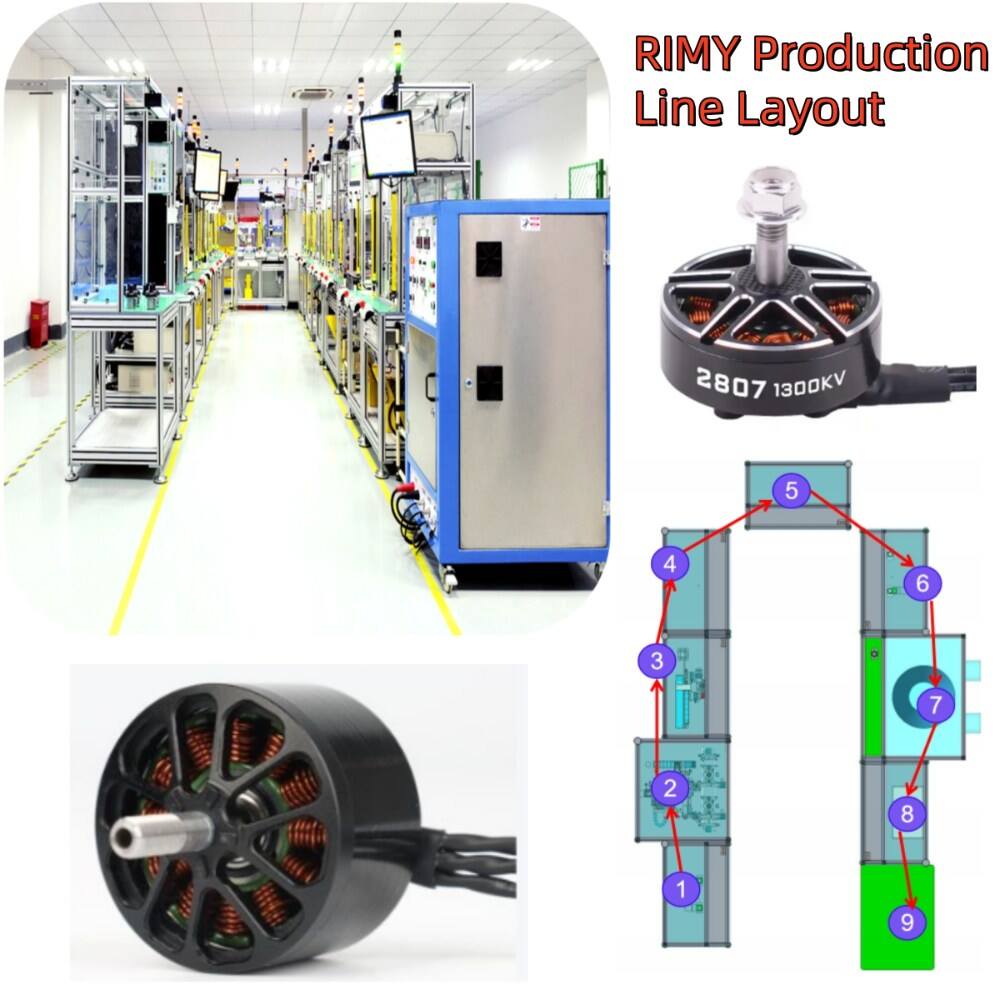
Flexible motor production lines represent the strategic response to this manufacturing dilemma, enabling drone factories to transition between different motor architectures, winding configurations, and assembly protocols with minimal downtime and capital expenditure. Unlike legacy production systems built around single product specifications, these adaptable manufacturing platforms incorporate modular tooling, programmable assembly stations, and intelligent material handling systems that recognize the reality of continuous design iteration in competitive UAV markets. For drone manufacturers seeking to maintain relevance across multiple product cycles, understanding the architecture and implementation of flexible motor production lines has shifted from competitive advantage to operational necessity.
Understanding the Strategic Imperative for Manufacturing Flexibility
The Acceleration of Drone Motor Design Evolution
Drone motor technology has undergone more transformation in the past five years than in the previous two decades combined, driven by simultaneous advances in magnetic materials, electronic speed controller integration, thermal management solutions, and power density requirements. Racing drones now demand motors capable of 2000+ KV ratings with sub-second burst capabilities, while industrial inspection platforms require ultra-efficient units optimized for 30-minute hover times with precision torque control. Cinema drones need vibration-dampened motors with smooth throttle curves, and agricultural UAVs increasingly specify sealed units resistant to chemical exposure and particulate contamination. This fragmentation of motor requirements across application segments creates a manufacturing environment where production lines must accommodate specifications that would have represented entirely separate product categories just a few years ago.
The traditional manufacturing response to product diversity—establishing dedicated production lines for each motor variant—has become economically untenable for all but the highest-volume producers. When motor designs evolve every 8-12 months and market winners remain uncertain until customer adoption data accumulates, the capital investment required for specialized fixed automation cannot be amortized before the next design iteration emerges. Flexible motor production lines address this economic reality by decoupling manufacturing capability from product specification, allowing the same infrastructure to produce motors ranging from 1407 to 2812 sizes, accommodate both inrunner and outrunner configurations, and switch between different winding patterns without requiring wholesale equipment replacement.
The Hidden Costs of Manufacturing Inflexibility
Manufacturers operating with rigid production systems face cost penalties that extend far beyond the obvious equipment utilization metrics. When a new motor design requires retooling that takes three weeks and costs $80,000 in lost production time, engineering teams face powerful incentives to avoid design optimization, even when performance improvements would strengthen market position. This invisible tax on innovation creates a conservative bias in product development where incremental modifications to existing designs receive preference over breakthrough architectures that might better serve emerging applications. The opportunity cost of foregone innovations rarely appears in manufacturing efficiency reports, yet it directly impacts competitive positioning in markets where technological leadership drives purchasing decisions.
Inventory complexity represents another hidden penalty of inflexible manufacturing systems. When production changeovers require extended downtime, manufacturers compensate by producing larger batches of each motor variant, increasing working capital requirements and warehouse space demands. These larger inventories expose companies to obsolescence risk when design changes render existing stock unmarketable, creating write-offs that can eliminate the profit margins from entire production runs. Flexible motor production lines that enable economically viable small-batch production fundamentally alter this inventory calculus, allowing manufacturers to operate with lower safety stocks while maintaining responsiveness to market demand fluctuations.
Defining True Manufacturing Flexibility Beyond Marketing Claims
The term flexible motor production lines has been diluted by equipment suppliers applying the label to systems that offer only superficial adaptability, such as adjustable fixturing for motors within a narrow size range or programmable winding heads that still require manual reconfiguration between product variants. Authentic manufacturing flexibility encompasses three distinct dimensions that must function in concert: geometric flexibility that accommodates different motor sizes and form factors, process flexibility that enables different assembly sequences and quality verification protocols, and temporal flexibility that allows economically viable production runs spanning from dozens to thousands of units without efficiency penalties.
Geometric flexibility demands more than simple adjustable tooling—it requires that fixtures, material handling systems, and quality inspection stations can accommodate motors with fundamentally different architectures without manual intervention. A truly flexible system transitions from producing 2207 racing motors with 2mm shafts to 4215 cinema motors with 5mm hollow shafts through software commands rather than mechanical reconfiguration. Process flexibility means that different motor designs can follow entirely different assembly sequences through the same production line, with some variants requiring additional magnet strength verification steps while others skip certain processes entirely based on design requirements. Temporal flexibility ensures that switching between motor variants incurs measured setup times of minutes rather than hours, making small-batch production economically comparable to traditional long-run manufacturing.
Architectural Foundations of Adaptable Motor Manufacturing Systems
Modular Workstation Design Principles
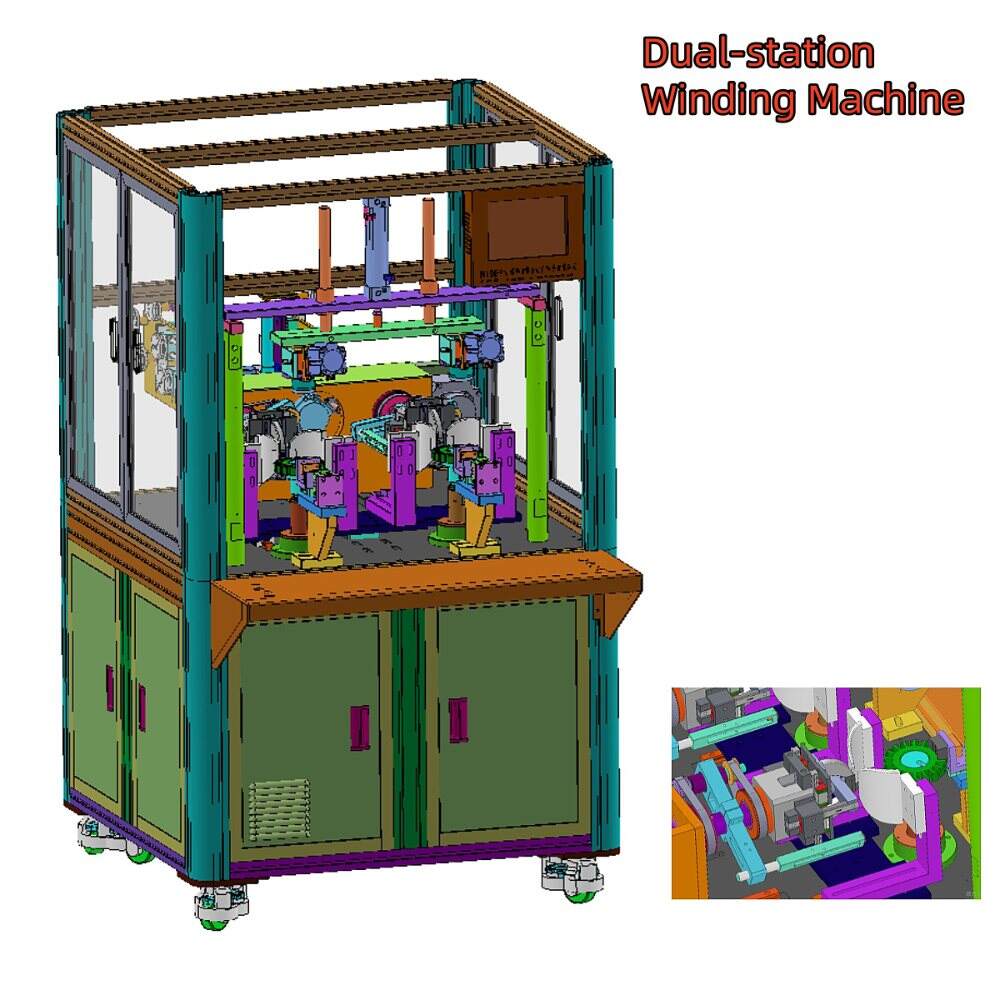
The foundation of flexible motor production lines rests on workstation modularity that treats each manufacturing process as an independent capability module rather than a fixed point in a rigid sequence. Stator winding stations, magnet insertion modules, bearing press assemblies, and balance verification units function as self-contained process islands connected through intelligent material handling systems that route motor components based on their specific manufacturing requirements rather than following predetermined paths. This architecture allows manufacturers to add, remove, or reconfigure process modules as new motor designs introduce requirements that didn't exist when the original line was commissioned.
Each modular workstation incorporates quick-change tooling interfaces that enable fixture replacement in under five minutes, typically through kinematic coupling systems that ensure repeatable positioning without lengthy alignment procedures. The economic advantage of this approach becomes apparent when comparing changeover scenarios: a traditional fixed line might require four hours of mechanical adjustment and alignment verification to switch from 2207 to 2306 motor production, while a properly designed modular system accomplishes the same transition in 12 minutes through pre-calibrated fixture cartridges that load into standardized tool interfaces. The time savings translate directly to manufacturing capacity—a factory operating two shifts can gain the equivalent of 15 additional production days annually simply by reducing changeover overhead.
Intelligent Material Handling and Process Routing
Traditional conveyor-based material handling systems that move all products through identical process sequences represent a fundamental limitation on manufacturing flexibility, since accommodating different motor designs requires either manual intervention to bypass unnecessary stations or elaborate mechanical switching mechanisms that introduce reliability concerns. Advanced flexible motor production lines instead employ autonomous mobile robot systems or overhead gantry networks that route each motor assembly based on its specific process requirements, reading RFID tags or vision markers to determine which workstations the particular variant requires.
This dynamic routing capability enables manufacturers to simultaneously produce multiple motor variants on the same line without batching requirements, intermixing 1507 racing motors that require high-speed balance verification with 2806 freestyle motors that need additional magnet strength testing. The material handling system becomes a flexible nervous system that adapts to product mix changes in real-time rather than requiring reprogramming or mechanical reconfiguration. When a new motor design enters production, engineers simply define its process routing requirements in software, and the material handling system immediately accommodates the new variant without physical modifications to the production infrastructure.
Adaptive Fixturing and Programmable Tooling
The mechanical interface between production equipment and motor components represents a critical determinant of manufacturing flexibility, since traditional fixed fixtures designed for specific motor geometries prevent adaptation to different sizes or configurations. Flexible motor production lines employ servo-driven adaptive fixtures that automatically adjust clamping positions, support points, and alignment references based on digital motor definitions, eliminating manual fixture changes for motors within the system's designed accommodation range. A winding station might use programmable finger mechanisms that adjust their positions to center stators ranging from 14mm to 28mm diameters, reading motor specifications from barcode data and configuring themselves before each assembly cycle begins.
Beyond simple dimension adjustment, sophisticated adaptive tooling systems incorporate force feedback sensors that detect the unique compliance characteristics of different motor components, automatically adjusting insertion forces, press speeds, and alignment tolerances based on the materials and geometries being processed. This sensory intelligence prevents the damage that occurs when fixtures designed for one motor variant apply inappropriate forces to different designs, such as cracking ceramic bearings designed for low-load applications when fixtures calibrated for high-preload racing bearings attempt insertion. The result is a manufacturing system that not only accommodates different motor geometries but optimizes its process parameters for each variant's specific material properties and assembly requirements.
Implementing Flexibility Without Compromising Quality or Throughput
Quality Verification Systems for Variable Product Specifications
Maintaining consistent quality standards across diverse motor variants presents unique challenges in flexible manufacturing environments, since inspection criteria, measurement protocols, and acceptance thresholds vary significantly between different designs. A racing motor might require balance verification to 0.05 gram-millimeter while an industrial unit specifies 0.2 gram-millimeter, and confusing these requirements leads either to unnecessary rejections of acceptable motors or acceptance of units that will cause vibration issues in their intended applications. Advanced flexible motor production lines integrate quality verification systems that access digital specification databases, automatically configuring measurement equipment and acceptance criteria based on the specific motor variant being tested.
These intelligent quality systems extend beyond simple threshold adjustments to encompass entirely different test protocols for different motor architectures. Some variants require electrical resistance measurements at specific winding temperatures, while others need magnetic field symmetry verification or cogging torque assessment. Rather than establishing a universal test sequence that applies unnecessary inspections to motors that don't require them—increasing cycle time and cost—flexible quality stations execute only the verification protocols relevant to each motor design. This targeted approach maintains rigorous quality standards while optimizing throughput, since motors aren't delayed by inspection procedures that don't apply to their specifications.
Maintaining Cycle Time Consistency Across Product Mix
One of the subtle challenges in flexible motor production lines involves managing cycle time variations that emerge when different motor variants have inherently different processing requirements. A small 1507 motor might complete its winding cycle in 45 seconds while a larger 2812 unit requires 105 seconds, and if these motors move through the line sequentially, the variation creates upstream and downstream workstation idle time that degrades overall equipment effectiveness. Sophisticated production line designs address this challenge through dynamic buffer management systems that temporarily decouple workstations operating at different speeds, allowing each process module to maintain its optimal cycle time regardless of variations in preceding or subsequent operations.
The buffer management strategy must balance competing objectives: minimize inventory between workstations to reduce working capital and floor space requirements while maintaining sufficient decoupling to prevent cycle time variations from cascading into line-wide efficiency losses. Advanced flexible motor production lines employ predictive algorithms that analyze the scheduled production mix and dynamically adjust buffer sizes based on the specific motor variants entering the line, expanding buffers ahead of high-variation processes while contracting them where product mix has minimal cycle time impact. This intelligent buffering enables manufacturers to maintain overall line efficiency above 85% even when producing motor mixes that span 3:1 cycle time ratios between fastest and slowest variants.
Operator Interface Design for Multi-Product Environments
Human operators working with flexible motor production lines face cognitive demands that don't exist in traditional single-product manufacturing environments, since they must recognize which motor variant is currently in process and apply the appropriate assembly techniques, quality criteria, and material selection. Poor interface design that requires operators to consult written specifications or remember variant-specific requirements introduces error opportunities that undermine the quality consistency flexible manufacturing seeks to achieve. Well-designed systems instead employ visual guidance systems that automatically display relevant assembly instructions, highlight correct material bins, and indicate pass-fail criteria specific to the motor variant currently at each workstation.
These operator support systems often incorporate error-proofing mechanisms that physically prevent incorrect actions rather than merely warning about them. Material dispensing stations might use electronically controlled bin locks that open only the compartment containing components appropriate for the motor currently being assembled, making it impossible to accidentally install 5mm bearings in a motor designed for 3mm units. Pick-to-light systems illuminate the correct wire gauge for the motor being wound, and assembly fixtures include presence sensors that verify correct component installation before allowing progression to the next manufacturing step. This comprehensive error-proofing approach maintains quality consistency even as operators transition between motor variants multiple times per shift.
Economic Models and Investment Justification
Capital Cost Analysis: Flexibility Premium Versus Long-Term Value
The initial capital investment required for flexible motor production lines typically exceeds equivalent-capacity fixed automation systems by 25-40%, representing a flexibility premium that requires careful economic justification. A traditional dedicated line optimized for a single motor design might cost $420,000 to establish 8,000-unit monthly capacity, while a flexible system capable of producing the same volume across six different motor variants might require $580,000 in capital investment. The superficial cost comparison appears to favor fixed automation, but this analysis ignores the opportunity costs, inventory carrying charges, and market responsiveness limitations that inflexible systems impose.
The economic case for flexibility strengthens when manufacturers model realistic scenarios that include design evolution cycles, demand uncertainty across product variants, and the competitive advantages of rapid market response. A manufacturer serving both racing and cinema drone markets might initially project 70% racing motor volume and 30% cinema motor volume, leading to a consideration of dedicated lines sized accordingly. However, if cinema drone demand grows faster than anticipated or a competitor introduces a superior racing motor that captures market share, the fixed capacity allocation becomes a strategic liability. Flexible motor production lines that can reallocate capacity between motor types within days rather than months provide option value that traditional net present value calculations fail to capture but that becomes visible when manufacturers model decision tree scenarios incorporating market uncertainty.
Throughput Economics and Batch Size Optimization
The relationship between batch size and unit production cost follows different curves in flexible versus fixed manufacturing systems, fundamentally altering optimal production strategies. Traditional dedicated lines achieve minimum unit costs at high production volumes where setup time amortization becomes negligible, creating strong economic incentives to produce large batches even when demand forecasts remain uncertain. A fixed line with four-hour changeover times might achieve optimal economics at 2,000-unit batches, forcing manufacturers to produce month-long inventories of specific motor variants. Flexible motor production lines with 15-minute changeover times reach comparable unit cost economics at 150-unit batches, enabling weekly production cycles that align more closely with actual demand patterns.
This batch size flexibility translates directly to inventory reduction opportunities that improve cash flow and reduce obsolescence risk. A manufacturer producing six motor variants in 2,000-unit batches maintains average inventory of 6,000 motors across all variants, representing perhaps $180,000 in working capital at $30 average motor cost. The same manufacturer operating with 150-unit batches maintains average inventory of just 450 motors, reducing working capital requirements to $13,500 while simultaneously improving market responsiveness. The inventory carrying cost savings—typically 15-25% annually including capital cost, storage, and obsolescence risk—often justify the flexibility premium within 18-24 months even before considering the competitive advantages of faster design iteration and demand response.
Total Cost of Ownership Over Manufacturing System Lifecycle
Evaluating flexible motor production lines requires total cost of ownership analysis that extends beyond initial capital investment to encompass maintenance requirements, upgrade pathways, and eventual disposition costs over the system's useful life. Fixed automation systems optimized for specific motor designs often incorporate specialized components that become difficult to source as the original equipment ages, forcing manufacturers either to maintain expensive spare parts inventories or face extended downtime when critical components fail. The modular architecture underlying flexible systems typically employs standardized industrial automation components with broad supplier bases and long-term availability commitments, reducing long-term maintenance cost uncertainty.
The upgrade economics of flexible versus fixed systems diverge dramatically when new motor technologies emerge that require additional manufacturing capabilities. A fixed line might require wholesale replacement at a cost equal to 80-90% of original investment when a new motor design introduces requirements outside its process envelope, while a flexible system often accommodates new requirements through targeted module additions costing 15-25% of original investment. A manufacturer who installed flexible motor production lines in 2020 and now needs to add capabilities for new hollow-shaft motor designs might spend $95,000 adding specialized boring and balancing modules to their existing infrastructure, while a competitor with fixed automation faces $450,000 to establish entirely new production capacity for the new motor type.
Strategic Implementation Roadmap
Assessing Current Manufacturing Flexibility Gaps
Transitioning from fixed to flexible motor production lines begins with honest assessment of current manufacturing limitations and their impact on business performance. Manufacturers should quantify several key metrics that reveal flexibility gaps: average changeover time between motor variants measured in both clock time and lost production units, current batch sizes compared to optimal inventory levels based on demand patterns, product development cycle times including manufacturing readiness delays, and opportunity costs from declined customer requests for motor variants outside current production capabilities. These metrics establish baseline performance and identify which flexibility dimensions offer greatest business value.
The assessment should also examine the product roadmap over a three-to-five-year horizon, identifying anticipated motor designs that would challenge current manufacturing capabilities. If the engineering team has identified hollow-shaft motors, sealed environmental protection designs, or integrated sensor mounting as likely future requirements, the manufacturing flexibility strategy must ensure these capabilities can be added without wholesale system replacement. This forward-looking analysis prevents the mistake of optimizing for current product requirements while ignoring strategic direction, ensuring that flexibility investments align with business strategy rather than merely addressing today's operational pain points.
Phased Implementation Versus Complete System Replacement
Manufacturers evaluating flexible motor production lines face a strategic choice between phased implementation that gradually adds flexibility to existing infrastructure versus complete replacement with fully flexible systems. Phased approaches begin with the manufacturing processes that offer greatest flexibility leverage—often final assembly and quality verification stations where adaptability enables immediate product mix benefits—while deferring investment in processes where existing equipment provides adequate flexibility. This staged strategy reduces initial capital requirements and allows learning from early flexibility implementations to inform subsequent investment decisions.
Complete system replacement makes economic sense when existing equipment approaches end-of-life, when facility relocation or expansion creates natural transition opportunities, or when current manufacturing capabilities have become so misaligned with product requirements that incremental improvements cannot bridge the gap. A manufacturer still operating manual winding equipment and considering drone racing motor production probably cannot achieve competitive performance through flexibility additions alone—the fundamental process capability gaps require comprehensive modernization. Conversely, a facility with relatively modern fixed automation often achieves better return on investment through targeted flexibility upgrades that preserve functioning equipment while addressing specific adaptability limitations.
Building Organizational Capabilities for Flexible Operations
The technical capabilities of flexible motor production lines provide value only when supported by organizational processes and workforce competencies that exploit manufacturing adaptability. Traditional production environments optimize for stability, establishing detailed work instructions for specific motor variants and training operators to become expert at high-volume production of limited product ranges. Flexible manufacturing instead requires operators comfortable with product variety, able to recognize different motor variants and adapt their techniques accordingly, and empowered to make setup adjustments without awaiting engineering intervention for minor process refinements.
Developing this flexible manufacturing culture requires deliberate training programs that extend beyond equipment operation to encompass motor design principles, quality criteria rationale, and process-product relationships that enable operators to understand why different motor variants require different handling approaches. Manufacturers achieving highest performance from flexible motor production lines typically invest in cross-training that develops multi-skilled operators capable of working at different workstations, further increasing scheduling flexibility and preventing bottlenecks when specific operators are absent. The organizational capability development timeline often extends 12-18 months beyond equipment installation, and manufacturers who neglect this dimension of flexibility implementation frequently achieve only 60-70% of the performance improvements their manufacturing systems enable.
FAQ
What is the typical return on investment timeline for flexible motor production lines compared to traditional dedicated manufacturing systems?
Return on investment timelines for flexible motor production lines vary significantly based on product mix complexity, design evolution frequency, and market demand volatility, but most drone manufacturers experience positive ROI within 24-36 months when comprehensive cost accounting includes inventory reduction, opportunity value of rapid design iteration, and avoided costs of dedicated line multiplication. Manufacturers producing three or more motor variants with significant demand uncertainty typically achieve faster payback periods of 18-24 months, while those with stable single-product focus may require 36-48 months to recover the flexibility premium through gradual capacity reallocation as product mix evolves. The analysis becomes more favorable when modeling realistic scenarios where inflexible manufacturing constrains product development decisions or prevents response to unexpected market opportunities, though quantifying these strategic benefits requires sophisticated financial modeling beyond simple payback calculations.
How do flexible motor production lines handle quality consistency when switching between motor variants with different specifications and tolerances?
Advanced flexible motor production lines maintain quality consistency across product variants through integrated digital specification systems that automatically configure inspection equipment, measurement protocols, and acceptance criteria based on the specific motor being tested at each station. These systems access centralized product databases containing complete quality requirements for each motor variant, eliminating operator interpretation errors and ensuring that racing motors designed for 0.05 gram-millimeter balance tolerance are not incorrectly evaluated against 0.2 gram-millimeter industrial motor criteria. The quality verification equipment includes programmable measurement systems that adjust sensor positioning, measurement forces, and data collection parameters appropriate to different motor geometries, while statistical process control algorithms account for the normal variation ranges specific to each design. This automated quality adaptation, combined with error-proofing mechanisms that prevent incorrect component installation during assembly, enables manufacturers to maintain defect rates below 0.3% even when producing six or more motor variants on the same production line.
What production volume thresholds make flexible motor production lines economically justified compared to manual assembly or dedicated automation?
Flexible motor production lines become economically advantageous compared to manual assembly at production volumes above approximately 8,000-12,000 motors annually when considering total manufacturing cost including labor, quality consistency, and throughput reliability, though this threshold decreases to 5,000-8,000 motors when factoring in the strategic value of rapid design iteration and reduced time-to-market for new variants. Compared to dedicated fixed automation, flexible systems justify their higher capital costs at lower production volumes—typically 15,000-25,000 motors annually across multiple variants—because they eliminate the multiplication of dedicated lines that fixed automation requires when serving diverse product portfolios. The economic crossover point is heavily influenced by product mix complexity and design evolution frequency: manufacturers producing two motor variants with infrequent design changes may find dedicated automation economical at 40,000+ units annually, while those producing six variants with annual design updates achieve better economics with flexible systems even at 20,000 total units because changeover efficiency and inventory optimization provide value beyond direct labor displacement.
Can existing dedicated motor production equipment be retrofitted with flexibility capabilities or does implementation require complete system replacement?
Retrofitting flexibility into existing dedicated motor production equipment is technically feasible for certain processes and can provide cost-effective performance improvements when current equipment maintains good mechanical condition and basic process capability, though the achievable flexibility level typically reaches only 60-75% of purpose-designed flexible systems. Winding stations represent the most promising retrofit candidates because programmable winding heads and adaptive stator fixtures can often be integrated into existing machine frames, enabling accommodation of different motor sizes and winding patterns at 25-35% of new equipment cost. Assembly and quality verification stations prove more challenging to retrofit because mechanical architectures designed for single product geometries lack the structural accommodation range required for diverse motor variants, though targeted upgrades such as programmable inspection systems and quick-change tooling interfaces can meaningfully improve flexibility at moderate cost. Material handling infrastructure usually requires complete replacement to achieve true flexible manufacturing capability because conveyor-based systems cannot provide the dynamic routing intelligence that flexible production demands, making phased implementation strategies that begin with workstation flexibility while deferring material handling upgrades until equipment replacement cycles align with capital availability a pragmatic approach for many manufacturers.
Table of Contents
- Understanding the Strategic Imperative for Manufacturing Flexibility
- Architectural Foundations of Adaptable Motor Manufacturing Systems
- Implementing Flexibility Without Compromising Quality or Throughput
- Economic Models and Investment Justification
- Strategic Implementation Roadmap
-
FAQ
- What is the typical return on investment timeline for flexible motor production lines compared to traditional dedicated manufacturing systems?
- How do flexible motor production lines handle quality consistency when switching between motor variants with different specifications and tolerances?
- What production volume thresholds make flexible motor production lines economically justified compared to manual assembly or dedicated automation?
- Can existing dedicated motor production equipment be retrofitted with flexibility capabilities or does implementation require complete system replacement?