 EN
EN

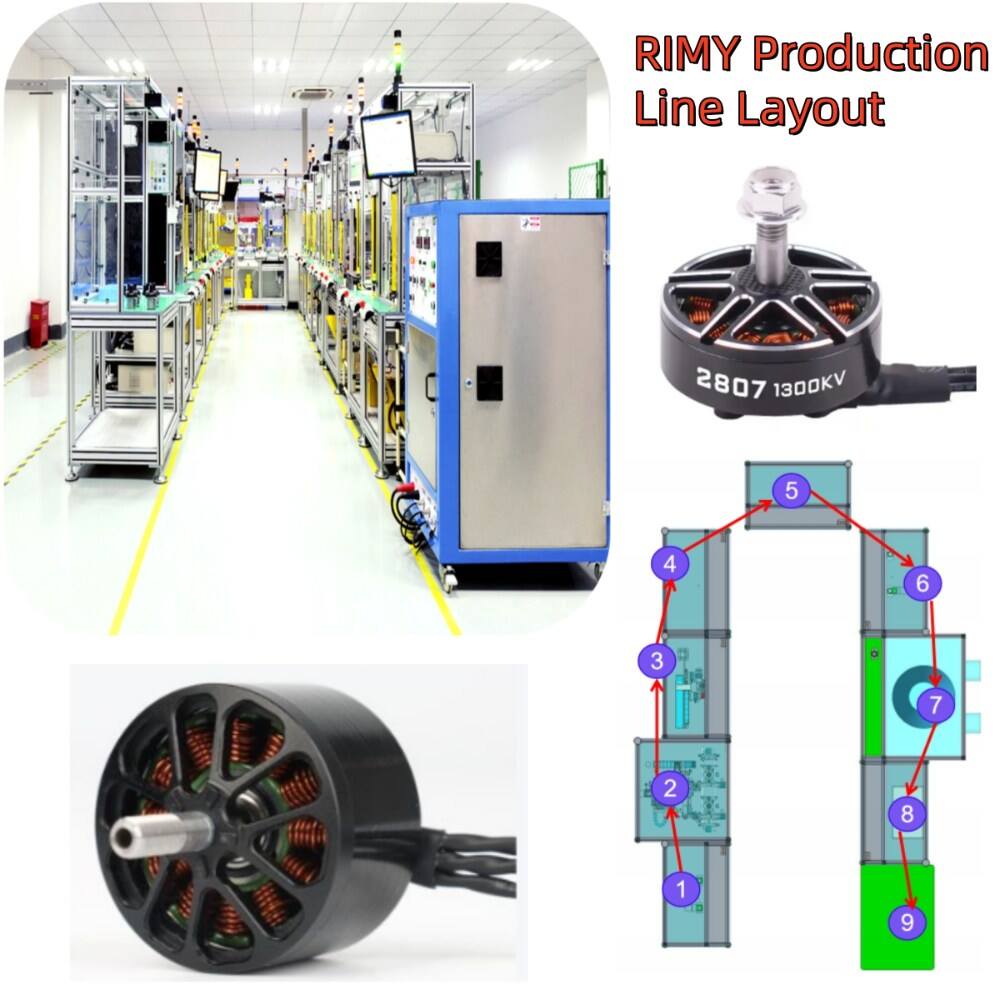
In the rapidly evolving aerospace and unmanned aerial vehicle industry, the precision and reliability of drone motors directly determine flight performance, operational safety, and product competitiveness. As drone applications expand from consumer photography to industrial inspection, agricultural spraying, and defense operations, manufacturers face mounting pressure to deliver motors with exceptional rotational accuracy and minimal vibration. Dynamic balancing machinery has emerged as a critical quality control checkpoint within modern motor production line environments, ensuring that every rotor assembly meets stringent performance specifications before integration into final drone platforms.
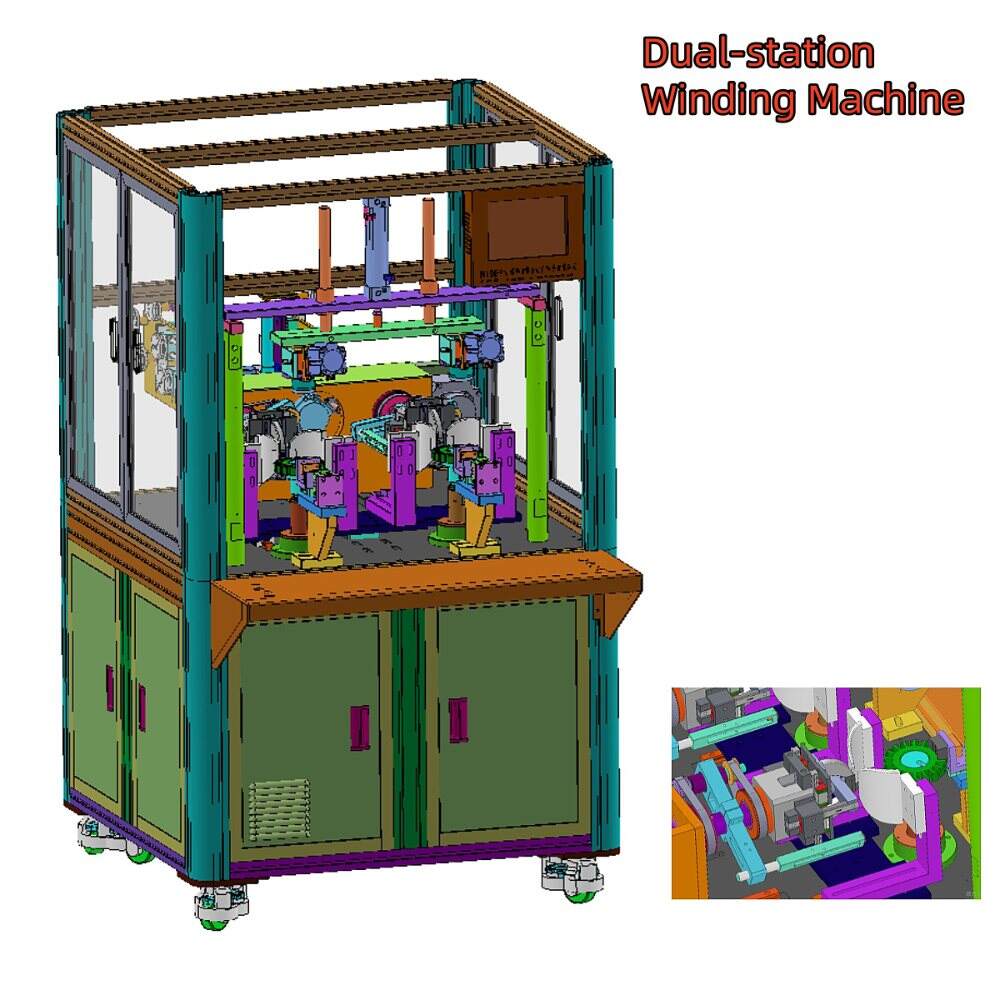
The integration of dynamic balancing equipment into a motor production line represents far more than an optional quality enhancement. It functions as the foundational mechanism that prevents catastrophic failures, extends operational lifespan, and preserves the delicate electronic components that modern brushless drone motors depend upon. Without proper balancing, even microscopic mass distribution irregularities generate destructive vibrations at operational speeds exceeding 20,000 RPM, leading to bearing degradation, structural fatigue, and control system interference. This article explores why dynamic balancing machinery constitutes an indispensable component of drone motor manufacturing infrastructure, examining the technical imperatives, business implications, and operational advantages that justify its central role in production workflows.
Technical Imperatives Driving Dynamic Balancing Requirements
Vibration Physics in High-Speed Rotational Systems
Drone motors operate at rotational velocities that amplify even minor imbalances exponentially. When a rotor assembly contains uneven mass distribution, centrifugal forces generate vibrations proportional to the square of rotational speed. A 0.1-gram imbalance at 15,000 RPM produces forces sufficient to compromise bearing integrity within hundreds of operational hours. Dynamic balancing machinery within the motor production line identifies these irregularities by measuring vibration amplitude and phase angle across multiple planes, enabling precise correction before the motor enters service. This preventive approach addresses root causes rather than managing symptoms, fundamentally distinguishing modern production methods from legacy manufacturing practices.
The relationship between imbalance and vibration follows predictable mathematical models, but real-world motor production line conditions introduce variables that demand sophisticated measurement systems. Manufacturing tolerances in rotor laminations, winding distribution variations, and magnet placement inconsistencies all contribute to the final balance state. Advanced dynamic balancing equipment employs accelerometers and laser displacement sensors to detect vibrations measured in micrometers, generating correction profiles that guide material removal or counterweight addition. This level of precision ensures that finished motors maintain vibration levels below thresholds that could interfere with flight control gyroscopes or accelerometers, which operate at sensitivities measured in milligravities.
Material Properties and Thermal Expansion Considerations
The heterogeneous material composition of modern brushless motors introduces balancing challenges that static measurement cannot address. Copper windings, silicon steel laminations, neodymium magnets, and aluminum housings each respond differently to centrifugal loading and thermal cycling. A motor production line incorporating dynamic balancing machinery tests assemblies under conditions simulating operational temperatures and speeds, revealing imbalances that emerge only when centrifugal forces compress windings or thermal expansion alters dimensional relationships. This approach captures the dynamic reality of motor operation rather than merely achieving static geometric symmetry.
Thermal gradients during motor operation create transient imbalance conditions as materials expand at different rates. High-performance drone applications demand motors capable of sustained operation at elevated temperatures, where copper winding expansion can shift the rotor's center of mass by measurable amounts. Dynamic balancing systems integrated into the motor production line perform multi-temperature testing protocols, ensuring balance integrity across the operational envelope. This capability becomes particularly critical for racing drones and industrial UAVs that cycle between idle and maximum power repeatedly, subjecting motors to thermal stress profiles that static balancing procedures cannot anticipate.
Electromagnetic Field Interaction Effects
Beyond mechanical considerations, dynamic balancing machinery addresses electromagnetic asymmetries that influence motor performance. Variations in magnet strength, pole alignment irregularities, and winding resistance imbalances create rotational force asymmetries that manifest as vibration during powered operation. A comprehensive motor production line evaluates both mechanical and electromagnetic balance, using powered spin testing to identify interactions between magnetic field irregularities and mechanical geometry. This holistic approach ensures that the motor operates smoothly under electrical load, not just during unpowered spin testing.
The interaction between rotor magnetic fields and stator windings generates torque ripple that can reinforce or counteract mechanical imbalance effects. Sophisticated balancing equipment within the motor production line measures vibration signatures under various electrical loading conditions, distinguishing between purely mechanical imbalance and electromagnetically induced vibration. This differentiation enables targeted corrective actions, whether through material removal for mechanical balance or pole alignment adjustment for electromagnetic symmetry. The integration of these measurement capabilities transforms the motor production line from a simple assembly sequence into an intelligent quality assurance system that optimizes multiple performance parameters simultaneously.
Business Impact and Manufacturing Efficiency Gains
Defect Prevention and Warranty Cost Reduction
The financial justification for dynamic balancing machinery in the motor production line extends beyond immediate quality improvements to long-term warranty and reputation management. Field failures attributable to vibration-induced bearing wear, structural fatigue, or electronic component damage generate costs far exceeding the price of prevention. A single motor failure in a commercial drone application may trigger warranty claims covering not only motor replacement but also consequential damages to flight controllers, cameras, and other integrated systems. By eliminating imbalance-related failure modes before motors leave the production facility, manufacturers protect both profit margins and brand reputation.
Statistical analysis of warranty claims reveals that vibration-related failures constitute a disproportionate share of early-life motor failures, typically clustering within the first 50 operational hours. These failures reflect manufacturing defects rather than normal wear, representing entirely preventable losses. A properly configured motor production line with comprehensive dynamic balancing capabilities reduces this failure category to near-zero levels, shifting the warranty cost profile toward predictable end-of-life wear rather than unpredictable early failures. This transformation improves financial forecasting accuracy while simultaneously enhancing customer satisfaction through improved reliability.
Production Throughput and Cycle Time Optimization
Modern dynamic balancing equipment integrates seamlessly into automated motor production line workflows, performing measurements and corrections within seconds rather than minutes. High-speed measurement systems capture vibration signatures during single-revolution scans, while automated correction mechanisms implement material removal or counterweight addition without manual intervention. This automation eliminates the throughput bottleneck that manual balancing creates, enabling production rates that match other automated assembly processes. The result is a balanced motor production line that maintains quality without sacrificing velocity, meeting market demand for both volume and precision.
The economic advantage of automated balancing extends beyond direct labor cost reduction to encompass floor space utilization and inventory management benefits. Traditional manual balancing requires dedicated workstations, skilled technicians, and work-in-progress buffering that consumes valuable manufacturing space. Inline dynamic balancing machinery occupies minimal footprint while processing motors at line speed, eliminating queuing delays and reducing inventory carrying costs. This spatial and temporal efficiency proves particularly valuable in high-volume drone motor markets where manufacturers compete on both price and delivery speed. The motor production line architecture that incorporates automated balancing delivers competitive advantages across multiple operational dimensions simultaneously.
Data-Driven Quality Management and Continuous Improvement
Contemporary dynamic balancing systems generate rich datasets that enable statistical process control and continuous improvement initiatives. Every motor passing through the motor production line generates balance measurement data, correction parameters, and final verification results that populate quality management databases. Analysis of these datasets reveals systematic trends, identifies upstream process variations, and guides targeted improvement efforts. This transformation of balancing from a pass-fail checkpoint into an information-generating process amplifies its value proposition beyond simple defect detection to encompass process optimization.
The correlation between balancing data and other process parameters enables root cause analysis of quality variations. When balancing equipment detects increasing imbalance trends, manufacturers can investigate upstream processes for tooling wear, material variation, or assembly fixture degradation before defect rates escalate. This predictive quality management approach minimizes scrap generation and rework costs while maintaining consistent output quality. The motor production line evolves into a self-monitoring system that identifies and corrects process drift automatically, reducing dependence on periodic audits and reactive problem-solving.
Operational Performance Enhancement Through Precision Balancing
Flight Stability and Control System Performance
The relationship between motor balance quality and overall drone flight performance manifests most clearly in control system behavior. Modern flight controllers rely on accelerometers and gyroscopes to detect orientation changes and stabilize flight attitude. Motor vibrations introduce noise into these sensor signals, forcing control algorithms to filter out mechanical interference while attempting to detect genuine flight dynamics changes. Poorly balanced motors generate vibration frequencies that overlap with control-relevant motion signatures, degrading sensor signal-to-noise ratios and compromising control system responsiveness. A motor production line that prioritizes dynamic balancing delivers motors that minimize sensor interference, enabling tighter control loops and more precise flight behavior.
The impact of vibration on sensor performance extends beyond simple noise addition to include nonlinear effects that challenge algorithmic compensation. High-amplitude vibrations can saturate sensor dynamic range during transient maneuvers, causing temporary control system blindness at critical moments. Additionally, vibration-induced structural resonances may amplify specific frequency components, creating narrow-band interference that simple filtering cannot eliminate without degrading control bandwidth. Motors produced on lines incorporating comprehensive dynamic balancing avoid these pathological vibration signatures, providing flight controllers with clean sensor data across the full operational envelope. This quality difference translates directly into superior flight performance, particularly in demanding applications like precision agriculture, infrastructure inspection, and professional cinematography.
Energy Efficiency and Battery Life Extension
Vibration represents wasted energy that degrades overall propulsion system efficiency. When a motor operates with significant imbalance, a portion of electrical input energy drives vibrational motion rather than productive thrust generation. This parasitic energy consumption increases battery drain rates and reduces flight endurance proportionally. Dynamic balancing machinery in the motor production line eliminates this inefficiency at the source, ensuring that electrical energy converts to thrust with minimal losses. The efficiency gain may appear modest in percentage terms, but in battery-limited drone applications, even small improvements translate to meaningful endurance extensions.
The secondary effects of vibration on system efficiency compound the direct energy losses. Vibration accelerates bearing friction, generates heat that must be dissipated through additional airflow, and induces structural flexing that dissipates energy as material hysteresis. These cumulative losses can reduce overall system efficiency by several percentage points compared to properly balanced motors. For commercial drone operations where flight time directly impacts revenue generation, this efficiency difference justifies premium pricing for motors produced on advanced motor production line systems that prioritize balance quality. The operational cost savings over motor lifetime typically exceed the initial price premium multiple times, creating compelling economic incentives for end users to specify dynamically balanced motors.
Acoustic Signature Reduction and Stealth Applications
Motor vibration contributes significantly to overall drone acoustic signature, generating both airborne and structure-borne noise that compromises stealth in sensitive applications. Wildlife monitoring, security operations, and military reconnaissance missions require minimal acoustic detectability, making motor balance quality a strategic performance parameter. Dynamic balancing equipment within the motor production line reduces vibration-induced noise generation, enabling quieter propulsion systems that expand operational capabilities in noise-sensitive scenarios. This acoustic improvement stems from eliminating the fundamental vibration source rather than attempting to dampen or isolate noise after generation.
The frequency spectrum of imbalance-induced vibration often includes components that propagate efficiently through air and structural pathways, creating tonal noise signatures distinctly recognizable as mechanical in origin. These tones stand out against natural ambient noise, increasing detection probability even at low overall sound pressure levels. Motors produced with rigorous dynamic balancing exhibit broadband noise characteristics that blend more effectively with environmental backgrounds, reducing detection range significantly. For manufacturers targeting professional and defense markets, the acoustic performance advantages enabled by comprehensive motor production line balancing capabilities represent key product differentiators that command premium positioning and pricing.
Integration Strategies for Production Line Implementation
Equipment Selection and Capability Matching
Successful integration of dynamic balancing into the motor production line begins with equipment selection aligned to specific product requirements and production volumes. Entry-level systems suitable for prototyping or low-volume specialty production differ fundamentally from high-throughput automated solutions required for mass manufacturing. Critical selection criteria include measurement sensitivity, correction capability, cycle time, automation level, and data integration features. Manufacturers must evaluate these parameters against their specific motor designs, production volumes, and quality objectives to identify optimal equipment configurations that neither under-serve nor over-specify operational needs.
The measurement sensitivity requirement derives from motor operating speed, acceptable vibration thresholds, and rotor mass characteristics. Small FPV racing motors operating at 40,000 RPM demand substantially finer balance resolution than larger industrial drone motors running at 8,000 RPM. Dynamic balancing systems specify resolution in units of gram-millimeters or ounce-inches of residual unbalance, with high-performance applications requiring capabilities below 0.1 gram-millimeter. Equipment selection must account for these technical requirements while considering future product roadmap evolution that may demand enhanced capabilities. A well-designed motor production line incorporates balancing equipment with sufficient capability headroom to accommodate next-generation product requirements without premature obsolescence.
Process Flow Architecture and Quality Gate Positioning
The physical and logical positioning of dynamic balancing within the motor production line significantly influences both effectiveness and efficiency. Optimal placement occurs after all mass-affecting operations complete but before final assembly steps that would complicate rotor access. This positioning enables detection and correction of accumulated manufacturing variations while avoiding disassembly requirements for balance adjustment. The balancing station functions as a critical quality gate, preventing defective assemblies from advancing to downstream processes where additional value addition would be wasted on ultimately rejected units.
Advanced motor production line architectures implement multi-stage balancing strategies that separate rough and fine balancing operations. Initial rough balancing after rotor assembly identifies gross imbalances requiring significant correction, while final fine balancing after housing integration and bearing installation verifies system-level balance under conditions matching operational configuration. This staged approach optimizes correction efficiency while ensuring comprehensive quality verification. The process architecture must account for material handling, data flow, and exception handling protocols that enable seamless integration without creating throughput bottlenecks or quality gaps.
Operator Training and Competency Development
Despite automation advances, successful motor production line balancing operations require skilled personnel capable of interpreting measurement data, troubleshooting equipment issues, and implementing process improvements. Comprehensive training programs cover vibration fundamentals, equipment operation, data analysis techniques, and corrective action decision-making. Operators must understand the relationship between measurement readings and physical rotor conditions to make informed judgments when automated systems flag anomalies or when process adjustments become necessary. This competency development represents an ongoing investment that pays dividends through improved first-pass yield and accelerated problem resolution.
The transition from manual to automated balancing changes rather than eliminates the human skill requirement. While automated systems handle routine operations, operators must intervene for exception cases, perform calibration verification, and analyze trend data for continuous improvement opportunities. Advanced motor production line environments cultivate technical expertise that extends beyond button-pushing to encompass deep understanding of balancing principles and their application to specific product characteristics. Organizations that invest in developing this expertise realize sustained competitive advantages through superior process control and faster adaptation to new product requirements.
Future Trends and Technology Evolution
Artificial Intelligence and Predictive Balancing
Emerging artificial intelligence applications promise to transform dynamic balancing from a reactive measurement process into a predictive quality management tool. Machine learning algorithms trained on historical balancing data can identify patterns correlating upstream process parameters with final balance outcomes, enabling preventive adjustments before imbalances occur. This predictive capability shifts the motor production line paradigm from detect-and-correct to prevent-and-verify, fundamentally improving efficiency and quality consistency. Early implementations demonstrate correlation detection between winding tension variations, lamination stack pressures, and resulting balance characteristics, enabling real-time process parameter optimization.
The integration of AI-driven analytics with dynamic balancing equipment creates closed-loop control systems that continuously optimize production parameters for balance outcomes. As the motor production line generates balancing data, algorithms identify drift trends and automatically adjust upstream processes to maintain target balance distributions. This autonomous optimization reduces manual intervention requirements while tightening quality distributions beyond levels achievable through periodic manual adjustment. The technology evolution positions dynamic balancing as the feedback mechanism for holistic production process control rather than merely a final verification checkpoint.
Non-Contact Measurement and In-Situ Verification
Advances in sensor technology enable non-contact vibration measurement that eliminates mechanical coupling requirements and accelerates measurement cycles. Laser vibrometry and optical displacement sensing systems measure vibration without physical contact, enabling measurements on rotating assemblies within operational housings. This capability facilitates in-situ verification within the motor production line, confirming balance integrity after final assembly without requiring dedicated test fixtures. The technology reduces handling requirements and enables 100% verification without compromising production throughput, advancing the goal of comprehensive quality assurance without efficiency penalties.
Future motor production line architectures may integrate continuous balance monitoring throughout operational life rather than limiting verification to manufacturing checkpoints. Embedded sensors within drone motor systems could provide real-time balance condition monitoring, detecting degradation from wear, contamination, or damage. This capability would enable predictive maintenance strategies and provide valuable field performance data to inform design improvements. The convergence of manufacturing quality control and operational health monitoring represents a paradigm shift enabled by sensor technology advances and connectivity infrastructure that connects production lines to field assets.
Miniaturization and Micro-Motor Balancing Challenges
The continuing miniaturization trend in drone technology drives demand for balancing capabilities applicable to increasingly small motors. Micro-drone applications in indoor navigation, inspection, and research require motors with rotor diameters below 20mm, presenting measurement and correction challenges that push conventional balancing technology limits. These motors operate at extreme rotational speeds where even sub-milligram imbalances generate significant vibrations, yet their small dimensions complicate traditional material removal correction methods. Advanced motor production line systems must incorporate precision measurement capabilities and micro-scale correction techniques to address this emerging market segment effectively.
The development of specialized balancing equipment for micro-motors represents both technical challenge and business opportunity. Manufacturers capable of delivering consistently balanced micro-motors gain access to growing markets in consumer electronics, medical devices, and emerging urban air mobility applications. The motor production line technology evolution toward handling smaller form factors requires innovations in fixturing, measurement sensitivity, and correction precision that will likely influence broader manufacturing practices beyond motor production specifically. This technology frontier presents opportunities for equipment suppliers and motor manufacturers willing to invest in capability development ahead of mainstream market demand.
FAQ
How does dynamic balancing differ from static balancing in motor production line applications?
Dynamic balancing measures and corrects imbalances across multiple planes while the rotor spins at operational speeds, detecting both static imbalance where the center of mass is offset from the rotational axis and couple imbalance where mass distribution creates a rocking moment. Static balancing only addresses center of mass offset and performs measurement with the rotor stationary, missing couple imbalances that only manifest during rotation. For high-speed drone motors, dynamic balancing is essential because couple imbalances generate vibrations proportional to the square of rotational speed, creating destructive forces that static balancing cannot detect or correct. A comprehensive motor production line must employ dynamic balancing to ensure motors perform reliably across their operational speed range.
What balance quality grades are appropriate for different drone motor applications?
Balance quality requirements follow ISO 21940 standards that specify acceptable residual unbalance based on rotor mass and operational speed. Consumer photography drones typically require G6.3 balance quality, while racing and performance applications demand G2.5 or better to minimize vibration at extreme RPMs. Industrial inspection drones operating precision sensors need G1.0 balance quality to prevent sensor interference. The motor production line must configure dynamic balancing equipment to achieve the target quality grade consistently, with measurement sensitivity and correction precision adequate for the specified requirements. Manufacturers serving multiple market segments may implement tiered balancing processes matching quality grades to application requirements, optimizing cost-performance tradeoffs.
Can dynamic balancing compensate for electromagnetic asymmetries in brushless motors?
Dynamic balancing primarily addresses mechanical mass distribution but indirectly influences electromagnetic performance by ensuring consistent air gap geometry and reducing structural deflections that could affect magnetic field symmetry. However, electromagnetic imbalances from magnet strength variations or winding resistance differences require separate testing and correction procedures. Advanced motor production line systems integrate both mechanical dynamic balancing and electromagnetic testing, using powered spin tests to detect torque ripple and cogging that indicate electromagnetic asymmetries. While mechanical balancing cannot directly correct electromagnetic issues, the combination of both measurement types enables comprehensive quality assurance that addresses all vibration sources, whether mechanical or electromagnetic in origin.
How frequently should dynamic balancing equipment be calibrated in production environments?
Calibration frequency depends on equipment stability, environmental conditions, and quality requirements, but most manufacturers implement monthly calibration schedules with daily verification checks using reference rotors of known unbalance. High-precision motor production line operations may require weekly calibration when targeting G1.0 or better balance grades. Calibration procedures verify measurement system accuracy across the full unbalance range and correction mechanism precision. Temperature-controlled environments enhance measurement stability and extend calibration intervals, while harsh production conditions may necessitate more frequent verification. Comprehensive calibration programs include both equipment calibration and process capability studies that confirm the entire motor production line consistently achieves target balance specifications under normal operating conditions.
Table of Contents
- Technical Imperatives Driving Dynamic Balancing Requirements
- Business Impact and Manufacturing Efficiency Gains
- Operational Performance Enhancement Through Precision Balancing
- Integration Strategies for Production Line Implementation
- Future Trends and Technology Evolution
-
FAQ
- How does dynamic balancing differ from static balancing in motor production line applications?
- What balance quality grades are appropriate for different drone motor applications?
- Can dynamic balancing compensate for electromagnetic asymmetries in brushless motors?
- How frequently should dynamic balancing equipment be calibrated in production environments?