 EN
EN

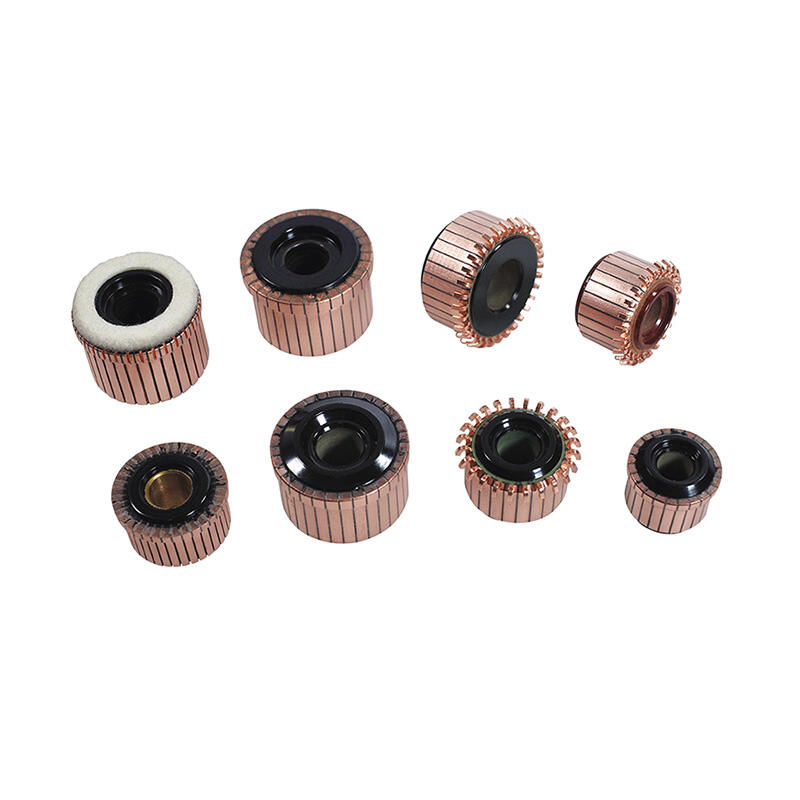
High-performance motors require precision-engineered components that can withstand demanding operational conditions while delivering consistent reliability. Among the most critical elements in motor construction, custom commutator designs play a pivotal role in determining overall system efficiency, durability, and performance characteristics. Understanding how to properly match commutator specifications to specific motor requirements has become increasingly important as industries push the boundaries of what electric motors can achieve in today's competitive marketplace.
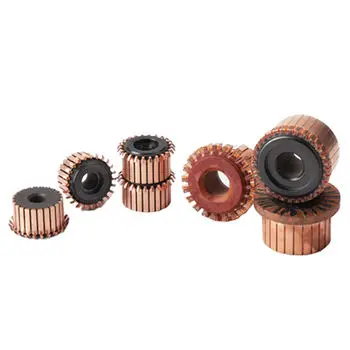
Modern manufacturing environments demand motors that can operate at higher speeds, carry greater loads, and maintain performance across extended duty cycles. These requirements necessitate a thorough understanding of how commutator geometry, materials, and construction techniques directly impact motor behavior. Engineers and procurement specialists must consider multiple factors when selecting or specifying commutator designs to ensure optimal integration with their specific motor architectures.
Understanding Commutator Function in High-Performance Applications
Electrical Contact Mechanics and Performance Impact
The fundamental operation of custom commutator designs centers on maintaining reliable electrical contact between rotating and stationary components within the motor assembly. This contact interface must handle significant electrical currents while managing mechanical forces generated by high-speed rotation. The quality of this electrical connection directly influences motor efficiency, with poorly designed commutators leading to increased resistance, heat generation, and premature component failure.
Advanced commutator geometries incorporate precise segment spacing and contact surface treatments that optimize current transfer characteristics. The segment design must account for the specific electrical load profile of the intended application, ensuring that current density remains within acceptable limits across all operating conditions. Engineers must also consider how contact resistance changes with temperature, as thermal cycling can significantly affect long-term performance stability.
Mechanical Durability Under Operating Stress
High-performance motors subject commutators to substantial mechanical stresses including centrifugal forces, vibration, and thermal expansion cycles. Custom commutator designs must incorporate robust construction techniques that maintain structural integrity throughout the motor's operational lifetime. The binding materials, segment dimensions, and overall assembly methods all contribute to the commutator's ability to withstand these demanding conditions.
Material selection plays a crucial role in achieving the necessary mechanical durability. High-grade copper segments provide excellent electrical conductivity while offering sufficient mechanical strength for most applications. However, specialized alloys may be required for extreme operating conditions, such as high-temperature environments or applications with severe vibration exposure. The commutator shell material and construction methodology must complement the segment material properties to create a unified, durable assembly.
Material Selection Criteria for Custom Applications
Copper Alloy Specifications and Performance Characteristics
The selection of appropriate copper alloys for custom commutator designs requires careful consideration of electrical, thermal, and mechanical properties. Standard electrolytic copper provides excellent conductivity but may lack the mechanical strength needed for high-speed applications. Silver-bearing copper alloys offer enhanced wear resistance and improved high-temperature performance, making them suitable for demanding industrial applications.
Specialized copper alloys incorporating beryllium, chromium, or other alloying elements can provide superior strength characteristics while maintaining acceptable electrical conductivity. These advanced materials command higher costs but deliver significant performance advantages in applications where standard copper cannot meet the required specifications. The selection process must balance electrical performance requirements against mechanical demands and cost considerations.
Insulation Materials and Thermal Management
Effective insulation between commutator segments is essential for preventing electrical shorts and maintaining proper current distribution. Custom commutator designs often require specialized insulation materials that can withstand elevated temperatures while maintaining their dielectric properties. Mica-based insulation systems provide excellent thermal stability and electrical isolation but may require careful handling during manufacturing processes.
Modern polymer-based insulation materials offer advantages in terms of manufacturing flexibility and cost-effectiveness. These materials can be precisely molded to complex geometries and provide consistent thickness control across the entire commutator assembly. The thermal conductivity of insulation materials also affects heat dissipation characteristics, influencing the overall thermal management strategy for the motor design.
Geometric Design Optimization Principles
Segment Sizing and Configuration Parameters
The geometric parameters of custom commutator designs directly influence both electrical and mechanical performance characteristics. Segment width affects current density distribution, while segment height impacts mechanical strength and thermal mass. The number of segments must be carefully matched to the motor's pole configuration and intended speed range to minimize torque ripple and electrical noise.
Advanced design optimization techniques employ finite element analysis to predict stress distributions and thermal behavior under various operating conditions. These analytical tools enable engineers to refine segment geometries before prototype construction, reducing development time and improving final performance. The optimization process must consider manufacturing constraints and cost targets while achieving the necessary performance specifications.
Surface Treatment and Contact Interface Design
The contact surface characteristics of commutator segments significantly impact brush performance and overall motor efficiency. Custom commutator designs may incorporate specialized surface treatments that reduce friction, improve electrical contact, or enhance wear resistance. These treatments can include plating processes, surface texturing, or application of conductive coatings.
The micro-geometry of contact surfaces affects brush film formation and current transfer characteristics. Properly designed surface finishes promote the development of stable brush films that reduce wear and improve electrical performance. The surface treatment selection process must consider the intended brush material, operating environment, and expected service life requirements.
Manufacturing Process Considerations
Precision Assembly Techniques
The manufacturing of custom commutator designs requires specialized assembly processes that ensure consistent quality and dimensional accuracy. Traditional press-fitting techniques may be supplemented with advanced bonding methods that provide superior retention strength and improved thermal characteristics. The assembly process must maintain precise segment alignment while avoiding damage to delicate insulation materials.
Quality control measures throughout the manufacturing process are essential for achieving the tight tolerances required in high-performance applications. Automated inspection systems can verify dimensional accuracy, electrical continuity, and insulation integrity at multiple stages of production. These quality systems help identify potential issues before final assembly, reducing warranty costs and improving customer satisfaction.
Testing and Validation Protocols
Comprehensive testing protocols ensure that custom commutator designs meet all specified performance requirements before delivery to customers. Electrical testing verifies proper current distribution and insulation integrity, while mechanical testing evaluates structural strength and dimensional stability. Environmental testing may include thermal cycling, humidity exposure, and vibration resistance evaluations.
Advanced testing facilities can simulate actual operating conditions to validate commutator performance under realistic load profiles. These tests provide valuable data for optimizing future designs and can identify potential failure modes before they occur in field applications. The testing results also provide documentation for quality assurance and regulatory compliance requirements.
Application-Specific Design Considerations
Power Tool Applications and Requirements
Power tools represent one of the most demanding applications for custom commutator designs due to their high-speed operation and variable load conditions. These applications require commutators that can handle rapid acceleration and deceleration cycles while maintaining consistent performance across wide temperature ranges. The compact size constraints typical of power tool designs add additional complexity to the commutator specification process.
Custom commutator designs for power tools often incorporate lightweight materials and compact geometries that maximize power density while minimizing overall tool weight. The electrical characteristics must be optimized for battery operation, considering both voltage levels and current surge requirements. Durability becomes particularly important as power tools may experience significant mechanical shock and vibration during normal operation.
Industrial Motor Integration Strategies
Industrial motor applications present different challenges for custom commutator designs, typically emphasizing long service life and consistent performance over extended operating periods. These applications may involve continuous duty cycles with high ambient temperatures and challenging environmental conditions. The commutator design must accommodate these requirements while maintaining cost-effectiveness for volume production.
Integration with industrial motor systems requires careful consideration of maintenance requirements and service accessibility. Custom commutator designs should facilitate routine inspection and replacement procedures while minimizing downtime during maintenance activities. The design process must also account for compatibility with existing motor architectures and mounting systems to simplify retrofitting and upgrades.
Performance Optimization Strategies
Thermal Management and Heat Dissipation
Effective thermal management represents a critical aspect of custom commutator designs, particularly in high-power applications where heat generation can significantly impact performance and service life. The thermal design must consider heat generation from electrical resistance, brush friction, and mechanical losses while providing adequate heat dissipation paths. Advanced thermal modeling techniques help optimize commutator geometry for improved heat transfer characteristics.
Material selection plays a crucial role in thermal management, with high thermal conductivity materials helping to distribute heat more evenly throughout the commutator assembly. The integration of heat sinks or thermal interface materials may be necessary for extreme applications. The overall motor design must also provide adequate ventilation and heat removal capabilities to support the commutator's thermal requirements.
Electrical Efficiency Enhancement Methods
Maximizing electrical efficiency in custom commutator designs involves minimizing resistive losses while optimizing current distribution patterns. Advanced segment geometries can reduce current crowding effects that lead to localized heating and efficiency losses. The contact interface design must balance low electrical resistance with adequate mechanical durability to maintain efficiency throughout the service life.
Surface treatments and coatings can further enhance electrical performance by reducing contact resistance and improving current transfer characteristics. These treatments must be carefully selected to ensure compatibility with the intended brush materials and operating environment. The overall electrical design should consider both steady-state efficiency and transient response characteristics to optimize performance across all operating conditions.
Quality Assurance and Reliability Engineering
Statistical Process Control Implementation
Maintaining consistent quality in custom commutator designs requires robust statistical process control systems that monitor key manufacturing parameters throughout production. These systems track dimensional accuracy, material properties, and assembly characteristics to identify potential quality issues before they affect product performance. The data collected through these systems also provides valuable feedback for continuous improvement initiatives.
Advanced quality control systems employ real-time monitoring capabilities that can automatically adjust manufacturing parameters to maintain optimal product quality. These systems reduce variability in finished products while minimizing waste and rework requirements. The implementation of statistical process control requires careful selection of critical control points and establishment of appropriate control limits based on customer requirements and manufacturing capabilities.
Predictive Maintenance and Service Life Optimization
Understanding the factors that influence service life enables engineers to optimize custom commutator designs for maximum reliability and durability. Failure mode analysis helps identify potential weak points in the design and guides material selection and construction techniques. The integration of condition monitoring capabilities can provide early warning of developing problems, enabling proactive maintenance strategies.
Service life optimization involves balancing multiple competing factors including initial cost, performance requirements, and maintenance considerations. Advanced modeling techniques can predict service life under various operating conditions, helping customers make informed decisions about commutator specifications. The optimization process should consider the total cost of ownership rather than just initial purchase price to provide maximum value to end users.
FAQ
What factors determine the optimal number of segments for custom commutator designs
The optimal number of segments depends on several key factors including motor pole configuration, intended operating speed range, and desired torque ripple characteristics. More segments generally provide smoother torque output and reduced electrical noise but increase manufacturing complexity and cost. The segment count must also be compatible with the motor's winding configuration and brush arrangement. For high-speed applications, segment count may be limited by mechanical stress considerations, while low-speed applications can accommodate more segments for improved performance characteristics.
How do environmental conditions affect commutator material selection
Environmental conditions significantly influence material selection for custom commutator designs. High-temperature applications require materials with enhanced thermal stability and reduced thermal expansion coefficients. Corrosive environments may necessitate protective coatings or specialized alloys with improved corrosion resistance. Humidity levels affect insulation material selection, with high-humidity environments requiring materials with superior moisture resistance. Vibration and shock conditions influence mechanical strength requirements and may require specialized construction techniques or materials with enhanced fatigue resistance.
What testing protocols ensure reliable performance of custom commutators
Comprehensive testing protocols for custom commutator designs include electrical tests for continuity and insulation integrity, mechanical tests for structural strength and dimensional stability, and environmental tests for temperature cycling and humidity resistance. Performance testing under simulated operating conditions validates current-carrying capacity and thermal behavior. Accelerated life testing helps predict long-term reliability and identify potential failure modes. Quality control testing during manufacturing ensures dimensional accuracy and proper assembly. These testing protocols must be tailored to the specific application requirements and operating conditions.
How can manufacturers balance cost and performance in custom commutator designs
Balancing cost and performance requires careful analysis of application requirements and total cost of ownership considerations. Standard materials and construction techniques should be used wherever possible while reserving premium materials for critical applications. Design optimization can reduce material usage without compromising performance through improved geometries and construction methods. Volume production considerations may justify investment in specialized tooling or processes that reduce unit costs. Value engineering approaches help identify opportunities to reduce costs while maintaining essential performance characteristics. The analysis should consider not just initial cost but also service life, maintenance requirements, and reliability factors.
Table of Contents
- Understanding Commutator Function in High-Performance Applications
- Material Selection Criteria for Custom Applications
- Geometric Design Optimization Principles
- Manufacturing Process Considerations
- Application-Specific Design Considerations
- Performance Optimization Strategies
- Quality Assurance and Reliability Engineering
-
FAQ
- What factors determine the optimal number of segments for custom commutator designs
- How do environmental conditions affect commutator material selection
- What testing protocols ensure reliable performance of custom commutators
- How can manufacturers balance cost and performance in custom commutator designs