 EN
EN
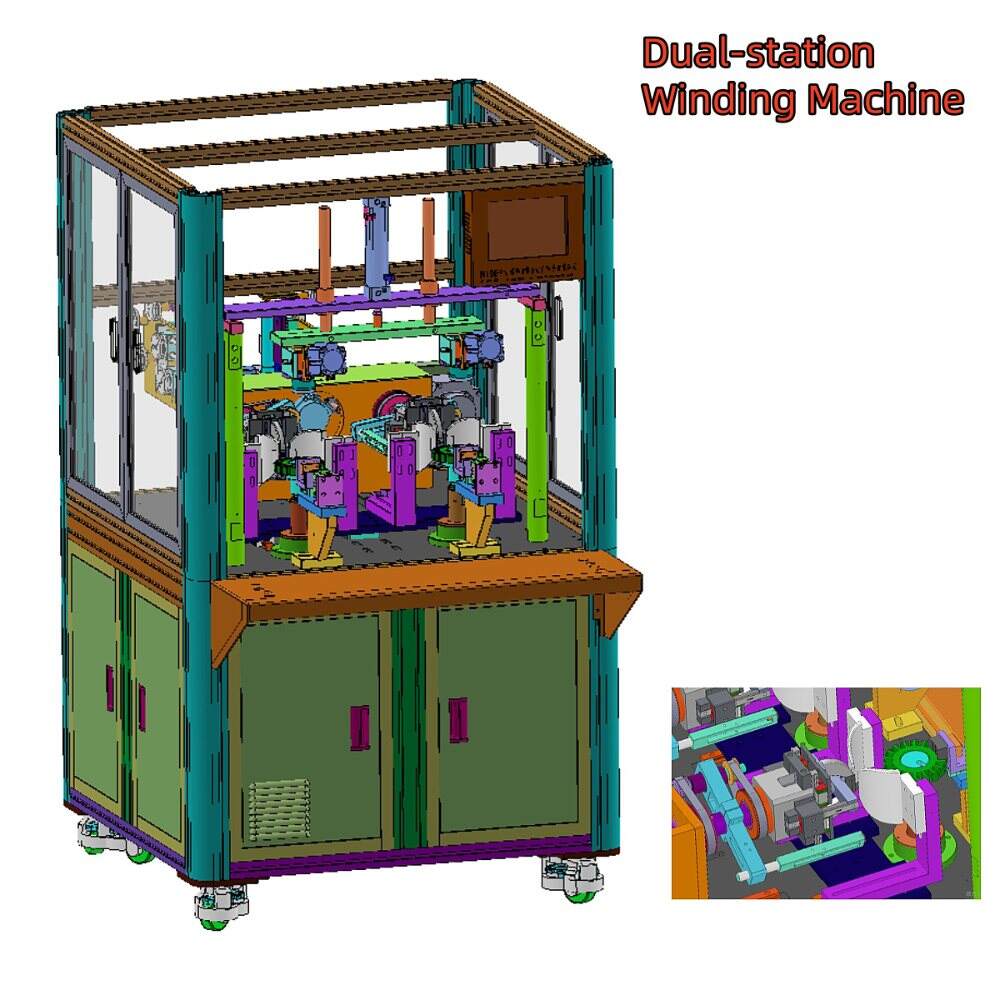
Industrial unmanned aerial vehicles represent a rapidly expanding sector where precision engineering meets operational efficiency, and nowhere is this intersection more critical than in the manufacturing of propulsion systems. Drone motor production lines for industrial UAVs face unique challenges that demand both technical excellence and operational efficiency, making the integration of lean manufacturing principles not just beneficial but essential. As industrial drone applications expand across agriculture, logistics, surveillance, and infrastructure inspection, the demand for high-performance motors manufactured with consistent quality and competitive cost structures has intensified dramatically.
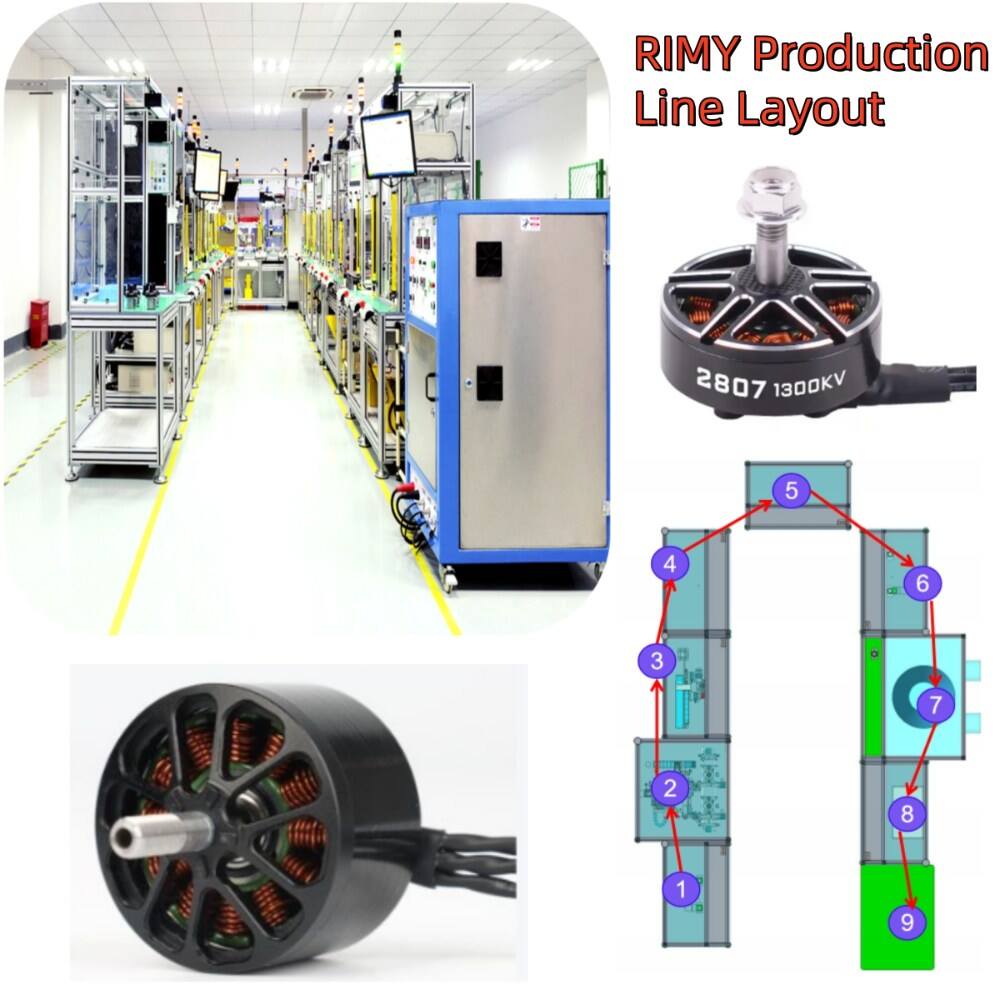
Lean manufacturing methodologies have transformed automotive, electronics, and aerospace production environments over the past several decades, delivering measurable improvements in throughput, quality consistency, and resource utilization. When applied specifically to drone motor production lines, these principles address the inherent complexities of producing miniaturized, high-precision electromechanical systems at scale while maintaining the flexibility needed to accommodate diverse industrial UAV specifications. The role of lean manufacturing extends beyond simple cost reduction, fundamentally reshaping how production facilities approach everything from component sourcing and inventory management to quality control protocols and continuous improvement initiatives.
Understanding the Unique Manufacturing Demands of Industrial UAV Motors
Precision Requirements and Performance Specifications
Industrial UAV motors operate under significantly more demanding conditions than consumer drone counterparts, requiring exceptional precision in manufacturing tolerances and component specifications. These motors must deliver consistent thrust-to-weight ratios, extended operational lifespans, and reliable performance across varied environmental conditions including temperature extremes, humidity, and dust exposure. Drone motor production lines dedicated to industrial applications must therefore implement rigorous dimensional accuracy controls, with bearing assemblies, stator windings, and rotor balancing all held to specifications measured in microns rather than millimeters.
The electrical performance characteristics of industrial drone motors demand equally precise manufacturing processes, with winding patterns, magnetic flux optimization, and thermal management features all requiring consistent execution across production volumes. Lean manufacturing principles address these precision requirements by eliminating process variation sources, standardizing work procedures, and implementing error-proofing mechanisms that prevent defects from progressing through production stages. This systematic approach to quality ensures that each motor leaving drone motor production lines meets the exacting standards required for professional UAV operations where failure consequences extend beyond mere equipment loss to potential safety incidents and operational disruptions.
Volume Flexibility and Product Variety Challenges
Unlike mass-market consumer products, industrial drone motor manufacturing frequently involves shorter production runs with greater product variety, as different UAV platforms require motors optimized for specific thrust requirements, voltage ranges, and mounting configurations. Traditional manufacturing approaches struggle with this variety-volume equation, often sacrificing either efficiency through excessive changeover times or flexibility through rigid production scheduling. Lean manufacturing methodologies specifically address this challenge through quick-changeover techniques, cellular manufacturing arrangements, and mixed-model production capabilities that allow drone motor production lines to economically produce diverse motor variants without accumulating excessive work-in-process inventory.
The application of lean principles enables production facilities to reduce batch sizes while maintaining economic viability, a capability particularly valuable in industrial UAV markets where customer specifications vary considerably and demand forecasting carries inherent uncertainty. By implementing single-minute exchange of die concepts and standardizing changeover procedures, manufacturers can transition between motor variants in minutes rather than hours, dramatically improving responsiveness to customer requirements while reducing the inventory carrying costs associated with large-batch production strategies. This flexibility represents a competitive advantage in markets where customization and rapid delivery increasingly differentiate successful suppliers.
Core Lean Manufacturing Principles Applied to Drone Motor Production Lines
Value Stream Mapping and Waste Elimination
The foundation of lean implementation in drone motor production lines begins with comprehensive value stream mapping that documents every process step from raw material receipt through finished motor testing and packaging. This systematic analysis identifies seven categories of waste including overproduction, waiting time, unnecessary transportation, excess inventory, unnecessary motion, defects, and underutilized worker capabilities. In motor manufacturing contexts, these wastes manifest as component staging inefficiencies, quality inspection bottlenecks, rework loops for winding defects, and knowledge gaps that prevent operators from performing preventive maintenance or basic troubleshooting.
Eliminating these wastes requires both immediate corrective actions and systematic root cause analysis that prevents recurrence. For example, drone motor production lines implementing lean methodologies typically reorganize floor layouts to minimize component transport distances, establish pull-based replenishment systems that eliminate overproduction waste, and develop standard work procedures that reduce process variation. The cumulative effect of these targeted improvements typically yields twenty to thirty percent reductions in production lead times and corresponding decreases in work-in-process inventory, freeing capital while simultaneously improving delivery performance.
Continuous Flow and Takt Time Synchronization
Achieving continuous flow in drone motor production lines requires careful synchronization of process cycle times with customer demand rates, a concept lean manufacturing defines as takt time. This synchronization ensures that each production station completes its assigned tasks within the available time window, preventing both bottleneck accumulation and idle capacity waste. For motor manufacturing, this might involve balancing winding operations, bearing installation sequences, and rotor assembly processes so that work flows smoothly from station to station without accumulating queue time between operations.
Implementing takt time discipline on drone motor production lines often reveals capacity imbalances that were previously masked by buffer inventory, prompting targeted investments in automation, process improvement, or operator cross-training that restore flow equilibrium. This approach contrasts sharply with traditional batch-and-queue manufacturing where large lots move episodically through production stages, accumulating wait time and obscuring process problems. The continuous flow model not only reduces lead times but also provides immediate visibility when process disruptions occur, enabling rapid problem resolution before quality or delivery impacts propagate downstream.
Built-In Quality and Error Proofing Systems
Lean manufacturing philosophy emphasizes building quality into production processes rather than inspecting defects out after the fact, an approach particularly critical for drone motor production lines where internal defects may not manifest until motors undergo operational stress testing or field deployment. This built-in quality approach employs error-proofing devices called poka-yoke that make it physically impossible to assemble components incorrectly, sensors that verify critical dimensions before allowing process progression, and automatic fault detection systems that halt production when parameters drift outside specification limits.
The implementation of these quality assurance mechanisms on drone motor production lines transforms quality control from an inspection function to a process design imperative, with quality considerations influencing tooling design, fixture development, and equipment selection decisions. For example, automated winding equipment might incorporate real-time resistance monitoring that detects wire breaks or insulation failures during the winding process itself, preventing defective stators from advancing to subsequent assembly stages. Similarly, bearing press-fit operations might employ force-distance profiling that identifies installation anomalies indicative of component defects or alignment errors, triggering automatic part rejection before motors enter final testing queues.
Operational Benefits of Lean Implementation in Motor Manufacturing
Lead Time Reduction and Inventory Optimization
One of the most immediately measurable benefits of applying lean manufacturing principles to drone motor production lines manifests as dramatic reductions in manufacturing lead times and corresponding decreases in inventory levels. Traditional batch manufacturing approaches typically generate lead times measured in weeks, with components spending the majority of this time waiting in queues rather than undergoing value-adding transformation. Lean implementations compress these lead times by eliminating queue time waste, often achieving seventy to eighty percent reductions that enable manufacturers to operate on significantly shorter planning horizons.
These lead time reductions cascade into substantial inventory optimization opportunities, as shorter manufacturing cycles reduce the safety stock requirements needed to buffer demand uncertainty and allow manufacturers to defer component purchasing decisions until customer orders materialize. For drone motor production lines handling multiple motor variants, this inventory reduction proves particularly valuable because it reduces the risk of component obsolescence when design revisions occur and minimizes the working capital tied up in slow-moving stock keeping units. The financial impact of these improvements often provides the strongest justification for lean manufacturing investments, with inventory turns increasing from four to six times annually under batch manufacturing to twelve to twenty turns under lean operations.
Quality Improvement and First-Pass Yield Enhancement
The systematic problem-solving culture that lean manufacturing instills in production organizations drives measurable improvements in quality metrics, with first-pass yield rates on drone motor production lines typically improving from eighty-five to ninety percent under traditional approaches to ninety-five to ninety-eight percent following comprehensive lean implementation. These improvements stem from multiple reinforcing mechanisms including enhanced process control, improved operator training, better visibility of quality trends, and faster response to emerging problems before they generate large defect populations.
Beyond the direct cost savings associated with reduced rework and scrap, these quality improvements deliver competitive advantages through enhanced customer satisfaction and reduced warranty exposure. Industrial UAV operators place premium value on motor reliability because unplanned failures during missions generate operational disruptions, potential equipment loss, and in some applications, safety risks. Manufacturers who can demonstrate superior quality performance through documented process capability metrics and field reliability data gain preferential consideration in supplier selection processes, often commanding price premiums that reflect this performance differentiation.
Labor Productivity and Skills Development
Lean manufacturing implementation fundamentally changes the relationship between production organizations and their workforce, shifting from traditional models where workers simply execute prescribed tasks to engagement models where operators actively participate in problem-solving and continuous improvement initiatives. This transformation manifests on drone motor production lines through daily team meetings that review performance metrics and discuss improvement opportunities, structured problem-solving training that develops analytical capabilities, and suggestion systems that capture operator insights for process enhancement.
The productivity improvements resulting from this enhanced engagement typically range from twenty to forty percent, reflecting both direct efficiency gains from improved work methods and indirect benefits from reduced supervision requirements and lower turnover rates. Manufacturers implementing lean approaches on drone motor production lines often find that operator skill development becomes a competitive differentiator, as experienced teams develop deep process knowledge that enables them to quickly diagnose quality issues, optimize process parameters, and successfully execute new product introductions with minimal external engineering support.
Implementation Strategies and Change Management Considerations
Phased Rollout and Pilot Line Approaches
Successful lean transformation of drone motor production lines rarely occurs through wholesale operational overhauls, but rather through carefully staged implementations that build organizational capability incrementally while demonstrating tangible results that sustain leadership commitment and workforce buy-in. Most experienced practitioners recommend beginning with pilot line implementations that apply lean principles to a single product family or production cell, allowing the organization to develop implementation expertise, refine approaches to fit specific operational contexts, and document measurable improvements before expanding to additional production areas.
This phased approach offers several strategic advantages beyond risk mitigation, including the opportunity to develop internal change agents who can subsequently lead expansion efforts, the ability to establish realistic performance benchmarks based on demonstrated results rather than theoretical projections, and the flexibility to adjust implementation strategies based on lessons learned during initial deployments. For drone motor production lines, pilot implementations might focus initially on high-volume motor variants where improvements generate immediate financial impact, or alternatively on problematic product lines where quality or delivery issues create urgent business needs that justify aggressive intervention.
Technology Integration and Automation Considerations
While lean manufacturing principles emphasize process improvement over technology acquisition, modern drone motor production lines increasingly incorporate automation technologies that enhance capability, improve consistency, and enable economically viable production at competitive labor cost structures. The challenge lies in ensuring that automation investments align with lean principles rather than simply automating existing wasteful processes, a risk that practitioners describe as paving cow paths where technology perpetuates inefficient workflows in faster, more expensive forms.
Effective technology integration on drone motor production lines begins with thorough process optimization using lean methodologies to eliminate waste and stabilize operations before introducing automation that further enhances performance. This sequencing ensures that automation targets genuinely value-adding activities rather than waste elimination tasks that process improvement could address more economically. Common automation applications in lean motor manufacturing environments include collaborative robots for repetitive material handling tasks, vision systems for automated quality verification, and data collection systems that enable real-time performance monitoring and statistical process control, all selected to complement rather than replace human judgment and problem-solving capabilities.
Performance Measurement and Continuous Improvement Systems
Sustaining lean manufacturing benefits on drone motor production lines requires robust performance measurement systems that provide timely visibility into key operational metrics and drive continuous improvement through disciplined problem-solving routines. Effective measurement frameworks typically track four categories of metrics including safety indicators, quality performance, delivery reliability, and productivity efficiency, with visual management systems displaying current performance against targets at production line locations where teams can review results and take corrective action.
The most sophisticated implementations supplement real-time operational metrics with leading indicators that predict future performance trends, allowing proactive intervention before problems manifest as customer impacts. For drone motor production lines, such leading indicators might include process capability indices that warn of potential quality drift, equipment reliability metrics that trigger preventive maintenance interventions, or supplier quality trends that prompt corrective action discussions before defective components reach production. These measurement systems work in conjunction with structured improvement processes such as kaizen events, root cause analysis protocols, and standardized problem-solving methodologies that convert performance data into actionable improvement initiatives.
Strategic Competitive Advantages in Industrial UAV Markets
Responsiveness and Customization Capabilities
Industrial UAV markets increasingly value suppliers who can respond rapidly to evolving requirements and accommodate application-specific customization, capabilities that lean manufacturing methodologies specifically enable through reduced lead times and enhanced production flexibility. Drone motor production lines operating under lean principles can economically produce smaller batch sizes with shorter delivery commitments than competitors constrained by traditional batch manufacturing economics, translating operational capabilities into competitive differentiation in markets where responsiveness influences supplier selection.
This responsiveness advantage extends beyond simple delivery speed to encompass collaborative development capabilities where motor manufacturers work closely with UAV designers to optimize propulsion system specifications for specific applications. Manufacturers with flexible, responsive production operations can support iterative design refinement through rapid prototype production and can accommodate running changes that improve performance based on field testing results, strengthening customer relationships and creating switching costs that protect market positions against price-based competition.
Cost Competitiveness and Value Engineering
While lean manufacturing delivers numerous operational benefits, cost competitiveness remains a fundamental driver for implementation, particularly in industrial markets where professional purchasers systematically evaluate total cost of ownership across qualified supplier alternatives. The waste elimination, productivity improvement, and inventory reduction achievements characteristic of lean drone motor production lines translate directly into cost advantages that manufacturers can leverage either for improved profitability or competitive pricing strategies depending on market dynamics and business objectives.
Beyond manufacturing cost reduction, lean methodologies foster value engineering mindsets where production teams actively seek opportunities to reduce product costs through design simplification, component standardization, and manufacturing process optimization. This continuous cost reduction capability proves particularly valuable in maturing markets where price erosion pressures require systematic cost management to maintain acceptable margins, and where suppliers who cannot continuously reduce costs find their competitive positions gradually deteriorating regardless of their initial cost advantages.
Sustainability and Resource Efficiency
Environmental sustainability considerations increasingly influence industrial purchasing decisions as organizations seek to reduce supply chain carbon footprints and demonstrate corporate environmental responsibility. Lean manufacturing principles align naturally with sustainability objectives through their fundamental emphasis on waste elimination, with reduced material consumption, lower energy utilization, and decreased scrap generation all representing shared benefits of both lean operations and environmental stewardship.
Drone motor production lines implementing lean methodologies typically achieve measurable improvements across multiple sustainability dimensions including reduced packaging waste through smaller, more frequent shipments, lower energy consumption per unit through improved equipment utilization and reduced rework, and decreased hazardous waste generation through better process control and higher first-pass yields. These environmental performance improvements increasingly translate into competitive advantages as industrial customers incorporate sustainability criteria into supplier evaluation frameworks and as regulatory pressures incentivize supply chain decarbonization across manufacturing sectors.
FAQ
How does lean manufacturing specifically improve quality in drone motor production compared to traditional methods?
Lean manufacturing improves quality in drone motor production lines through multiple mechanisms including built-in quality systems that detect defects immediately rather than at final inspection, standardized work procedures that reduce process variation, error-proofing devices that prevent assembly mistakes, and continuous improvement cultures that systematically address root causes rather than merely treating symptoms. These approaches typically increase first-pass yield rates from eighty-five percent under traditional batch manufacturing to ninety-five percent or higher under lean operations, while simultaneously reducing customer returns and warranty claims through enhanced process control and operator engagement in quality assurance.
What investment levels are typically required to implement lean manufacturing on existing drone motor production lines?
Lean manufacturing implementation costs vary considerably depending on current operational maturity, production scale, and improvement objectives, but initial investments typically focus on training, facilitation support, and modest physical changes rather than major capital expenditures. Most organizations budget between fifty thousand and two hundred thousand dollars for comprehensive lean transformations of drone motor production lines, with funds allocated primarily toward employee training programs, consultant facilitation during initial improvement events, visual management systems, and minor equipment modifications for improved flow and error-proofing. These investments typically generate payback periods of six to eighteen months through productivity improvements, inventory reductions, and quality enhancement benefits.
Can lean manufacturing principles accommodate the automation levels increasingly common in modern motor production?
Lean manufacturing principles integrate effectively with production automation when technology serves to enhance stable, optimized processes rather than simply automating existing waste. Successful implementations on drone motor production lines use lean methodologies first to eliminate process waste, stabilize operations, and optimize workflow before introducing automation that further improves capability, consistency, or cost competitiveness. This sequencing ensures that automation investments target genuinely value-adding activities and complement human capabilities for problem-solving and continuous improvement rather than replacing workforce engagement that drives sustained operational excellence.
How long does it typically take to see measurable results from lean implementation on drone motor production lines?
Organizations implementing lean manufacturing on drone motor production lines typically observe initial measurable improvements within three to six months of beginning structured implementation efforts, with metrics such as lead time reduction, inventory turns, and first-pass yield showing early positive trends. However, achieving full transformation benefits including cultural change, sustained continuous improvement capabilities, and comprehensive waste elimination typically requires eighteen to thirty-six months of consistent effort, with ongoing performance gains continuing indefinitely as organizational capabilities mature and improvement systems become embedded in daily management routines.
Table of Contents
- Understanding the Unique Manufacturing Demands of Industrial UAV Motors
- Core Lean Manufacturing Principles Applied to Drone Motor Production Lines
- Operational Benefits of Lean Implementation in Motor Manufacturing
- Implementation Strategies and Change Management Considerations
- Strategic Competitive Advantages in Industrial UAV Markets
-
FAQ
- How does lean manufacturing specifically improve quality in drone motor production compared to traditional methods?
- What investment levels are typically required to implement lean manufacturing on existing drone motor production lines?
- Can lean manufacturing principles accommodate the automation levels increasingly common in modern motor production?
- How long does it typically take to see measurable results from lean implementation on drone motor production lines?