 EN
EN
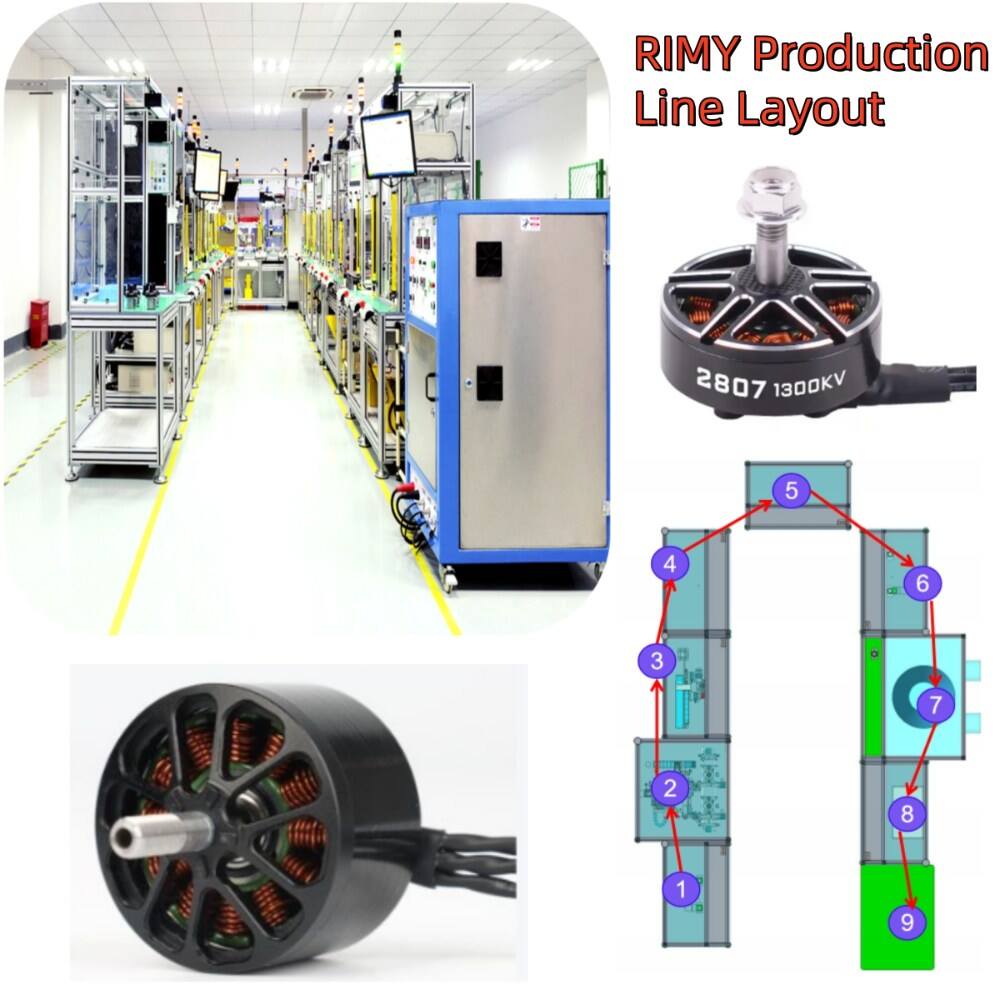
The rapid expansion of the unmanned aerial vehicle industry has created unprecedented demands for high-performance micro brushless motors, driving manufacturers to seek advanced automation solutions that can deliver consistent quality at scale. Modern drone motor production line systems must achieve extraordinary precision in winding operations while maintaining the delicate balance requirements that directly impact flight stability and energy efficiency. As commercial and industrial drone applications proliferate across sectors from agriculture to logistics, the pressure intensifies on motor manufacturers to optimize production workflows, reduce cycle times, and eliminate variability that could compromise performance in demanding operational environments.
Recent technological breakthroughs in automated winding machinery and dynamic balancing systems have fundamentally transformed how manufacturers approach drone motor production line efficiency, enabling them to meet stringent quality standards while dramatically improving throughput. These innovations address the critical bottlenecks that have historically constrained production capacity, particularly the labor-intensive manual processes and quality inconsistencies associated with traditional manufacturing methods. By integrating precision robotics, real-time monitoring systems, and intelligent control algorithms, modern production equipment delivers the consistency and speed necessary to compete in today's fast-paced market while maintaining the tight tolerances required for aerospace-grade components.
Advanced Winding Technologies Revolutionizing Motor Production
Precision Flyer Winding Systems for Outer Rotor Configurations
The adoption of automated flyer winding technology represents a quantum leap forward for drone motor production line operations, particularly when manufacturing outer rotor brushless DC motors that power the majority of modern multirotor aircraft. Unlike conventional needle winding methods that struggle with tension consistency and wire placement accuracy, flyer winding systems employ rotating spindles that precisely lay copper wire onto stator cores with micrometer-level accuracy. This mechanical approach ensures uniform winding density across all phases, eliminating the hot spots and magnetic imbalances that can result from inconsistent turn distribution. The rotational motion of the flyer head naturally maintains optimal wire tension throughout the winding process, preventing the stretching or loosening that degrades motor performance and reduces service life.
Modern flyer winding equipment designed specifically for drone motor production line applications incorporates servo-driven positioning systems that coordinate multiple axes of motion with exceptional synchronization. The winding head follows programmable trajectories that account for slot geometry, wire gauge specifications, and fill factor requirements, automatically adjusting speed and tension parameters based on real-time feedback from integrated sensors. This adaptive control capability proves particularly valuable when transitioning between different motor designs or wire specifications, as operators can simply load new winding recipes rather than performing time-consuming mechanical adjustments. The result is dramatic reductions in changeover time and the elimination of trial-and-error setup procedures that previously consumed hours of production time.
Dual-Station Architecture for Continuous Production Flow
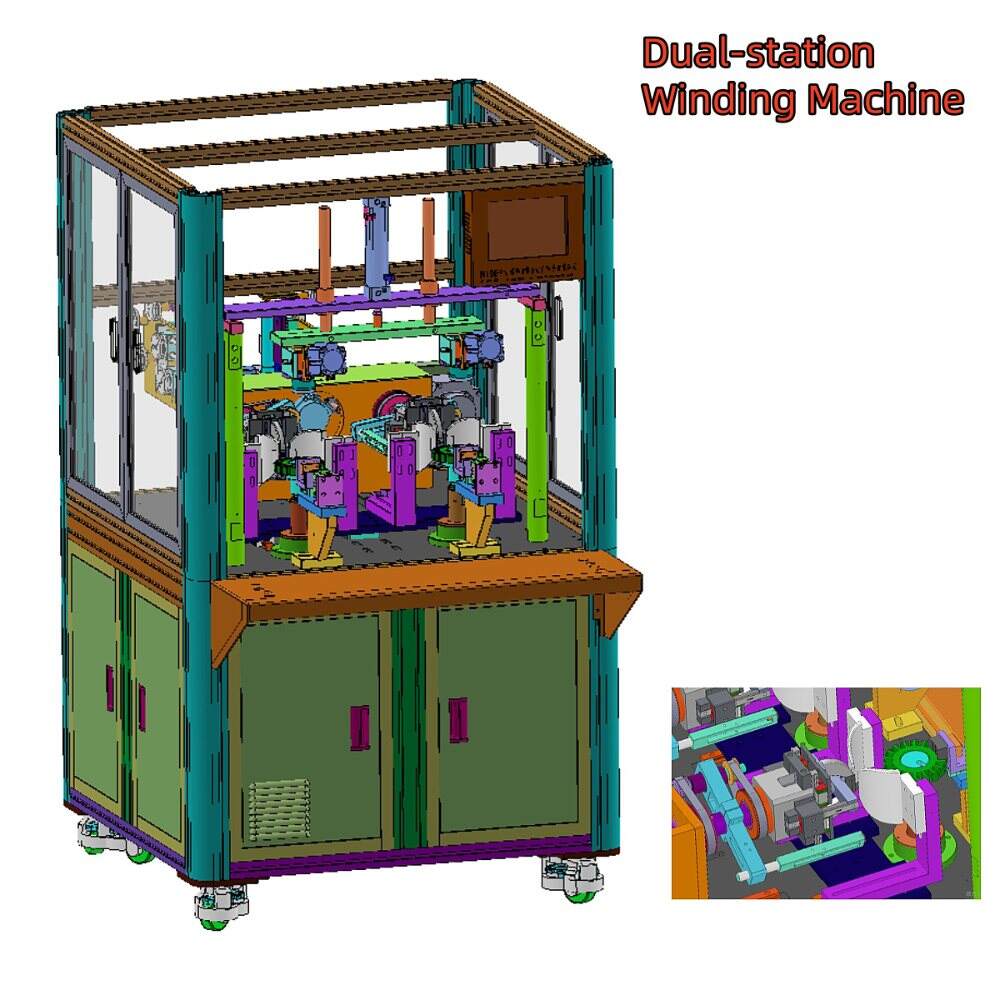
Implementing double-station configurations in drone motor production line equipment has emerged as a critical strategy for maximizing equipment utilization and minimizing idle time during loading and unloading operations. This architectural approach positions two independent work zones within a single machine footprint, allowing operators to prepare the next stator assembly while the winding head completes work on the current unit. As soon as one station finishes its winding cycle, the machine controller seamlessly transfers operation to the second station, creating an overlapping workflow that effectively doubles throughput compared to single-station alternatives. The reduction in cycle time per unit becomes particularly significant in high-volume production scenarios where even marginal efficiency gains translate into substantial capacity improvements.
The dual-station design philosophy extends beyond simple productivity gains by enabling more sophisticated quality control integration within the drone motor production line workflow. Manufacturers can dedicate one station exclusively to winding operations while configuring the second for automated testing or secondary processes such as lead termination and insulation coating. This parallel processing capability allows quality verification to occur simultaneously with production, catching defects immediately rather than discovering issues in downstream operations where rework costs escalate dramatically. Advanced implementations incorporate vision systems and electrical testing modules that validate winding integrity before releasing parts to subsequent production stages, effectively transforming the winding machine into a comprehensive quality gate rather than a single-purpose tool.
Wire Handling Systems That Eliminate Tension Variability
Maintaining consistent wire tension throughout the winding process represents one of the most critical factors determining motor performance consistency in drone motor production line operations. Variations in tension during winding cause dimensional irregularities in the finished coil, creating localized areas of compression or looseness that manifest as magnetic field asymmetries during motor operation. These asymmetries translate directly into vibration, reduced efficiency, and accelerated bearing wear in the finished drone motor. Recognition of this relationship has driven the development of sophisticated wire tensioning systems that employ closed-loop control to maintain tension within extraordinarily tight tolerances regardless of spool diameter changes or environmental fluctuations.
Contemporary drone motor production line equipment integrates active tension control modules that continuously monitor wire force through precision load cells positioned in the wire path between the supply spool and the winding head. Microprocessor-based controllers compare these real-time measurements against programmed setpoints, making instantaneous adjustments to tensioning brake force or capstan motor speed to compensate for any detected deviations. This dynamic regulation proves essential when winding with ultra-fine magnet wires common in micro motor applications, where even minor tension spikes can cause wire breakage while insufficient tension leads to loose, unreliable windings. The result is a remarkable improvement in first-pass yield and the elimination of the wire-related defects that traditionally plagued manual and semi-automated winding operations.
Dynamic Balancing Integration for In-Process Quality Assurance
Understanding the Critical Role of Rotor Balance in Drone Performance
The balancing requirements for drone motors far exceed those of conventional electric motor applications due to the direct mechanical coupling between motor rotors and aircraft propellers in brushless outrunner configurations. Even microscopic mass asymmetries in the rotor assembly generate centrifugal forces that amplify with the square of rotational velocity, creating vibrations that propagate through the airframe and degrade flight stability, control precision, and payload quality. In professional cinematography drones or precision agriculture UAVs, these vibrations directly corrupt sensor data and compromise mission objectives. Consequently, manufacturers must achieve balance tolerances measured in milligrams-millimeters within their drone motor production line processes, standards that demand sophisticated measurement and correction capabilities.
Traditional approaches to motor balancing treated this operation as a separate post-assembly process, often requiring specialized equipment and skilled technicians to identify imbalance vectors and manually add or remove correction weights. This workflow created significant bottlenecks in drone motor production line throughput while introducing variability based on operator technique and measurement equipment calibration. The temporal separation between winding operations and balancing also meant that design-related balance issues only became apparent after significant value had been added to the component, making root cause analysis and corrective action more difficult and expensive. Modern production philosophies recognize that integrating balancing capabilities directly into the winding and assembly line dramatically improves both efficiency and quality outcomes.
Automated Balancing Systems With Real-Time Correction
Advanced drone motor production line configurations now incorporate inline balancing stations that measure rotor assembly balance immediately following winding and potting operations, while components remain fixtured in precisely controlled orientations. These systems employ high-speed spindles to rotate the rotor assembly at operational velocities while accelerometer arrays detect the magnitude and angular position of any mass imbalance. Sophisticated signal processing algorithms filter out environmental noise and machine vibration signatures to isolate the true rotor imbalance vector with exceptional accuracy. The entire measurement cycle completes in seconds, providing immediate feedback that enables real-time process adjustments rather than retrospective quality analysis.
Once imbalance characteristics are quantified, automated correction systems apply precise remediation through multiple available techniques depending on the severity and nature of the detected imbalance. For minor asymmetries within acceptable tolerance bands, the system may simply flag the rotor for a specific orientation during final assembly to optimize the combined balance of the motor-propeller system. Moderate imbalances trigger automated material removal processes using laser ablation or precision drilling to selectively reduce mass at calculated angular positions on the rotor bell. Severe imbalances outside correction capability automatically route the component to rejection bins while simultaneously alerting quality personnel to potential upstream process deviations. This closed-loop approach transforms balancing from a corrective operation into a predictive quality control mechanism within the drone motor production line architecture.
Statistical Process Control Through Balancing Data Analysis
The integration of balancing measurement systems into drone motor production line equipment generates valuable datasets that extend far beyond simple pass-fail quality verification. Every balance measurement captures information about the consistency and centering of winding patterns, the uniformity of adhesive distribution during potting operations, and the geometric precision of rotor bell manufacturing. By aggregating this data across production runs and applying statistical process control methodologies, manufacturers gain unprecedented visibility into process capability and drift patterns that would remain invisible without such comprehensive measurement.
Forward-thinking manufacturers leverage this balancing data to implement predictive maintenance protocols for their drone motor production line equipment, identifying subtle degradation in winding head positioning accuracy or fixture wear before these issues generate scrap. Trend analysis algorithms detect gradual shifts in average imbalance magnitude or changes in the directional distribution of imbalance vectors, providing early warning of developing problems. This proactive approach prevents the costly production of entire batches of non-conforming parts while maximizing equipment uptime through condition-based rather than time-based maintenance scheduling. The transformation of balancing systems from quality gates into comprehensive process monitoring tools represents a fundamental shift in manufacturing philosophy that delivers compounding benefits across multiple operational dimensions.
Automation Architecture and Control System Integration
Programmable Logic Controllers Enabling Flexible Production
The control system architecture underlying modern drone motor production line equipment relies on industrial-grade programmable logic controllers that orchestrate the complex choreography of mechanical, electrical, and pneumatic subsystems required for automated winding and balancing operations. These controllers execute real-time code that synchronizes servo motor movements, manages sensor inputs, coordinates safety interlocks, and implements the process recipes that define winding patterns, tension parameters, and quality acceptance criteria. The computational power and deterministic execution characteristics of contemporary PLCs enable sub-millisecond response times essential for maintaining precision during high-speed winding operations while simultaneously managing human-machine interface displays and network communications with factory-level systems.
Recipe-based programming paradigms have become standard in drone motor production line controllers, allowing operators to store hundreds of different motor configurations as discrete parameter sets that can be recalled instantly without requiring engineering intervention. Each recipe encapsulates all the variables defining a specific motor variant, including stator dimensions, slot count, wire gauge, turn count per phase, winding pattern topology, tension setpoints, and quality tolerance bands. This database-driven approach dramatically accelerates product changeovers and enables mixed-model production strategies where different motor types flow through the same equipment based on real-time demand signals. The elimination of manual setup procedures reduces both changeover time and the opportunity for human error that could compromise product quality or damage expensive tooling.
Sensor Integration for Closed-Loop Process Control
Modern drone motor production line equipment incorporates extensive sensor networks that continuously monitor critical process variables and provide the feedback signals necessary for closed-loop control algorithms. Wire tension transducers, position encoders, temperature sensors, and vision systems generate streams of real-time data that controllers analyze to detect deviations from optimal operating conditions. This sensor-rich environment enables adaptive control strategies that automatically compensate for variables such as ambient temperature changes affecting wire elasticity, gradual tool wear altering geometric relationships, or supply voltage fluctuations impacting servo motor performance. The transition from open-loop programmed sequences to closed-loop adaptive control represents a fundamental capability upgrade that directly impacts process robustness and product consistency.
Vision systems have emerged as particularly transformative sensors within drone motor production line applications, providing capabilities that extend far beyond traditional limit switches and proximity sensors. High-resolution cameras equipped with specialized lighting and image processing algorithms verify proper wire routing, detect crossed or damaged windings, confirm correct lead placement, and measure dimensional characteristics of the finished coil. These non-contact inspection capabilities operate at production speeds without adding cycle time, effectively inserting comprehensive quality verification into every unit produced rather than relying on statistical sampling of batch populations. The image data also creates a permanent digital record of each motor's manufacturing characteristics, enabling traceability protocols essential for aerospace and medical applications while facilitating root cause analysis when field failures occur.
Industrial Connectivity and Manufacturing Execution System Integration
The evolution of drone motor production line equipment increasingly emphasizes connectivity with enterprise manufacturing execution systems and industrial Internet of Things platforms that aggregate data across factory operations. Modern winding machines incorporate Ethernet interfaces supporting industrial protocols such as OPC-UA, MQTT, and Modbus TCP that enable bidirectional communication with higher-level systems. This connectivity architecture allows production planners to remotely configure equipment with production schedules and recipe selections while simultaneously extracting real-time performance metrics including cycle times, quality yield rates, maintenance alerts, and energy consumption patterns. The resulting data visibility empowers evidence-based decision making and enables sophisticated analytics that identify optimization opportunities invisible at the individual machine level.
Integration with manufacturing execution systems transforms isolated drone motor production line equipment into nodes within intelligent factory networks where information flows seamlessly between design engineering, production planning, quality assurance, and maintenance departments. When design engineers release updated motor specifications, the changes propagate automatically to production recipes without requiring manual data entry that introduces transcription errors. Quality systems receive instantaneous notification of out-of-specification conditions, triggering automatic hold procedures and investigation workflows before non-conforming product can ship to customers. Maintenance teams access predictive alerts generated by machine learning algorithms analyzing equipment performance trends, allowing intervention before catastrophic failures halt production. This level of integration represents the practical realization of Industry 4.0 concepts within the specialized domain of precision motor manufacturing.
Operational Excellence Through Process Optimization
Cycle Time Reduction Without Quality Compromise
The imperative to reduce per-unit production time within drone motor production line operations must be carefully balanced against the quality requirements that ultimately determine product value and customer satisfaction. Aggressive cycle time reduction achieved by increasing winding speeds beyond equipment capabilities or reducing inspection rigor proves counterproductive when resulting defect rates erode profitability through warranty costs and reputation damage. Sustainable efficiency improvements emerge from systematic analysis of the complete production cycle to identify non-value-adding wait times, unnecessary motion, and process steps that can be eliminated or combined without impacting quality outcomes. Time-study methodologies reveal that actual value-adding winding and balancing operations often consume only a fraction of total cycle time, with the remainder lost to material handling, queue time, and manual verification steps amenable to automation.
Implementing rapid tool-change systems and automated material handling represents one of the most effective strategies for cycle time reduction in drone motor production line environments. Quick-change winding nozzles and fixture systems enable operators to reconfigure equipment for different motor sizes in minutes rather than hours, dramatically improving schedule flexibility and reducing the batch sizes necessary to justify changeover costs. Automated loading systems that interface with upstream component storage and downstream assembly operations eliminate manual part handling that consumes operator time while introducing opportunities for component damage or contamination. Collaborative robots increasingly handle repetitive loading and unloading tasks, allowing human operators to focus on higher-value activities such as quality verification, equipment monitoring, and continuous improvement initiatives. The cumulative impact of these incremental improvements compounds into substantial capacity gains without requiring additional factory floor space or capital equipment investment.
First-Pass Yield Optimization Through Root Cause Elimination
Maximizing first-pass yield represents the most powerful lever for improving drone motor production line efficiency, as every defect requiring rework or scrap consumes materials, labor, and equipment time while generating no revenue. Traditional quality approaches focus on detecting defects through inspection, but this strategy merely quantifies problems without addressing underlying causes. World-class manufacturers instead implement systematic root cause analysis methodologies that trace each category of defect back to specific process variables or equipment conditions, enabling targeted corrective actions that prevent recurrence. Statistical correlation analysis of process data reveals relationships between input variables and quality outcomes that may not be apparent through casual observation, guiding engineers toward the most impactful improvement opportunities.
The transition from reactive defect management to proactive defect prevention requires cultural shifts as much as technical improvements in drone motor production line operations. Operators must be empowered and trained to stop production when abnormal conditions appear rather than continuing to produce questionable units until batch completion. Quality personnel need access to comprehensive process data and analytical tools that enable rapid investigation of quality events rather than relying on anecdotal evidence and intuition. Management systems must recognize and reward teams for identifying and resolving root causes rather than penalizing temporary production disruptions necessary for lasting improvements. Organizations that successfully implement these philosophical changes consistently achieve first-pass yields exceeding ninety-five percent, transforming quality from a cost center into a competitive advantage that enables premium pricing and preferential customer relationships.
Energy Efficiency and Sustainability Considerations
Contemporary drone motor production line design increasingly incorporates energy efficiency considerations that reduce operating costs while supporting corporate sustainability commitments and regulatory compliance objectives. Servo-driven motion systems replace older hydraulic and pneumatic actuators, delivering equivalent performance while consuming power only during active movement rather than continuously running pumps and compressors. Variable frequency drives optimize motor operation across the speed range, eliminating the energy waste inherent in fixed-speed motors controlled through throttling or mechanical transmissions. LED lighting and efficient heating systems further reduce facility energy consumption, with some advanced installations incorporating heat recovery systems that capture waste heat from electrical components to preheat incoming ventilation air during cold weather operation.
Beyond direct energy consumption, sustainable drone motor production line practices address material waste through improved process control that reduces scrap generation and implements recycling systems for copper wire, packaging materials, and solvents used in cleaning operations. Predictive maintenance strategies extend equipment service life and reduce the environmental impact associated with premature replacement of major components. Some manufacturers have achieved zero-landfill status for their motor production operations through comprehensive waste segregation and partnerships with specialized recycling vendors capable of processing industrial waste streams. These sustainability initiatives increasingly influence purchasing decisions as drone manufacturers face pressure from their own customers to demonstrate environmental responsibility throughout their supply chains, creating competitive advantages for motor suppliers demonstrating measurable sustainability performance.
Strategic Implementation Considerations for Production Line Upgrades
Capacity Planning and Scalability Assessment
Organizations contemplating investment in advanced drone motor production line equipment must conduct rigorous capacity analysis to ensure proposed systems align with both current volume requirements and anticipated growth trajectories. Undersized equipment creates immediate bottlenecks that constrain output and force expensive overtime or outsourcing to meet customer commitments, while excessive capacity ties up capital in underutilized assets that generate inadequate returns on investment. Effective capacity planning incorporates demand forecasting across multiple scenarios, accounting for both organic growth from existing customers and potential new business opportunities that may require different motor configurations or quality standards. The analysis must also consider seasonal demand patterns, new product introduction cycles, and the strategic importance of maintaining reserve capacity for unexpected opportunities or supply chain disruptions affecting competitors.
Scalability considerations extend beyond initial equipment capacity to encompass the architectural flexibility necessary to accommodate future expansion without disrupting ongoing operations or obsoleting existing investments. Modular equipment designs that allow capacity increases through addition of winding heads or workstations provide more cost-effective growth paths than monolithic systems requiring complete replacement as volumes grow. Facility layouts should reserve space for equipment additions while ensuring utility infrastructure including electrical power, compressed air, and network connectivity can support expanded configurations. Software architectures must accommodate integration of additional machines without requiring wholesale system replacements or complex migration projects. Organizations that incorporate these scalability principles into initial investment decisions position themselves to respond efficiently to market opportunities while minimizing the total cost of ownership across the equipment lifecycle.
Workforce Training and Change Management
The successful deployment of sophisticated drone motor production line automation requires comprehensive workforce development programs that build the technical capabilities necessary to operate, maintain, and optimize complex mechatronic systems. Traditional motor winding skills involving manual dexterity and mechanical intuition give way to requirements for computer literacy, troubleshooting methodology, and understanding of sensors, actuators, and control systems. Organizations must invest in structured training curricula that develop these competencies through combinations of classroom instruction, vendor-provided equipment training, and mentored hands-on experience. The most effective programs recognize that operators possess valuable process knowledge that should inform automation implementation rather than being displaced by it, creating collaborative environments where human expertise and machine capability complement rather than compete with each other.
Change management protocols prove equally critical to technology deployment success, as resistance to unfamiliar systems can undermine even technically sound automation projects. Leadership must clearly communicate the strategic rationale for production line modernization while addressing workforce concerns about job security and role changes. Involving operators and technicians in equipment specification and acceptance testing processes builds ownership and captures frontline insights that improve implementation outcomes. Phased deployment strategies that introduce automation incrementally rather than through disruptive wholesale replacements allow organizations to develop capabilities progressively while maintaining production continuity. Recognition programs that celebrate early adopters and quick learners create positive momentum and peer influence that accelerates the broader organization's adaptation to new working methods. Companies that execute these human-centered change management practices consistently achieve faster time-to-full-productivity and higher ultimate performance levels from their automation investments.
Vendor Selection and Partnership Development
The decision to invest in advanced drone motor production line equipment represents a long-term commitment to a technology partner whose capabilities, responsiveness, and business stability will significantly impact operational success for years beyond initial installation. Comprehensive vendor evaluation processes assess not only equipment specifications and pricing but also factors including application engineering support, spare parts availability, software update policies, and field service network coverage. Reference checks with existing customers provide insights into real-world performance and support quality that marketing materials may not fully reveal. Financial stability analysis ensures the vendor will remain viable to support equipment throughout its economic life, avoiding the costly complications that arise when suppliers cease operations or discontinue product lines.
The most successful implementations evolve vendor relationships beyond transactional equipment purchases into strategic partnerships characterized by mutual investment in joint success. Collaborative vendors provide application engineering resources that optimize machine configurations for specific motor designs and production requirements rather than offering only standard catalog solutions. They participate in continuous improvement initiatives, analyzing production data to identify enhancement opportunities and incorporating customer feedback into product development roadmaps. Flexible commercial arrangements including performance-based payment terms, spare parts consignment programs, and training support demonstrate vendor confidence in their equipment and alignment with customer success. Organizations that cultivate these strategic relationships access innovation pipelines and technical capabilities that extend far beyond their internal resources, creating sustainable competitive advantages in the rapidly evolving drone motor market.
FAQ
What production volume justifies investment in automated drone motor winding and balancing equipment?
The economic justification for automated drone motor production line equipment typically emerges at production volumes exceeding 50,000 units annually, though the specific breakeven point depends on labor costs, product mix complexity, and quality requirements. Organizations producing multiple motor variants benefit from automation at lower volumes due to the reduced changeover time and improved consistency compared to manual processes. The calculation should account for total cost of ownership including equipment acquisition, installation, training, and maintenance against labor savings, quality improvements, and capacity increases over the expected equipment lifecycle of seven to ten years.
How do automated balancing systems compare to traditional manual balancing in terms of accuracy and throughput?
Automated inline balancing systems integrated into drone motor production line configurations achieve residual imbalance levels below 0.5 gram-millimeters while processing units in cycle times under thirty seconds, compared to manual balancing that typically requires two to five minutes per unit with residual imbalance of one to two gram-millimeters depending on operator skill. The automated approach also eliminates subjective measurement interpretation and provides complete documentation of every unit tested, supporting traceability requirements for aerospace and medical applications. The consistency of automated balancing proves particularly valuable for eliminating the performance variation between units that generates customer complaints and warranty costs in high-performance drone applications.
What maintenance requirements should manufacturers anticipate for automated winding equipment?
Modern drone motor production line equipment requires preventive maintenance intervals ranging from weekly inspections of wear items like winding nozzles and wire guides to quarterly lubrication of mechanical systems and annual calibration of sensors and measurement devices. Predictive maintenance capabilities built into advanced machines monitor component conditions and alert maintenance personnel to developing issues before failures occur, shifting maintenance strategy from time-based to condition-based scheduling. Organizations should budget approximately five to eight percent of equipment acquisition cost annually for maintenance including spare parts, consumables, and calibration services, while ensuring technical personnel receive adequate training to perform routine maintenance tasks and basic troubleshooting without requiring vendor support for every minor issue.
Can existing manual or semi-automated production lines be upgraded incrementally rather than requiring complete replacement?
Many manufacturers successfully implement phased modernization strategies that incrementally introduce automation capabilities into existing drone motor production line operations rather than requiring wholesale replacement of functional equipment. Common upgrade paths include retrofitting manual winding machines with programmable tension control systems, adding vision inspection stations to detect winding defects, or implementing automated loading systems that interface with existing equipment. The technical feasibility and economic justification for incremental upgrades versus complete replacement depends on the age and condition of existing equipment, the availability of retrofit kits and integration support from vendors, and whether current machine architectures can accommodate modern control systems and sensor technologies without fundamental redesign.
Table of Contents
- Advanced Winding Technologies Revolutionizing Motor Production
- Dynamic Balancing Integration for In-Process Quality Assurance
- Automation Architecture and Control System Integration
- Operational Excellence Through Process Optimization
- Strategic Implementation Considerations for Production Line Upgrades
-
FAQ
- What production volume justifies investment in automated drone motor winding and balancing equipment?
- How do automated balancing systems compare to traditional manual balancing in terms of accuracy and throughput?
- What maintenance requirements should manufacturers anticipate for automated winding equipment?
- Can existing manual or semi-automated production lines be upgraded incrementally rather than requiring complete replacement?