 EN
EN
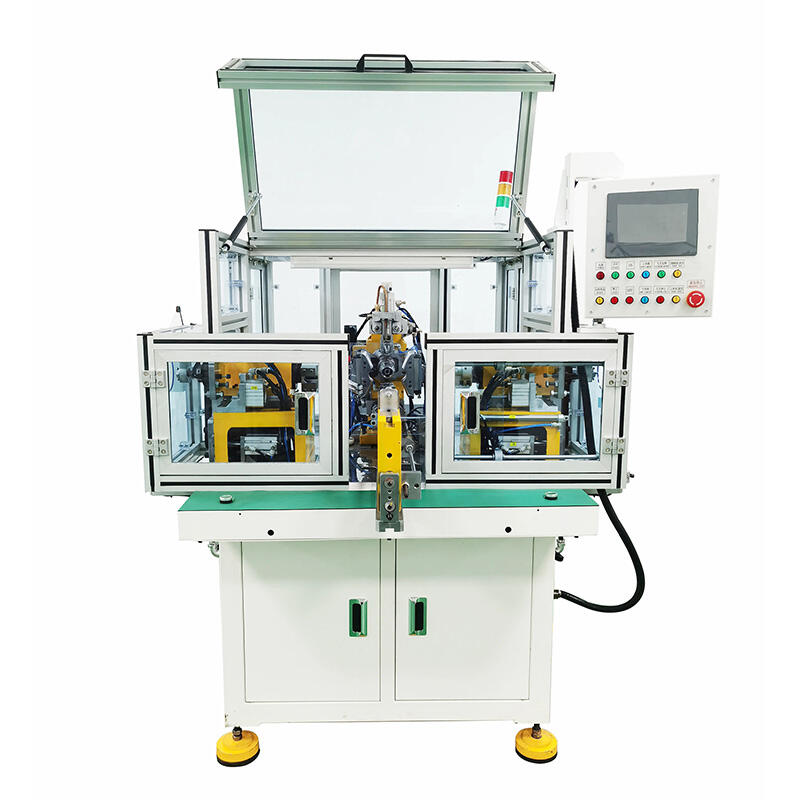
Modern motor manufacturing requires precision, efficiency, and reliability to meet the growing demands of industrial applications. When motor factories scale up for mass production, selecting the right stator winding machines becomes a critical decision that impacts product quality, production speed, and overall profitability. The complexity of motor stator assembly demands sophisticated automation solutions that can handle high-volume manufacturing while maintaining consistent quality standards. Understanding the key factors that influence equipment selection helps manufacturers make informed decisions that align with their production goals and market requirements.
Production Volume Requirements and Capacity Planning
Determining Daily Output Targets
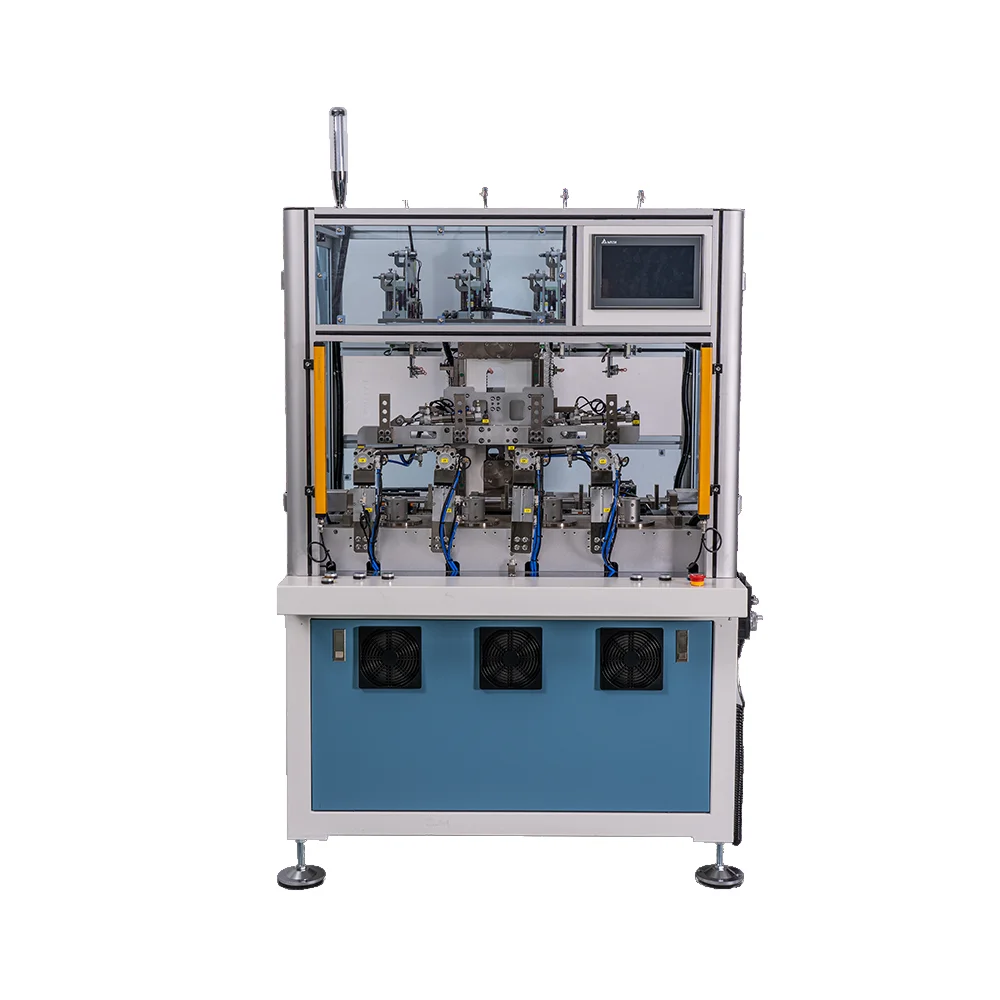
Motor factories must first establish realistic production targets based on market demand and facility capabilities. Daily output requirements directly influence the type and number of stator winding machines needed for efficient operation. High-volume facilities producing thousands of motors daily require fully automated systems with multiple winding stations and integrated quality control mechanisms. These advanced stator winding machines can process different motor sizes and configurations while maintaining consistent cycle times throughout extended production runs.
Production planners analyze historical demand patterns, seasonal fluctuations, and growth projections to determine optimal capacity levels. This analysis helps identify whether single-station manual machines, semi-automatic dual-station systems, or fully automated production lines best serve the manufacturing strategy. The selected stator winding machines must accommodate peak demand periods without creating bottlenecks in the overall production workflow.
Scalability and Future Expansion Considerations
Forward-thinking manufacturers invest in stator winding machines that can adapt to changing production requirements over time. Modular equipment designs allow facilities to add winding stations, upgrade control systems, or integrate additional automation components as production volumes increase. This scalability prevents the need for complete equipment replacement when expanding manufacturing capabilities.
Equipment suppliers often provide upgrade paths that enable existing stator winding machines to incorporate new technologies or handle different product specifications. Manufacturers should evaluate the long-term flexibility of potential equipment investments, considering factors such as software upgradability, mechanical modularity, and compatibility with emerging industry standards.
Technical Specifications and Performance Criteria
Winding Speed and Precision Requirements
The technical capabilities of stator winding machines directly impact production efficiency and product quality. Winding speed measured in revolutions per minute determines throughput capacity, while precision specifications ensure consistent coil placement and electrical performance. Modern automated systems achieve winding speeds of 2000-4000 RPM while maintaining positional accuracy within 0.1mm tolerances.
Precision becomes particularly critical when manufacturing high-performance motors for automotive, aerospace, or industrial applications. These applications demand tight tolerances for electrical characteristics such as inductance, resistance, and magnetic field uniformity. Advanced stator winding machines incorporate servo-controlled wire tensioning, programmable winding patterns, and real-time quality monitoring to achieve these exacting standards consistently.
Wire Handling and Material Compatibility
Different motor applications require various wire gauges, insulation materials, and conductor types. The selected stator winding machines must accommodate the full range of materials used in the facility's product portfolio. Automatic wire feeding systems, tension control mechanisms, and changeover capabilities determine how efficiently equipment handles material variations.
Wire handling systems must prevent damage to delicate insulation coatings while maintaining consistent tension throughout the winding process. Advanced machines incorporate sensors that detect wire breaks, monitor tension variations, and automatically adjust feeding parameters to compensate for material property differences. This automation reduces scrap rates and ensures consistent electrical performance across production batches.
Automation Level and Integration Capabilities
Manual versus Automated Operation
The decision between manual, semi-automatic, and fully automated stator winding machines depends on production volume, labor costs, and quality requirements. Manual machines offer lower initial investment costs and maximum flexibility for prototype development or small-batch production. However, they require skilled operators and cannot achieve the consistency and speed needed for mass production environments.
Semi-automatic systems provide a balance between investment cost and production capability. These stator winding machines automate the winding process while requiring operator involvement for loading, unloading, and quality inspection. Fully automated systems integrate material handling, winding, testing, and packaging operations into seamless production lines that minimize labor requirements and maximize consistency.
Integration with Manufacturing Execution Systems
Modern motor factories implement Manufacturing Execution Systems that coordinate production activities across multiple workstations and departments. Stator winding machines equipped with industrial communication protocols can share real-time production data, quality metrics, and maintenance status with central control systems. This integration enables predictive maintenance scheduling, automatic quality adjustments, and comprehensive production tracking.
Data integration capabilities allow manufacturers to implement statistical process control, identify production trends, and optimize equipment performance continuously. Advanced stator winding machines generate detailed reports on cycle times, quality metrics, material consumption, and equipment utilization rates that support continuous improvement initiatives.
Quality Control and Testing Integration
In-Line Quality Monitoring Systems
Quality control becomes increasingly important as production volumes increase and manual inspection becomes impractical. Modern stator winding machines incorporate vision systems, electrical testing equipment, and dimensional measurement tools that verify product quality during the manufacturing process. These systems detect defects immediately, preventing defective products from advancing to subsequent assembly operations.
Automated quality systems perform multiple tests including wire placement verification, electrical continuity checks, insulation resistance measurements, and dimensional accuracy validation. Real-time feedback enables immediate process adjustments when quality parameters drift outside acceptable ranges. This proactive approach minimizes scrap generation and ensures consistent product quality throughout production runs.
Traceability and Documentation Requirements
Regulatory compliance and customer quality requirements often mandate comprehensive product traceability throughout the manufacturing process. Advanced stator winding machines capture detailed production records including material lot numbers, process parameters, quality test results, and operator identifications. This documentation supports quality investigations, warranty claims, and regulatory audits.
Traceability systems link individual products to specific production conditions, enabling manufacturers to isolate quality issues to particular material lots, equipment settings, or time periods. This capability proves essential when addressing customer complaints or implementing corrective actions that prevent recurring quality problems.
Cost Analysis and Return on Investment
Initial Capital Investment Considerations
The initial purchase price represents only one component of the total cost of ownership for stator winding machines. Manufacturers must evaluate installation costs, operator training expenses, spare parts inventory requirements, and facility modifications needed to accommodate new equipment. Comprehensive cost analysis includes these implementation expenses alongside the equipment purchase price.
Financing options such as equipment leasing, rent-to-own agreements, or supplier financing programs can reduce initial capital requirements while preserving cash flow for other business needs. Some equipment suppliers offer performance-based contracts that tie payments to achieved production levels or quality metrics, sharing financial risk between manufacturer and supplier.
Operating Cost and Productivity Benefits
Operating costs include energy consumption, maintenance expenses, consumable materials, and labor requirements. Energy-efficient stator winding machines with regenerative braking systems and optimized motor drives can significantly reduce electrical consumption compared to older technologies. Maintenance costs depend on equipment reliability, spare parts availability, and service support quality from the supplier.
Productivity benefits from advanced stator winding machines include increased throughput, reduced scrap rates, lower labor requirements, and improved consistency. These operational improvements generate cost savings and revenue increases that justify equipment investments. Payback periods for high-quality automation equipment typically range from 18 to 36 months depending on production volumes and labor cost differentials.
Supplier Evaluation and Support Services
Technical Support and Training Programs
Supplier selection extends beyond equipment capabilities to include ongoing support services that ensure successful implementation and operation. Comprehensive training programs for operators, maintenance technicians, and engineering staff help maximize equipment utilization and minimize downtime. Experienced suppliers provide detailed documentation, video training materials, and hands-on instruction that accelerates the learning curve.
Technical support availability becomes critical when production issues arise or equipment modifications are needed. Local support presence, remote diagnostic capabilities, and rapid response times determine how quickly problems can be resolved. Leading stator winding machines suppliers maintain service networks that provide on-site support within 24-48 hours for critical production equipment.
Spare Parts Availability and Maintenance Support
Long-term equipment reliability depends on access to genuine spare parts and qualified service technicians. Suppliers should maintain adequate spare parts inventory levels and provide clear parts identification systems that simplify ordering processes. Preventive maintenance programs offered by equipment suppliers help identify potential problems before they cause production disruptions.
Service contracts that include regular maintenance visits, remote monitoring services, and guaranteed response times provide predictable maintenance costs and maximum equipment uptime. Some advanced stator winding machines incorporate predictive maintenance sensors that monitor component wear and alert service teams when maintenance is needed.
FAQ
What production volume justifies investing in automated stator winding machines
Automated stator winding machines become cost-effective when daily production exceeds 200-300 units, depending on motor complexity and labor costs. The break-even point occurs when labor savings, quality improvements, and increased throughput generate sufficient returns to justify the higher initial investment. Facilities producing 1000+ motors daily typically require fully automated systems to meet capacity requirements efficiently.
How do I determine the right level of automation for my motor factory
Automation level selection depends on production volume, product variety, quality requirements, and available capital. Start by analyzing current production bottlenecks, labor costs, and quality issues. Semi-automatic stator winding machines work well for medium-volume production with multiple product variants, while fully automated systems suit high-volume single-product manufacturing. Consider future growth plans and product development roadmaps when making this decision.
What maintenance requirements should I expect from modern stator winding machines
Modern stator winding machines typically require daily cleaning and lubrication checks, weekly precision adjustments, and monthly comprehensive inspections. Preventive maintenance intervals range from 500 to 2000 operating hours depending on equipment design and operating conditions. Budget approximately 3-5% of equipment value annually for maintenance costs including spare parts, service calls, and scheduled overhauls.
How important is supplier location when selecting stator winding machines
Supplier location significantly impacts service response times, spare parts delivery, and ongoing support quality. Local or regional suppliers can provide faster emergency service and more frequent technical visits. However, international suppliers with local service networks or partnerships can offer competitive support while providing access to advanced technologies. Evaluate the supplier's service infrastructure and response capabilities rather than just geographic proximity when making selection decisions.
Table of Contents
- Production Volume Requirements and Capacity Planning
- Technical Specifications and Performance Criteria
- Automation Level and Integration Capabilities
- Quality Control and Testing Integration
- Cost Analysis and Return on Investment
- Supplier Evaluation and Support Services
-
FAQ
- What production volume justifies investing in automated stator winding machines
- How do I determine the right level of automation for my motor factory
- What maintenance requirements should I expect from modern stator winding machines
- How important is supplier location when selecting stator winding machines