 EN
EN

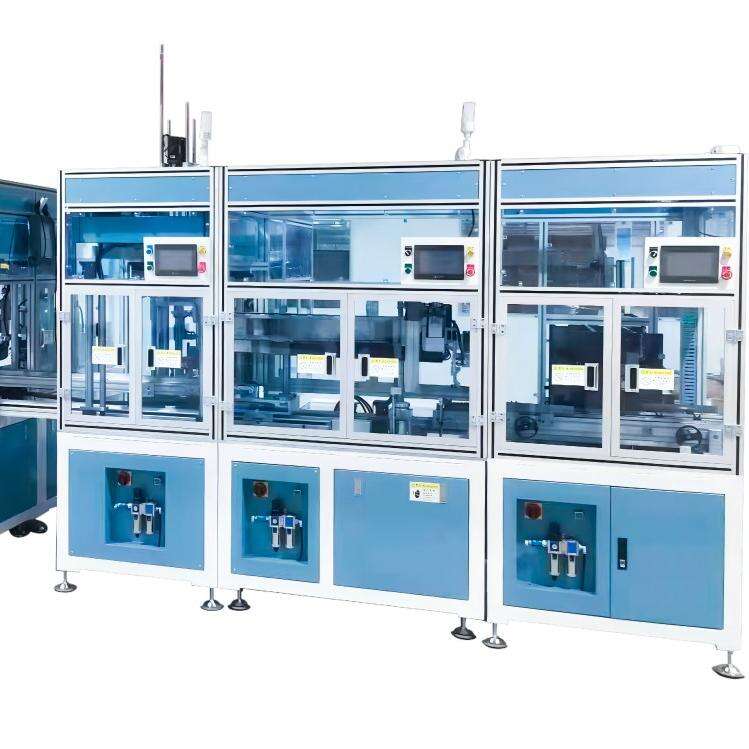
Quality control in automated motor production lines represents one of the most critical operational challenges facing modern manufacturing facilities. As motor production volumes increase and tolerances tighten across industrial applications, the integration of sophisticated testing machinery within automated motor production lines has become essential rather than optional. Manufacturers who implement comprehensive inline testing systems can identify defects in real-time, reduce warranty claims by up to 40%, and maintain consistent product quality across millions of units. The shift from batch testing to continuous integrated testing within automated motor production lines fundamentally transforms quality assurance from a reactive process to a proactive manufacturing strategy.
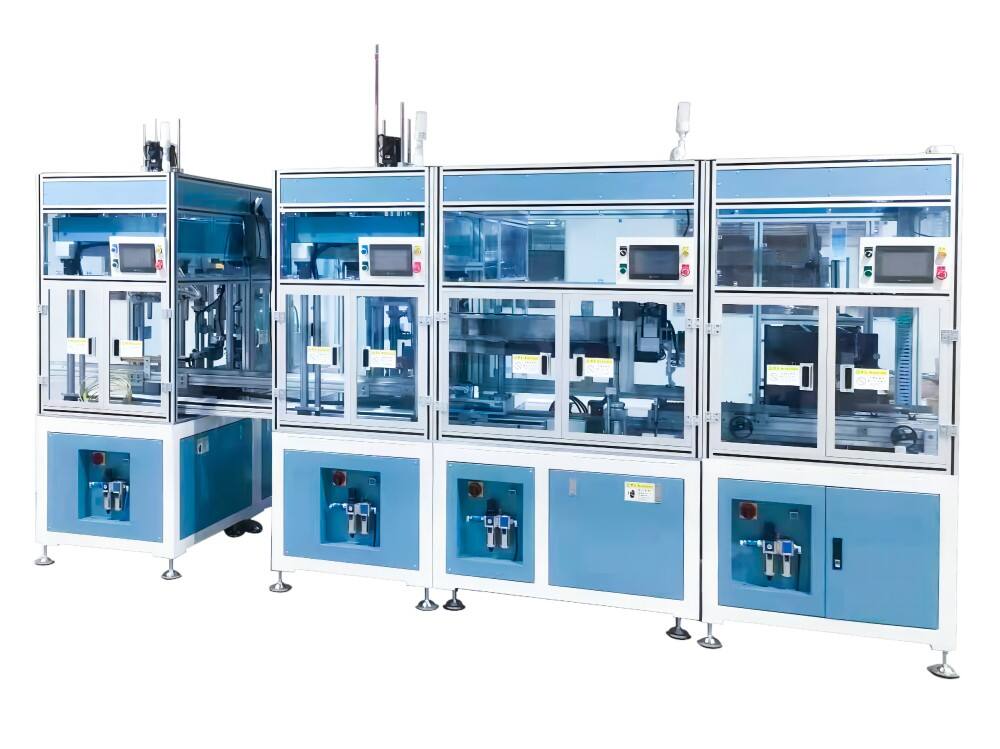
The evolution of quality control methodologies in motor manufacturing has been driven by increasing complexity in motor designs, stricter regulatory requirements, and the economic imperative to eliminate rework. Traditional end-of-line testing approaches create significant bottlenecks and fail to capture process variations that occur during assembly. Modern automated motor production lines incorporate testing machinery at multiple sequential stages, creating a multi-layered quality verification system that ensures each component and sub-assembly meets specifications before advancing. This article examines the strategic implementation of integrated testing machinery within automated motor production lines, exploring the technical architecture, operational benefits, implementation challenges, and best practices that enable manufacturers to achieve superior quality outcomes while maintaining production efficiency.
Strategic Integration Architecture for Testing Systems in Motor Production
Multi-Stage Testing Point Placement Within Production Flow
The architecture of integrated testing within automated motor production lines requires careful planning of testing station locations based on value-added analysis and defect propagation risk. Optimal testing architectures typically incorporate four distinct testing zones: incoming component verification, in-process sub-assembly validation, pre-final assembly functional testing, and comprehensive end-of-line performance evaluation. Each testing point serves a specific quality gate function, with earlier stages focusing on dimensional accuracy and material properties while later stages emphasize electrical performance and operational characteristics. The placement strategy must balance detection capability against cycle time impact, ensuring that testing operations do not create production bottlenecks while maintaining sufficient inspection coverage.
Component-level testing at the beginning of automated motor production lines typically employs non-contact measurement systems including laser micrometers, vision systems, and coordinate measuring machines integrated directly into material handling systems. These stations verify that incoming parts such as rotor shafts, stator cores, and bearing assemblies meet geometric tolerances before they enter assembly operations. Early detection at this stage prevents defective components from consuming production resources and generating compound defects in later stages. Advanced systems utilize statistical process control algorithms that analyze measurement data in real-time, automatically adjusting acceptance criteria based on process capability trends and triggering alerts when incoming quality degrades below acceptable thresholds.
Synchronized Data Architecture and Traceability Systems
Effective quality management in automated motor production lines depends on robust data architecture that captures, correlates, and analyzes testing results across all production stages. Modern integrated testing systems employ industrial IoT platforms that assign unique identifiers to each motor unit, creating digital threads that link component genealogy, process parameters, and test results throughout the production journey. This traceability architecture enables root cause analysis when defects are detected, allowing quality engineers to trace problems back to specific material lots, production shifts, or process parameter variations. The data infrastructure must support real-time synchronization between testing equipment, manufacturing execution systems, and quality management databases while maintaining data integrity and cybersecurity.
The implementation of edge computing nodes within automated motor production lines enhances testing system responsiveness by processing measurement data locally before transmitting aggregated results to enterprise systems. This distributed architecture reduces network latency, enables immediate pass-fail decisions at each testing station, and ensures production continuity even during temporary network disruptions. Advanced analytics platforms apply machine learning algorithms to historical testing data, identifying subtle patterns that correlate with future failures and enabling predictive quality interventions. The most sophisticated systems integrate testing data with supplier quality management platforms, automatically generating corrective action requests when component defect patterns emerge from upstream suppliers.
Physical Integration and Ergonomic Considerations
The physical integration of testing machinery within automated motor production lines requires careful consideration of spatial constraints, material flow optimization, and access requirements for maintenance and calibration. Testing stations must be positioned to minimize material handling distances while providing adequate workspace for equipment setup, verification, and troubleshooting. Many manufacturers employ modular testing cell designs that consolidate multiple test functions within compact footprints, utilizing multi-axis robotic handling systems to position motors through sequential test operations without manual intervention. This approach reduces floor space requirements while improving measurement repeatability by eliminating variations introduced by manual part handling.
Environmental control represents a critical consideration for testing accuracy within production environments that may experience temperature fluctuations, vibration, and electromagnetic interference. High-precision testing equipment such as electrical parameter analyzers and vibration measurement systems require environmental isolation to maintain calibration stability and measurement accuracy. Advanced automated motor production lines incorporate climate-controlled testing enclosures with active vibration isolation, maintaining stable conditions independent of surrounding production environment variations. The physical design must also accommodate periodic calibration routines, providing access for reference standards and calibration fixtures without disrupting production flow for extended periods.
Core Testing Technologies and Their Applications in Motor Production
Electrical Performance Testing Integrated Within Assembly Sequence
Electrical testing represents the most critical quality verification stage in automated motor production lines, validating that motors meet performance specifications for resistance, inductance, back-EMF, and operational characteristics under load. Modern integrated testing systems perform these measurements at multiple production stages, beginning with stator winding resistance verification immediately after winding operations and culminating in comprehensive dynamometer testing at end-of-line. Intermediate electrical tests identify assembly defects such as poor terminal connections, phase imbalances, and insulation failures before motors undergo final assembly, preventing costly rework and reducing scrap rates significantly.
Advanced electrical testing stations within automated motor production lines utilize high-speed switching matrices and precision measurement instruments that complete comprehensive test sequences in seconds rather than minutes. These systems apply programmed voltage and current patterns while measuring electrical responses with resolution sufficient to detect fractional percentage deviations from nominal values. Sophisticated test algorithms compensate for temperature variations, automatically adjusting acceptance limits based on motor thermal state to eliminate false rejections caused by measurement artifacts. The integration of thermal imaging cameras with electrical testing enables simultaneous detection of hotspots that indicate localized defects such as turn-to-turn shorts or unbalanced magnetic circuits that may not be apparent through electrical measurements alone.
Mechanical and Acoustic Quality Verification Methods
Mechanical testing within automated motor production lines encompasses dimensional verification, bearing quality assessment, rotor balance validation, and torque characteristic measurement. These tests ensure that motors operate smoothly without excessive vibration, noise, or mechanical friction that would reduce efficiency and service life. Integrated vibration analysis systems measure acceleration patterns during motor operation, comparing frequency spectra against baseline profiles to detect bearing defects, rotor eccentricity, and mechanical resonances. Advanced systems employ order tracking algorithms that isolate rotational frequency components from background noise, enabling detection of subtle mechanical anomalies that would be missed by simple amplitude-based pass-fail criteria.
Acoustic testing has emerged as a valuable quality indicator in automated motor production lines producing motors for noise-sensitive applications such as HVAC systems and automotive auxiliaries. Integrated acoustic measurement stations employ arrays of precision microphones positioned around operating motors, capturing sound pressure patterns that are analyzed using psychoacoustic metrics including loudness, sharpness, and tonality. These measurements identify motors with objectionable noise characteristics caused by electromagnetic effects, aerodynamic phenomena, or mechanical defects. The acoustic data correlates strongly with customer satisfaction in consumer applications, making it an essential quality parameter despite the technical challenges of implementing acoustic testing within noisy production environments.
Vision Systems and Dimensional Inspection Technologies
Machine vision systems integrated throughout automated motor production lines provide non-contact inspection of critical features including component presence, assembly orientation, label placement, and surface defects. High-resolution cameras combined with advanced image processing algorithms verify that assembly operations have been completed correctly, detecting missing components, reversed parts, and incorrect fastener installation that could cause functional failures. Vision systems excel at tasks requiring 100% inspection where contact measurement methods would be too slow or could damage delicate components. The latest systems employ deep learning algorithms trained on thousands of defect examples, achieving detection rates exceeding 99.5% while maintaining false alarm rates below 0.1%.
Three-dimensional scanning technologies including structured light projection and laser triangulation enable complete surface geometry verification within production cycle times compatible with automated motor production lines. These systems capture millions of measurement points per motor, comparing actual geometry against CAD models with micron-level precision. Applications include verifying housing machining quality, confirming shaft straightness, and validating bearing seat concentricity. The comprehensive geometric data generated by these systems supports statistical process control initiatives, revealing gradual tool wear or fixture degradation before they produce out-of-specification parts. Integration with machine control systems enables automatic process adjustments that maintain dimensional consistency without operator intervention.
Operational Benefits and Performance Impact of Integrated Testing
Defect Detection Economics and Cost Avoidance
The economic justification for integrated testing machinery in automated motor production lines centers on the principle that early defect detection costs exponentially less than downstream discovery. Industry data demonstrates that detecting defects during component receipt costs approximately one dollar per incident, while finding the same defect during assembly operations increases costs tenfold, and field failures generate costs exceeding one hundred times the initial detection cost when warranty service, logistics, and brand reputation damage are included. Integrated testing systems shift quality verification upstream, intercepting defective units before they accumulate value-added processing costs and preventing defective motors from reaching customers.
Manufacturers implementing comprehensive integrated testing within automated motor production lines typically report quality-related cost reductions ranging from 25% to 45% within the first year of operation. These savings derive from multiple sources including reduced scrap and rework, decreased warranty claims, lower inspection labor requirements, and improved production efficiency through elimination of quality holds and sorting operations. The real-time feedback provided by integrated testing systems enables rapid process corrections that prevent defect propagation, containing quality excursions to dozens of units rather than thousands. Advanced analytics applied to testing data reveal chronic quality issues that manual inspection systems overlook, guiding continuous improvement initiatives that systematically eliminate root causes rather than simply detecting symptoms.
Production Efficiency and Throughput Enhancement
Contrary to initial concerns that integrated testing would reduce production throughput, properly implemented testing systems within automated motor production lines actually enhance overall equipment effectiveness by eliminating quality-related disruptions and reducing cycle time variability. Automated testing stations perform verification operations during natural cycle breaks such as adhesive curing periods or while motors transfer between stations, effectively achieving zero-time testing through parallel processing. The elimination of offline batch testing and associated material handling reduces total production lead time, enabling manufacturers to operate with lower work-in-process inventory levels while maintaining delivery performance.
Integrated testing within automated motor production lines enables dynamic production optimization through real-time quality feedback that informs process parameter adjustments. When testing systems detect quality trends indicating process drift, automated control systems can adjust parameters such as winding tension, adhesive dispense volumes, or press-fit forces to restore nominal performance before defects occur. This closed-loop quality control approach maintains processes centered within specification windows, maximizing yield while minimizing the conservative safety margins that reduce efficiency when quality feedback is delayed or absent. Manufacturers report overall equipment effectiveness improvements of 8% to 15% attributable to integrated testing systems that reduce unplanned downtime, eliminate quality holds, and optimize process parameters continuously.
Enhanced Product Consistency and Performance Validation
The comprehensive testing coverage provided by integrated systems within automated motor production lines ensures that every motor meets performance specifications rather than relying on statistical sampling approaches that inevitably allow defective units to escape detection. This 100% inspection capability is particularly valuable for safety-critical applications and high-value products where field failures carry severe consequences. Beyond simple pass-fail determination, integrated testing generates detailed performance characterization data for each motor, enabling manufacturers to implement performance-based sorting strategies that match motors to application requirements more precisely than traditional tolerance-based approaches.
Advanced manufacturers leverage testing data from automated motor production lines to implement digital twin models that predict field performance based on production test results. By correlating in-process measurements with long-term durability testing and field performance data, these models identify parameter combinations that optimize reliability and efficiency. The resulting insights inform design improvements, component specification refinements, and process optimization initiatives that continuously enhance product quality. Customers increasingly demand detailed test documentation for supplied motors, and integrated testing systems automatically generate comprehensive test reports including measurement data, statistical analysis, and certification statements that satisfy quality management system requirements without manual documentation efforts.
Implementation Challenges and Strategic Solutions
Equipment Selection and Technology Validation Process
Selecting appropriate testing technologies for integration within automated motor production lines requires thorough evaluation of measurement capability, reliability, cycle time compatibility, and integration complexity. Manufacturers must conduct detailed capability studies that demonstrate testing equipment can achieve required measurement uncertainty margins while operating continuously in production environments. The validation process should include long-term repeatability studies that quantify measurement system variation under realistic production conditions including temperature fluctuations, vibration exposure, and electromagnetic interference from surrounding equipment. Procurement specifications must address not only initial measurement performance but also long-term calibration stability and supplier support capabilities for maintaining accuracy over equipment lifespan.
Technology pilots within automated motor production lines provide essential learning before committing to full-scale implementation across multiple production cells. These pilot programs should operate in parallel with existing quality systems, allowing direct comparison of automated testing results against manual inspection or offline testing methods. Successful pilots systematically address integration challenges including communication protocol compatibility, material handling coordination, and operator interface design before replicating systems throughout manufacturing facilities. The pilot phase also establishes baseline performance metrics for measurement system capability, uptime, and maintenance requirements that inform realistic return-on-investment projections and ongoing performance monitoring frameworks.
Workforce Development and Skills Transformation
The introduction of sophisticated testing machinery within automated motor production lines necessitates significant workforce development initiatives that transform quality technicians from manual inspectors into systems operators and data analysts. Effective training programs must address multiple competency layers including equipment operation procedures, measurement science fundamentals, statistical process control principles, and troubleshooting methodologies specific to integrated testing systems. Manufacturers should develop competency matrices that define required knowledge levels for different workforce roles, ensuring that production operators possess sufficient understanding to recognize abnormal system behavior while reserving advanced diagnostic capabilities for specialized maintenance and quality engineering personnel.
Resistance to automation represents a predictable human challenge when implementing integrated testing systems that displace traditional manual inspection roles. Successful change management approaches reframe testing integration as workforce enhancement rather than replacement, emphasizing new opportunities for skilled technicians to apply analytical capabilities that were previously consumed by repetitive manual inspection tasks. Organizations that involve quality personnel in testing system design and validation processes build ownership and advocacy that facilitates smooth operational transitions. Continuous learning systems that provide ongoing skills development in emerging testing technologies and data analytics methodologies help retain talented quality professionals while building organizational capabilities essential for maintaining competitive advantage through quality leadership.
Calibration Management and Measurement System Assurance
Maintaining measurement accuracy across dozens of testing stations within automated motor production lines presents significant calibration management challenges that require systematic approaches and appropriate infrastructure. Effective calibration programs establish station-specific calibration intervals based on measurement stability studies rather than applying arbitrary annual schedules that either waste resources through excessive calibration or risk measurement errors through insufficient verification. Advanced manufacturers implement automated calibration tracking systems that monitor individual measurement channel performance, triggering calibration interventions only when statistical evidence indicates potential accuracy degradation. This condition-based approach optimizes resource utilization while maintaining measurement confidence.
The physical implementation of calibration procedures within automated motor production lines must minimize production disruption while ensuring measurement traceability to national standards. Many manufacturers develop quick-change calibration fixturing systems that enable technicians to install reference standards, execute verification sequences, and restore production operations within minutes rather than hours. For critical measurements, some facilities maintain redundant testing stations that allow production to continue using backup equipment while primary systems undergo calibration procedures. The calibration infrastructure should include environmentally controlled storage areas for reference standards, dedicated calibration laboratories equipped with transfer standards traceable to national metrology institutes, and comprehensive documentation systems that maintain calibration records required for quality management system compliance and customer audits.
Future Evolution and Advanced Quality Control Strategies
Artificial Intelligence Integration for Predictive Quality Management
The next generation of quality control systems within automated motor production lines will leverage artificial intelligence and machine learning algorithms that transcend traditional statistical process control approaches. These advanced systems analyze patterns across thousands of process parameters and test measurements simultaneously, identifying complex multivariate relationships that human analysts would never detect. Predictive quality models learn normal operational signatures during stable production periods, then continuously monitor for subtle deviations that precede quality excursions. By detecting these early warning indicators, AI-enabled systems trigger preventive interventions that avoid defect generation entirely rather than simply detecting problems after they occur.
Deep learning models applied to image data from vision systems within automated motor production lines achieve defect detection capabilities that surpass human inspectors while operating at production speeds. These neural networks learn visual features characteristic of defect types through exposure to thousands of labeled examples, developing detection algorithms that generalize across variations in lighting, part orientation, and surface conditions. The continuous learning capabilities of these systems enable automatic adaptation to new product variants and evolving defect modes without requiring explicit reprogramming. As training datasets expand to encompass millions of inspection examples across global production networks, collaborative learning approaches will enable quality systems to leverage collective experience, rapidly disseminating detection capabilities for novel defect modes discovered at any facility to all connected manufacturing operations.
Digital Thread Integration and Supply Chain Quality Connectivity
Future automated motor production lines will implement comprehensive digital thread architectures that extend quality traceability from raw material suppliers through manufacturing operations to field service events. Blockchain-based quality records will provide immutable documentation of test results, process parameters, and component genealogy, creating transparent quality histories that support warranty analysis, regulatory compliance, and continuous improvement initiatives. This end-to-end visibility will enable manufacturers to implement closed-loop quality systems that automatically correlate field failure patterns with specific production conditions, material lots, or supplier quality characteristics, accelerating root cause identification and corrective action implementation.
Integration of supplier quality data directly into manufacturer testing systems within automated motor production lines will enable real-time incoming quality assessment based on source inspection data rather than redundant receiving inspection. Suppliers equipped with compatible testing systems will transmit certified test results electronically, with component identifiers linking to specific measurement data. Manufacturer systems will automatically correlate this incoming data with in-process and final test results, identifying supplier quality trends and triggering collaborative improvement initiatives when statistical evidence indicates capability degradation. This supply chain quality connectivity will reduce redundant inspection activities while accelerating quality issue resolution through enhanced visibility into component quality variations and their downstream manufacturing impacts.
Adaptive Testing Strategies and Intelligent Resource Allocation
Advanced quality management systems within automated motor production lines will implement adaptive testing strategies that dynamically adjust inspection intensity based on real-time quality performance and risk assessment. During periods of demonstrated stable quality, testing frequencies may be reduced for specific parameters while maintaining comprehensive monitoring of risk indicators. Conversely, when process variations or component quality trends suggest increased defect risk, testing intensity automatically increases until stability is restored. This intelligent resource allocation optimizes the trade-off between quality assurance cost and defect detection effectiveness, maintaining appropriate protection against quality escapes while avoiding excessive testing overhead during demonstrated capable operations.
The evolution toward predictive maintenance integration within automated motor production lines will enable testing system availability to approach theoretical maximums through anticipatory component replacement and proactive service interventions. Sensor networks monitoring testing equipment health will detect gradual degradation in actuator performance, measurement electronics drift, or optical component contamination, scheduling maintenance interventions during planned production breaks before failures occur. This condition-based maintenance approach maximizes testing system uptime while optimizing maintenance resource utilization. Combined with remote diagnostic capabilities that enable equipment manufacturers to monitor system performance and provide proactive support, these advances will drive testing system availability rates exceeding 98%, effectively eliminating quality system downtime as a production constraint.
FAQ
What is the typical return on investment timeline for integrated testing systems in automated motor production lines?
Most manufacturers implementing comprehensive integrated testing within automated motor production lines achieve positive return on investment within 18 to 30 months, depending on production volumes, defect rates prior to implementation, and warranty cost structures. High-volume facilities producing motors for applications with significant warranty exposure often realize returns within the first year through dramatic reductions in field failures and associated service costs. The ROI calculation should include not only direct quality cost savings from reduced scrap and rework but also benefits from improved production efficiency, reduced inventory carrying costs, and enhanced customer satisfaction that supports premium pricing and market share gains. Facilities experiencing chronic quality issues or operating in industries with stringent regulatory requirements typically see faster payback periods due to higher baseline quality costs and regulatory compliance benefits.
How do manufacturers balance testing thoroughness against production cycle time constraints in automated motor production lines?
Effective testing integration strategies employ parallel testing approaches that perform verification operations during unavoidable cycle delays such as adhesive curing, thermal stabilization periods, or part transfer sequences, essentially achieving zero-added cycle time for many test operations. For measurements that cannot be parallelized, manufacturers prioritize testing stations based on failure mode analysis that identifies which defects are most likely, most costly, and most difficult to detect through downstream testing. High-risk quality characteristics receive comprehensive inline testing while lower-risk parameters may be verified through periodic sampling supplemented by statistical process control of upstream process parameters that influence those characteristics. Advanced facilities implement multi-level testing strategies where rapid screening tests flag potentially defective units for comprehensive evaluation in parallel testing cells, allowing conforming units to proceed without delay while suspect units undergo thorough diagnosis without impacting mainstream production flow.
What maintenance infrastructure is required to support integrated testing systems in automated motor production lines?
Supporting integrated testing systems requires dedicated maintenance infrastructure including calibration laboratories equipped with reference standards traceable to national metrology institutes, spare parts inventories for critical measurement components, and specialized test equipment for diagnosing testing system malfunctions. Manufacturers should establish preventive maintenance programs with schedules based on equipment manufacturer recommendations supplemented by experience-based adjustments reflecting actual operating conditions and reliability performance. The maintenance workforce requires specialized training in measurement system principles, electrical testing technologies, and precision mechanical systems that differ substantially from general industrial equipment maintenance skills. Many facilities establish service agreements with testing equipment suppliers that provide periodic expert maintenance, calibration verification, and rapid response support for complex failures beyond internal capabilities. The maintenance infrastructure should also include remote diagnostic connectivity enabling equipment manufacturers to monitor system health and provide proactive support, significantly reducing unplanned downtime from testing system failures.
Can integrated testing systems within automated motor production lines accommodate frequent product changeovers and multiple motor variants?
Modern flexible testing systems designed for automated motor production lines accommodate product variety through programmable test sequences, adaptable fixturing, and comprehensive recipe management systems that store testing parameters for each motor variant. Quick-change fixturing systems enable mechanical reconfiguration for different motor sizes within minutes, while software-based test program selection automatically adjusts electrical test parameters, dimensional tolerances, and performance specifications based on product identification from upstream production tracking systems. The most advanced installations employ universal testing platforms with sufficient parametric range to test entire motor families without hardware changes, relying entirely on software configuration to adapt testing protocols. Vision system integration enhances flexibility by enabling automatic product recognition that triggers appropriate test sequence selection without manual operator intervention, eliminating changeover errors. Manufacturers producing diverse motor portfolios should prioritize testing platform standardization across product lines, minimizing the variety of testing technologies and equipment types to simplify maintenance, reduce spare parts inventory, and facilitate cross-training of quality and maintenance personnel across multiple production lines.
Table of Contents
- Strategic Integration Architecture for Testing Systems in Motor Production
- Core Testing Technologies and Their Applications in Motor Production
- Operational Benefits and Performance Impact of Integrated Testing
- Implementation Challenges and Strategic Solutions
- Future Evolution and Advanced Quality Control Strategies
-
FAQ
- What is the typical return on investment timeline for integrated testing systems in automated motor production lines?
- How do manufacturers balance testing thoroughness against production cycle time constraints in automated motor production lines?
- What maintenance infrastructure is required to support integrated testing systems in automated motor production lines?
- Can integrated testing systems within automated motor production lines accommodate frequent product changeovers and multiple motor variants?