 EN
EN

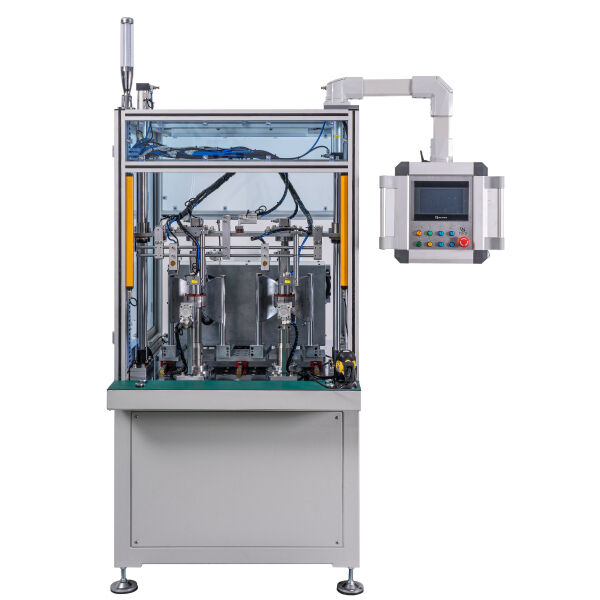
Electric motor efficiency remains a critical performance indicator across industrial applications, influencing energy consumption, operational costs, and environmental sustainability. At the heart of motor performance lies the stator assembly, where precision in winding construction directly correlates with electromagnetic efficiency, thermal management, and mechanical reliability. High-precision stator winding machinery has emerged as a transformative technology in motor manufacturing, enabling tolerances and consistency levels previously unattainable through manual or semi-automated methods. The relationship between winding precision and motor efficiency operates through multiple mechanisms: reduction of copper losses through optimized conductor placement, minimization of air gap irregularities affecting magnetic flux distribution, improved thermal conductivity through consistent slot fill factors, and elimination of mechanical imbalances that generate parasitic losses during operation.
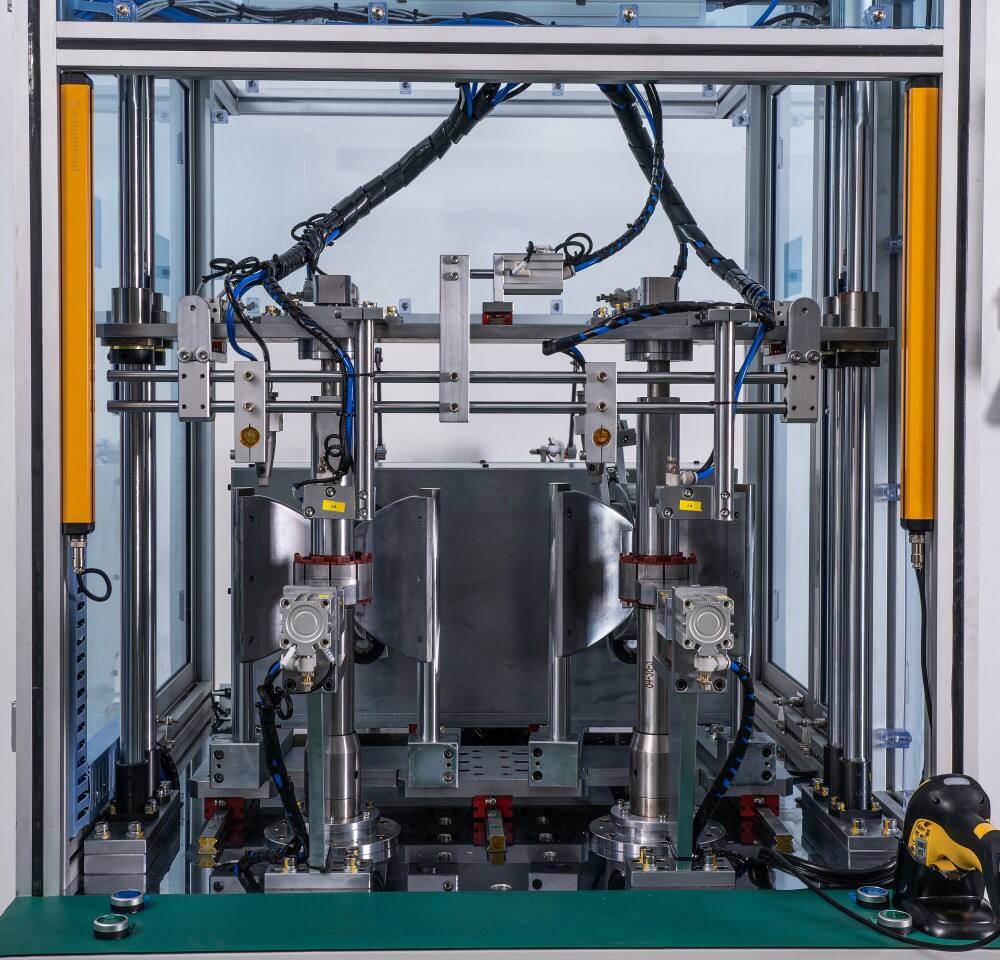
Modern manufacturing environments demand quantifiable improvements in motor performance metrics, and the adoption of advanced stator winding machinery addresses this requirement through measurable enhancements in efficiency ratings, failure rate reductions, and production consistency. The impact extends beyond individual motor units to influence total cost of ownership calculations, warranty claim frequencies, and competitive positioning in markets where efficiency certifications carry regulatory and commercial significance. Understanding how precision winding equipment translates into efficiency gains requires examining the technical mechanisms, manufacturing process improvements, quality control capabilities, and long-term reliability implications that distinguish high-precision automation from conventional winding methods.
Precision Engineering Foundations in Stator Construction
Dimensional Accuracy and Electromagnetic Performance
The dimensional precision achieved by modern stator winding machinery directly influences the electromagnetic performance characteristics that determine motor efficiency. Winding placement accuracy within stator slots affects the uniformity of the magnetic field distribution during motor operation. When conductors occupy inconsistent positions relative to the rotor magnetic field, localized flux density variations generate additional eddy current losses and hysteresis losses in the stator core material. High-precision equipment maintains positional tolerances within 0.05 millimeters across thousands of winding turns, ensuring that each conductor experiences the intended magnetic field strength and direction throughout the electromagnetic cycle.
This geometric consistency eliminates efficiency losses associated with magnetic field distortions. In conventional winding processes with lower precision, cumulative positioning errors create asymmetric flux paths that force magnetic energy through higher reluctance routes, increasing core losses by two to four percent in typical induction motor designs. Advanced stator winding machinery employs closed-loop positioning systems with optical or magnetic encoders that verify conductor placement after each insertion cycle, detecting and correcting deviations before they compound across multiple coil layers. The resulting symmetry in winding distribution minimizes circulating currents between parallel conductors and reduces the magnetomotive force harmonics that contribute to stray load losses.
Slot Fill Factor Optimization
Achieving high slot fill factors represents a critical pathway through which precision winding equipment improves motor efficiency. The slot fill factor quantifies the percentage of stator slot volume occupied by copper conductor material versus insulation and air voids. Higher fill factors translate directly into reduced resistive losses through increased conductor cross-sectional area for given slot dimensions. Manual and semi-automated winding processes typically achieve slot fill factors between fifty-five and sixty-five percent, limited by inconsistent wire tension, irregular layer formation, and human variability in conductor packing techniques.
High-precision stator winding machinery utilizes programmable tension control systems and precision insertion needles to achieve slot fill factors exceeding seventy-five percent in production environments. This fifteen to twenty percent improvement in copper utilization reduces I²R losses proportionally, translating into efficiency gains of one to two percentage points in typical motor designs operating at rated load. The equipment accomplishes this through controlled wire feeding speeds synchronized with needle insertion depth, maintaining constant tension throughout the winding process regardless of slot geometry or coil layer position. Additionally, precision machinery enables the use of rectangular or square conductor profiles that pack more efficiently than round wires, further enhancing slot fill factors when design specifications permit alternative conductor geometries.
Insulation System Integrity
The preservation of insulation system integrity during the winding process significantly impacts long-term motor efficiency and reliability. Insulation damage creates pathways for partial discharge activity and eventual turn-to-turn or phase-to-ground faults that degrade motor performance before causing complete failure. Precision stator winding machinery minimizes mechanical stress on conductor insulation through controlled insertion forces and guided wire paths that avoid sharp bending radii or contact with slot edges. Force monitoring systems integrated into advanced equipment detect abnormal resistance during wire insertion, indicating potential insulation damage or obstruction conditions requiring operator intervention.
This protective capability maintains the electrical isolation necessary for efficient motor operation across the product lifecycle. Insulation system failures in service typically manifest as increased leakage currents and elevated core losses before progressing to catastrophic faults. By preventing insulation damage during manufacturing, high-precision winding equipment ensures that motors maintain their design efficiency throughout rated operational lifespans. The equipment also enables precise application of supplementary insulation materials such as slot liners and phase separators, positioning these components with consistent clearances that prevent contamination ingress while minimizing the dielectric thickness that contributes to slot space consumption.
Manufacturing Process Improvements Enabling Efficiency Gains
Repeatability and Statistical Process Control
The repeatability characteristics of automated stator winding machinery enable statistical process control methodologies that drive continuous efficiency improvements. Unlike manual winding operations subject to operator skill variations and fatigue effects, precision automated equipment reproduces identical winding parameters across consecutive production units. This consistency allows manufacturers to establish narrow control limits for critical parameters affecting efficiency, including wire tension, turn count per coil, layer formation quality, and terminal connection resistance.
Statistical analysis of production data from precision winding equipment reveals process capability indices that support six-sigma quality objectives, reducing the standard deviation of efficiency measurements across production batches. When motor manufacturers specify efficiency guarantee values for customer applications, the reduced variability provided by precision winding machinery allows tighter margins between guaranteed and nominal performance, improving competitive positioning without increasing warranty risk. The equipment's data logging capabilities create traceable records linking individual motor serial numbers to specific winding parameters, enabling root cause analysis when field performance issues arise and facilitating targeted process refinements that benefit entire production lines.
Reduced Rework and Scrap Rates
High-precision stator winding machinery substantially reduces rework and scrap rates compared to conventional winding methods, indirectly supporting efficiency objectives through quality cost reductions that justify premium conductor materials and design optimizations. Automated equipment detects winding faults during the production process through integrated sensors monitoring wire breaks, tension anomalies, incorrect turn counts, and terminal connection failures. Immediate fault detection prevents the progression of defective units through subsequent manufacturing stages, where fault correction becomes progressively more expensive and often impossible without complete stator replacement.
The economic benefits of reduced scrap enable motor manufacturers to specify higher-grade copper conductors and advanced insulation systems that enhance efficiency but carry material cost premiums. When production yield rates exceed ninety-eight percent, the incremental cost of premium materials distributes across a larger population of saleable units, making efficiency-optimized designs commercially viable for broader market segments. Additionally, the elimination of rework operations removes process steps that introduce additional handling damage risks and insulation contamination opportunities, preserving the efficiency potential designed into the original motor specification.
Thermal Management Enhancement
Precision in conductor placement and coil formation directly influences the thermal management characteristics that affect motor efficiency under loaded operating conditions. High-precision stator winding machinery creates uniform conductor spacing within slots, establishing consistent thermal conduction paths from heat-generating copper to the stator core structure that serves as the primary heat sink. Regular spacing eliminates localized hotspots that accelerate insulation aging and increase winding resistance over the motor's operational life. The equipment's ability to maintain specified radial clearances between coil layers ensures that thermal interface materials and impregnating resins distribute evenly, maximizing thermal conductivity without creating voids that trap heat.
Improved thermal management enabled by precision winding translates into efficiency gains through multiple mechanisms. Lower operating temperatures reduce copper resistivity according to the material's positive temperature coefficient, decreasing I²R losses by approximately zero point four percent per degree Celsius temperature reduction in the winding. Enhanced heat dissipation also permits higher current density operation without exceeding insulation temperature ratings, allowing designers to specify smaller conductor gauges that improve slot fill factors and reduce material costs. The thermal benefits compound over motor operational lifespans, as units wound with precision equipment maintain efficiency performance closer to nameplate ratings compared to motors experiencing accelerated thermal aging from uneven heat distribution patterns.
Quality Control Integration and Efficiency Validation
In-Process Measurement and Verification
Modern stator winding machinery incorporates in-process measurement systems that verify efficiency-critical parameters during manufacturing rather than relying solely on end-of-line testing. Resistance measurement circuits integrated into winding equipment verify that each coil and phase assembly meets specified resistance targets within tight tolerances, detecting turn count errors, conductor gauge deviations, or connection faults immediately upon completion. Automated inductance testing identifies winding symmetry issues and turn-to-turn shorts that compromise electromagnetic performance, preventing defective units from advancing to subsequent assembly operations.
These in-process verification capabilities create quality gates that ensure only efficiency-compliant stators proceed through the manufacturing sequence. The immediate feedback enables rapid process adjustments when drift occurs, maintaining the statistical process control necessary for consistent efficiency performance. High-precision equipment also performs automated surge testing to verify insulation system integrity at voltage levels exceeding operational ratings, identifying partial discharge sites and insulation weaknesses that would degrade efficiency through leakage current paths. The combination of electrical parameter verification and insulation quality assessment provides comprehensive assurance that wound stators possess the design characteristics necessary to achieve specified efficiency ratings.
Traceability and Performance Correlation
The data acquisition capabilities of precision stator winding machinery enable detailed traceability linking manufacturing parameters to field performance outcomes. Equipment control systems log hundreds of process variables for each production unit, including wire tension profiles, insertion force measurements, temperature conditions, and quality test results. When manufacturers correlate this production data with efficiency measurements from dynamometer testing and field performance reports, statistical relationships emerge that guide continuous improvement initiatives targeting efficiency optimization.
This analytical capability transforms motor manufacturing from an experience-based craft into a data-driven engineering discipline. Manufacturers identify which winding parameters exert the strongest influence on efficiency performance, focusing process control efforts and equipment maintenance activities on variables with demonstrated impact. The traceability systems also support warranty claim investigations, allowing manufacturers to determine whether field failures result from manufacturing process deviations or application conditions outside design specifications. Over time, the accumulated knowledge base informs design rule refinements that push efficiency performance boundaries while maintaining manufacturing feasibility and cost competitiveness.
Accelerated Testing and Validation Protocols
High-precision stator winding machinery enables manufacturers to implement accelerated testing protocols that validate long-term efficiency retention without extended real-time aging studies. The consistency achieved by automated equipment allows statistically valid sampling plans where a small percentage of production units undergo accelerated thermal aging, vibration exposure, and humidity cycling to predict fleet-wide performance degradation. Because precision-wound stators exhibit minimal unit-to-unit variation, test results from sample populations reliably represent entire production batches, supporting efficiency guarantee commitments with acceptable confidence levels.
Accelerated testing reveals how efficiency performance evolves across operational lifespans, identifying design or process factors that cause premature degradation. Motors wound with precision equipment typically demonstrate superior efficiency retention compared to conventionally wound units, maintaining performance within two percent of initial ratings after thousands of operational hours. This durability stems from the manufacturing consistency that prevents localized stress concentrations, insulation weak points, and thermal management deficiencies that initiate degradation mechanisms. The validation data generated through accelerated testing provides marketing differentiation for motors manufactured with high-precision winding equipment, supporting premium positioning in efficiency-sensitive market segments.
Economic and Operational Implications for Motor Manufacturers
Total Cost of Ownership Reduction
The adoption of high-precision stator winding machinery generates total cost of ownership reductions that extend beyond direct manufacturing cost savings. While equipment capital costs exceed conventional winding systems, the return on investment materializes through multiple value streams including reduced energy consumption during production, decreased scrap and rework costs, lower warranty claim frequencies, and enhanced market access for efficiency-regulated applications. The energy efficiency improvements in finished motors also create secondary value through end-user utility cost savings that strengthen market demand for premium-efficiency products, supporting higher selling prices that improve manufacturer profitability.
Motor manufacturers quantify these economic benefits through lifecycle cost modeling that accounts for equipment depreciation, maintenance expenses, labor productivity, material utilization efficiency, and quality cost structures. Precision winding equipment typically achieves payback periods between eighteen and thirty-six months depending on production volumes and product mix, with ongoing operational cost advantages accumulating throughout equipment service lives exceeding fifteen years. The economic case strengthens when manufacturers consider the competitive risks of not adopting precision technology, as market standards for efficiency performance continue rising through regulatory initiatives and customer specifications that conventional manufacturing processes struggle to satisfy cost-effectively.
Labor Productivity and Skill Requirements
High-precision stator winding machinery transforms labor requirements in motor manufacturing facilities, shifting workforce composition from manual winding specialists to equipment operation and maintenance technicians. While this transition requires training investments and organizational change management, the resulting productivity gains substantially reduce per-unit labor costs while improving output consistency. A single operator supervising multiple automated winding stations achieves production throughput equivalent to six to eight manual winding technicians, with quality outcomes superior to even the most skilled manual operators.
The reduced dependency on specialized manual skills also mitigates workforce availability risks in regions experiencing skilled labor shortages. Precision equipment enables manufacturers to maintain production consistency despite personnel turnover, as machine programming encodes the process knowledge previously resident in experienced winding technicians. This operational resilience supports business continuity planning and facilitates geographic expansion into locations where traditional motor manufacturing skills may be underdeveloped. The evolution also enhances workplace safety by eliminating repetitive motion injuries associated with manual winding operations, reducing workers' compensation costs and improving employee retention rates.
Market Positioning and Regulatory Compliance
Motors manufactured using high-precision stator winding machinery achieve efficiency ratings that satisfy increasingly stringent regulatory standards emerging across global markets. International Efficiency classes IE4 and IE5 defined by the International Electrotechnical Commission require performance levels challenging to achieve through conventional manufacturing methods without significant oversizing or premium material content. Precision winding equipment enables manufacturers to meet these standards in compact frame sizes using standard materials, maintaining cost competitiveness while accessing market segments where efficiency regulations mandate premium performance.
The capability to document manufacturing process controls and demonstrate consistent efficiency compliance also supports certification processes required for regulated markets. Testing laboratories and certification bodies increasingly require evidence of manufacturing process capability when granting efficiency ratings valid across production volumes. The statistical process control data generated by precision stator winding machinery provides objective evidence supporting certification claims, reducing testing sample sizes and accelerating product approval timelines. This administrative efficiency shortens time-to-market for new motor designs and reduces the recurring costs associated with certification maintenance and surveillance testing.
FAQ
How does stator winding precision specifically affect motor efficiency measurements?
Stator winding precision affects motor efficiency through multiple measurable pathways including reduced copper losses from optimized conductor placement and higher slot fill factors, decreased core losses from symmetric magnetic field distribution, minimized stray load losses through harmonic reduction, and improved thermal management enabling lower operating temperatures. Precision equipment maintains dimensional tolerances that ensure consistent air gap geometry and balanced phase impedances, eliminating asymmetries that generate circulating currents and parasitic losses. Quantitatively, motors wound with high-precision machinery typically demonstrate efficiency improvements of one to three percentage points compared to equivalent designs produced through conventional methods, with the magnitude depending on motor topology, power rating, and operating load profile.
What production volume justifies investment in high-precision stator winding machinery?
Investment justification for high-precision stator winding machinery depends on multiple factors beyond simple production volume, including product mix complexity, efficiency performance requirements, quality cost structures, and labor availability. As a general guideline, manufacturers producing more than ten thousand motor units annually across similar frame sizes typically achieve acceptable return on investment from precision winding automation. However, operations serving efficiency-regulated markets or applications with stringent performance specifications may justify investment at lower volumes due to premium pricing opportunities and reduced warranty exposure. The calculation should incorporate quality cost savings from reduced scrap and rework, labor productivity gains, and market access benefits from enhanced efficiency capabilities rather than focusing solely on direct manufacturing cost reduction.
Can existing motor designs achieve efficiency improvements when produced with precision winding equipment?
Existing motor designs frequently achieve measurable efficiency improvements when production transitions to high-precision stator winding machinery without any design modifications. The improvements stem from better realization of the original design intent through enhanced manufacturing consistency, higher slot fill factors, improved conductor placement accuracy, and superior insulation system integrity. Motors originally designed for manual winding processes often contain conservative margins accounting for manufacturing variability that precision equipment eliminates, allowing actual production units to approach theoretical efficiency limits more closely. Additionally, manufacturers can often extract further efficiency gains by redesigning motors specifically to exploit precision winding capabilities, optimizing slot geometries, conductor configurations, and thermal management features that conventional manufacturing methods cannot reliably reproduce.
What maintenance requirements ensure continued precision performance from automated winding equipment?
Maintaining precision performance from automated stator winding machinery requires systematic preventive maintenance programs addressing mechanical wear, calibration drift, and control system reliability. Critical maintenance activities include regular verification of positioning system accuracy using calibrated measurement standards, replacement of wear components such as insertion needles and wire guides according to manufacturer specifications, lubrication of motion system components following prescribed schedules, and periodic recalibration of tension control systems and electrical testing circuits. Advanced equipment incorporates condition monitoring systems that track performance parameters and predict maintenance requirements before precision degradation affects production quality. Manufacturers should establish maintenance intervals based on production volume and equipment utilization rates, typically performing comprehensive calibration verification quarterly and component replacement annually for continuously operated systems, with more frequent attention required for equipment operating in harsh environmental conditions or producing particularly demanding winding configurations.
Table of Contents
- Precision Engineering Foundations in Stator Construction
- Manufacturing Process Improvements Enabling Efficiency Gains
- Quality Control Integration and Efficiency Validation
- Economic and Operational Implications for Motor Manufacturers
-
FAQ
- How does stator winding precision specifically affect motor efficiency measurements?
- What production volume justifies investment in high-precision stator winding machinery?
- Can existing motor designs achieve efficiency improvements when produced with precision winding equipment?
- What maintenance requirements ensure continued precision performance from automated winding equipment?